Public image
Advertising, stardom, and public persuasion
This route follows the way Mucha turns the poster into a tool of prestige, representation, and culturally legible authority.
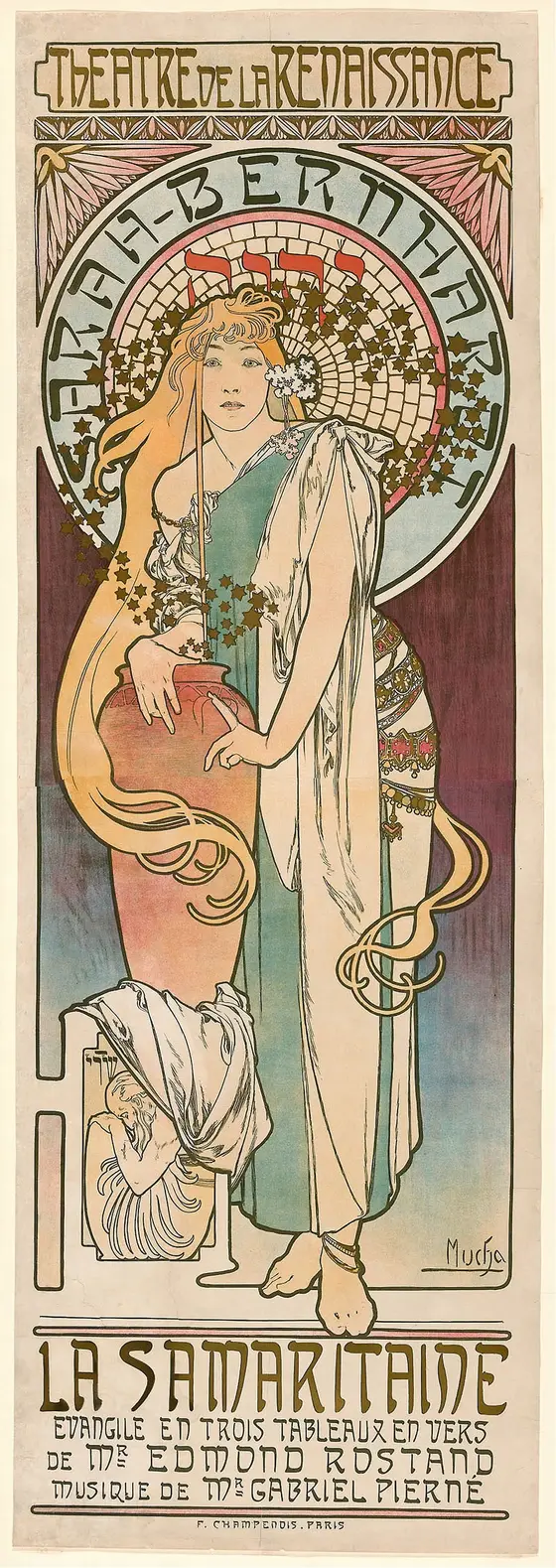
Advertising, theatricality, and Mucha's ability to stop the gaze
Mucha is not only an artist of ornament. He is also a maker of images that can halt the gaze within seconds and construct an aura of exceptionality.
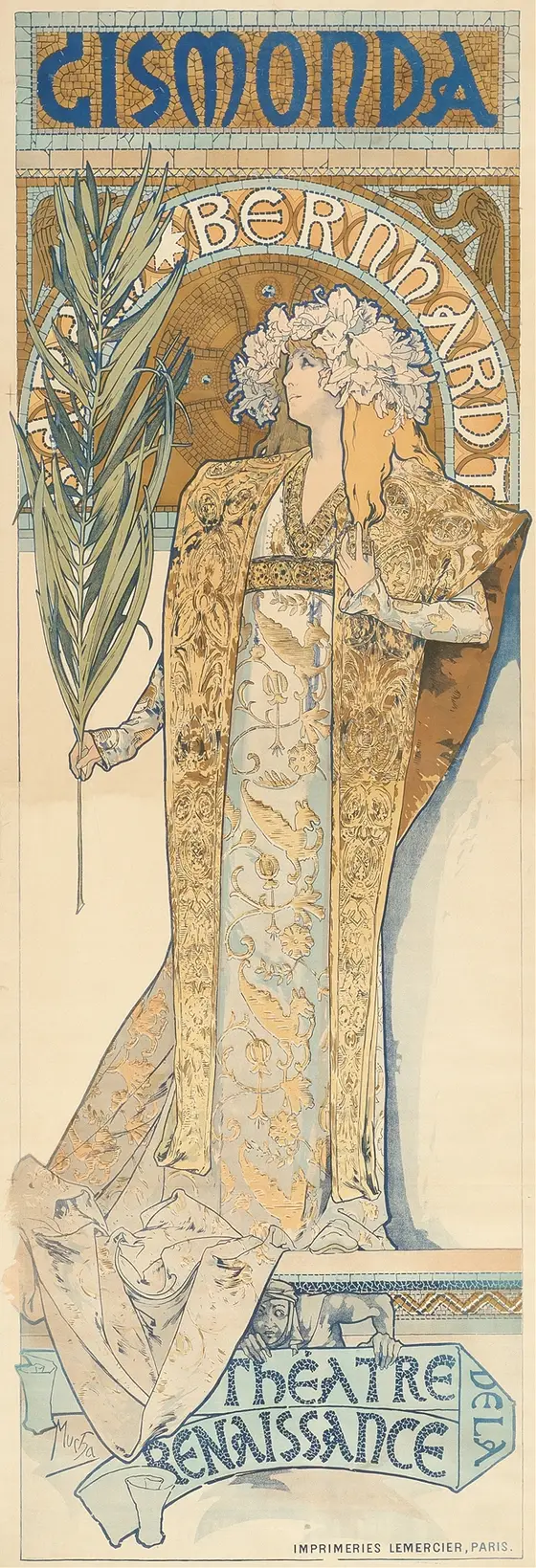
Sarah Bernhardt and the making of a public star image
Mucha's Sarah Bernhardt works matter because they do more than advertise performances. They produce a new kind of public stardom built from scale, poise, and ritualized visibility.
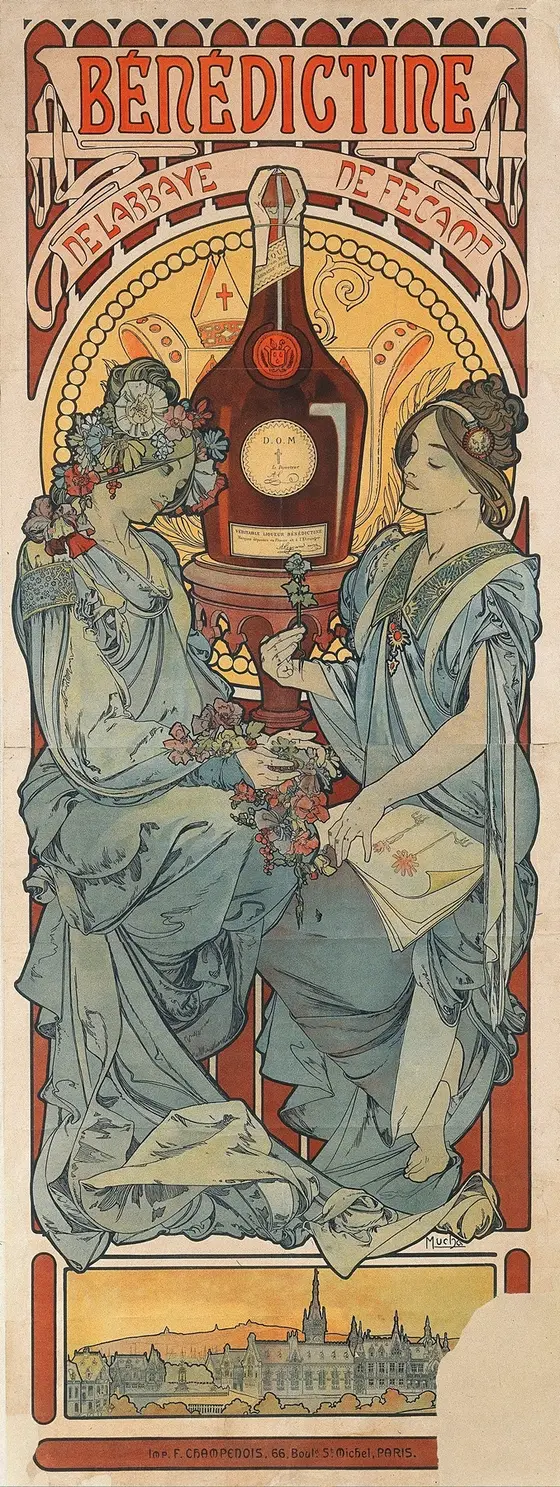
Luxury and public persuasion
Mucha's commercial works matter because they rarely sell through pressure. They persuade by staging luxury, dignity, and the feeling that the product already belongs to a higher cultural register.
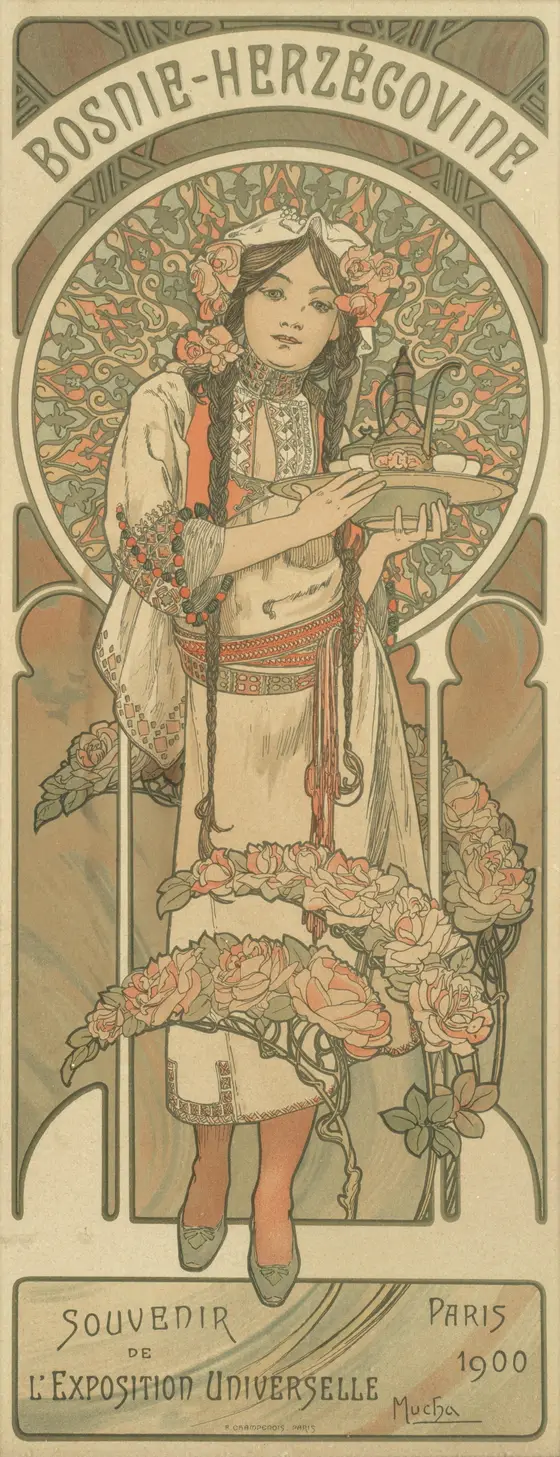
Civic image from exposition to festival
Mucha's civic works matter because they show him moving from product publicity toward the representation of institutions, nations, and ceremonial public life.
Print and circulation
Print culture, spirituality, and recurring visibility
This group shows that Mucha works not with a single image type, but with a network of media stretching from periodicals to devotional print.
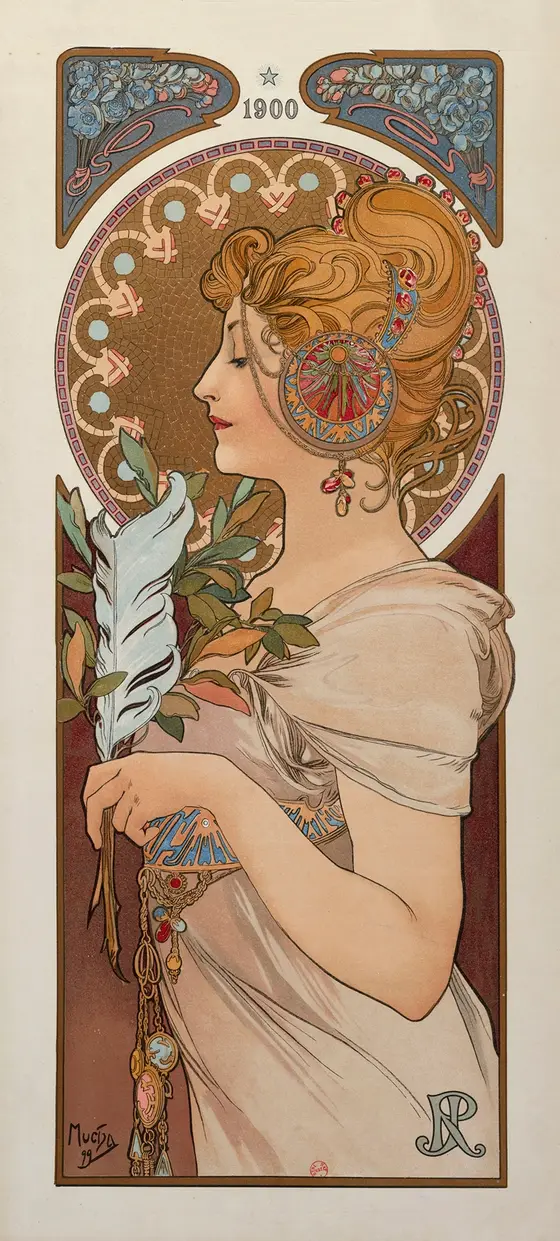
Print culture and recurring visibility
Mucha matters in print culture not only because he designed for magazines and publishers, but because he understood repeated visibility as a form of cultural authority.
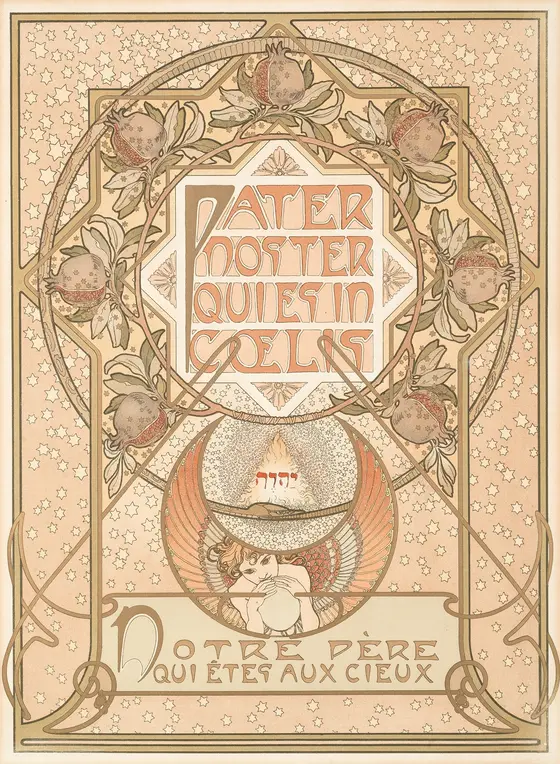
Public spirituality and cultural image
Mucha's devotional and cultural works matter because they do not retreat from publicity. They transform spiritual subject matter into a slow, ceremonial public image.
Ornament and series
The figure, ornament, and serial ways of reading the image
These essays move Mucha beyond decorative impression toward a sharper reading of rhythm, relation, and serial structure.
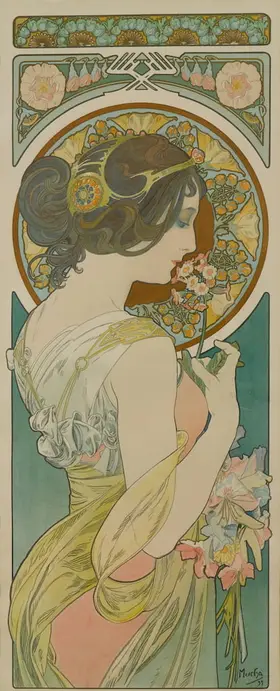
The female figure, ornament, and the slow reading of Mucha's image
The longer we look at Mucha, the clearer it becomes that ornament is not background. It is an active part of expression, atmosphere, and meaning.

The Seasons and serial rhythm
The Seasons matter because they show Mucha thinking in sequences. Each panel works alone, but the deeper effect comes from rhythm, variation, and return across the set.
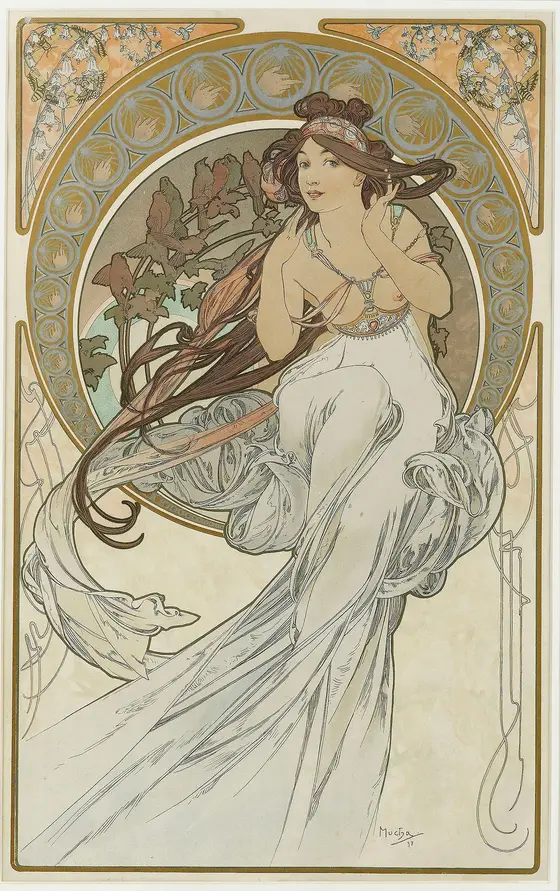
Decorative constellations and paired panels
Mucha's paired decorative panels matter because they show ornament working structurally, not as surface excess. Meaning emerges through echo, counterpart, and visual correspondence.
Late Mucha
Identity, portraiture, and late public presence
Here the shift of tempo becomes clear: from large-scale publicity toward more concentrated forms of identity, dignity, and representation.
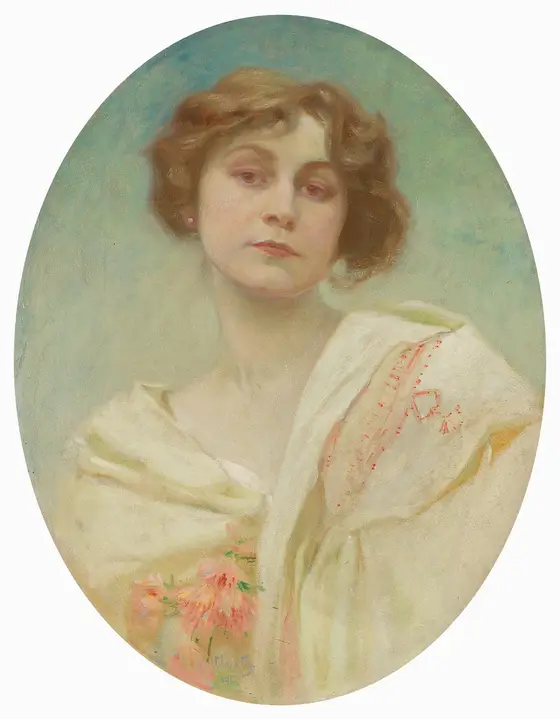
Costume, portrait, and the staging of identity
In Mucha's later portraits, clothing is never only descriptive. It becomes a way of turning a sitter into a bearer of cultural memory and public meaning.
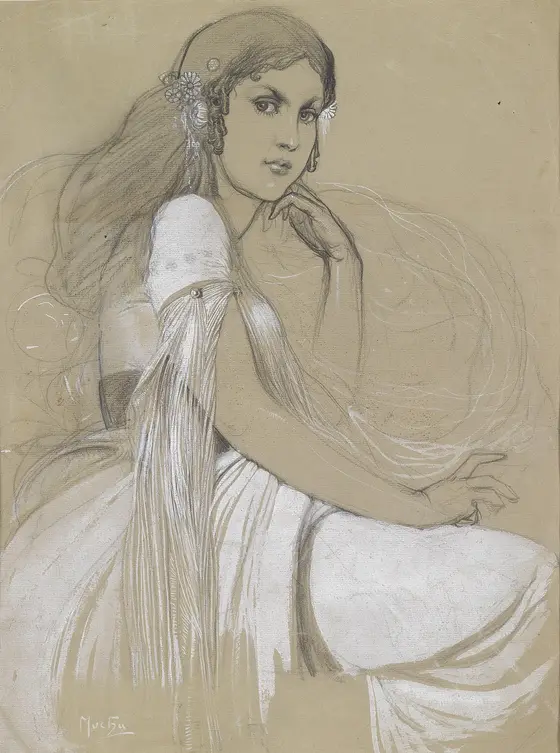
Late Mucha and the turn toward private presence
Mucha's later work often matters most where it becomes quieter. The poster voice recedes and a more concentrated sense of presence begins to carry the image.
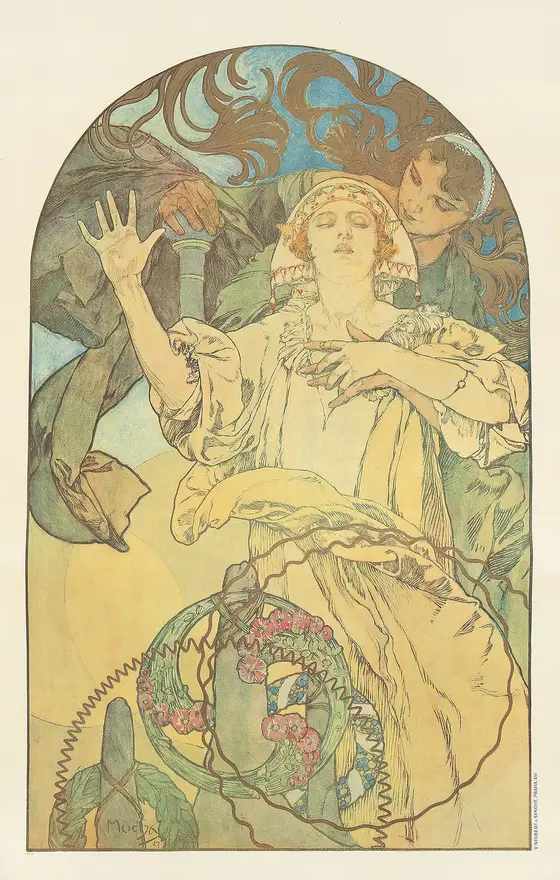
After Paris: Mucha's late public image
The later Mucha does not abandon the public sphere. He returns to it differently, giving posters and publicity a slower authority than the Paris years required.
All essays
Full index
A chronological fallback view for visitors who want to browse every curatorial text at once.
Civic image from exposition to festival
Mucha's civic works matter because they show him moving from product publicity toward the representation of institutions, nations, and ceremonial public life.
Decorative constellations and paired panels
Mucha's paired decorative panels matter because they show ornament working structurally, not as surface excess. Meaning emerges through echo, counterpart, and visual correspondence.
Print culture and recurring visibility
Mucha matters in print culture not only because he designed for magazines and publishers, but because he understood repeated visibility as a form of cultural authority.
Luxury and public persuasion
Mucha's commercial works matter because they rarely sell through pressure. They persuade by staging luxury, dignity, and the feeling that the product already belongs to a higher cultural register.
Public spirituality and cultural image
Mucha's devotional and cultural works matter because they do not retreat from publicity. They transform spiritual subject matter into a slow, ceremonial public image.
Sarah Bernhardt and the making of a public star image
Mucha's Sarah Bernhardt works matter because they do more than advertise performances. They produce a new kind of public stardom built from scale, poise, and ritualized visibility.
The Seasons and serial rhythm
The Seasons matter because they show Mucha thinking in sequences. Each panel works alone, but the deeper effect comes from rhythm, variation, and return across the set.
Costume, portrait, and the staging of identity
In Mucha's later portraits, clothing is never only descriptive. It becomes a way of turning a sitter into a bearer of cultural memory and public meaning.
After Paris: Mucha's late public image
The later Mucha does not abandon the public sphere. He returns to it differently, giving posters and publicity a slower authority than the Paris years required.
Late Mucha and the turn toward private presence
Mucha's later work often matters most where it becomes quieter. The poster voice recedes and a more concentrated sense of presence begins to carry the image.
Advertising, theatricality, and Mucha's ability to stop the gaze
Mucha is not only an artist of ornament. He is also a maker of images that can halt the gaze within seconds and construct an aura of exceptionality.
The female figure, ornament, and the slow reading of Mucha's image
The longer we look at Mucha, the clearer it becomes that ornament is not background. It is an active part of expression, atmosphere, and meaning.