Theatre and celebrity image
La Dame aux Camélias: a white figure under a sky of stars
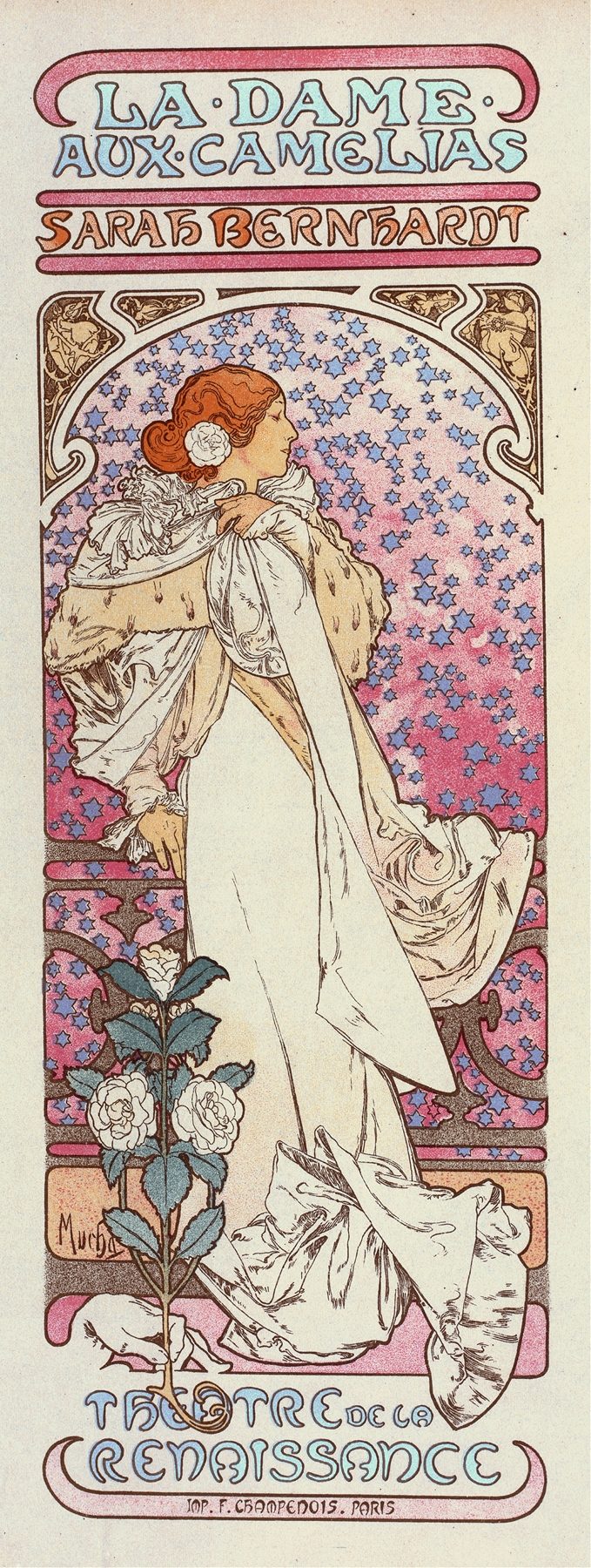
Mucha's 1896 poster for Sarah Bernhardt shows no scene from the play: a single profile, a white camellia and a field of blue stars carry the whole story. This essay reads it line by line.
A poster for a role, not a scene
In 1896 the Théâtre de la Renaissance in Paris advertised Sarah Bernhardt in La Dame aux Camélias, and Mucha designed the sheet. The gallery lists it as La Dame aux Camélias. According to the Victoria and Albert Museum, it is a colour lithograph printed by F. Champenois, and the imprint is legible at the foot of the sheet. The same record notes that Bernhardt had contracted Mucha in 1895 for six years to design posters, sets and costumes for her productions, and that she used this poster again when she toured the play in the United States.
The play itself was older than the poster by more than forty years. Alexandre Dumas fils published the novel in 1848 and adapted it for the stage; it opened at the Théâtre du Vaudeville in Paris on 2 February 1852, with the courtesan Marie Duplessis, the author’s former lover, behind the heroine Marguerite Gautier. By the 1890s it was a famous vehicle for great actresses, and the poster does not need to explain the story. It needs only to say who is playing it, and where.
Related works
 5 explained symbols
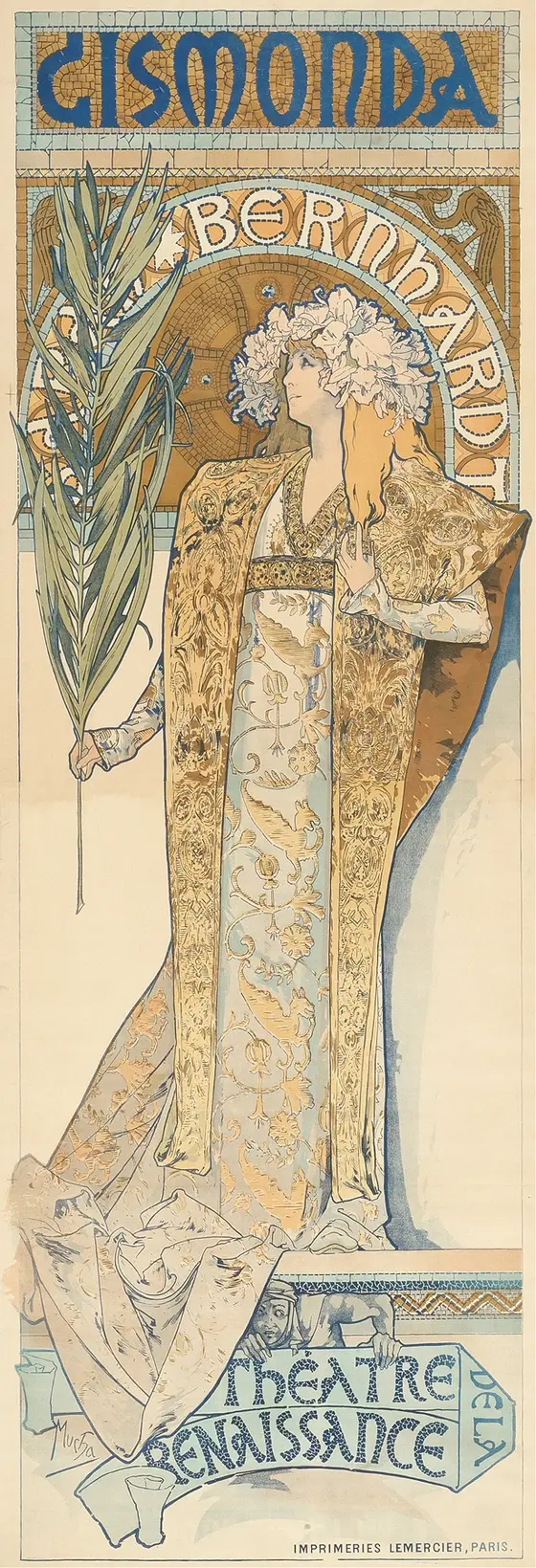
Gismonda
The Bernhardt breakthrough poster that announced Mucha to Paris.
 5 explained symbols
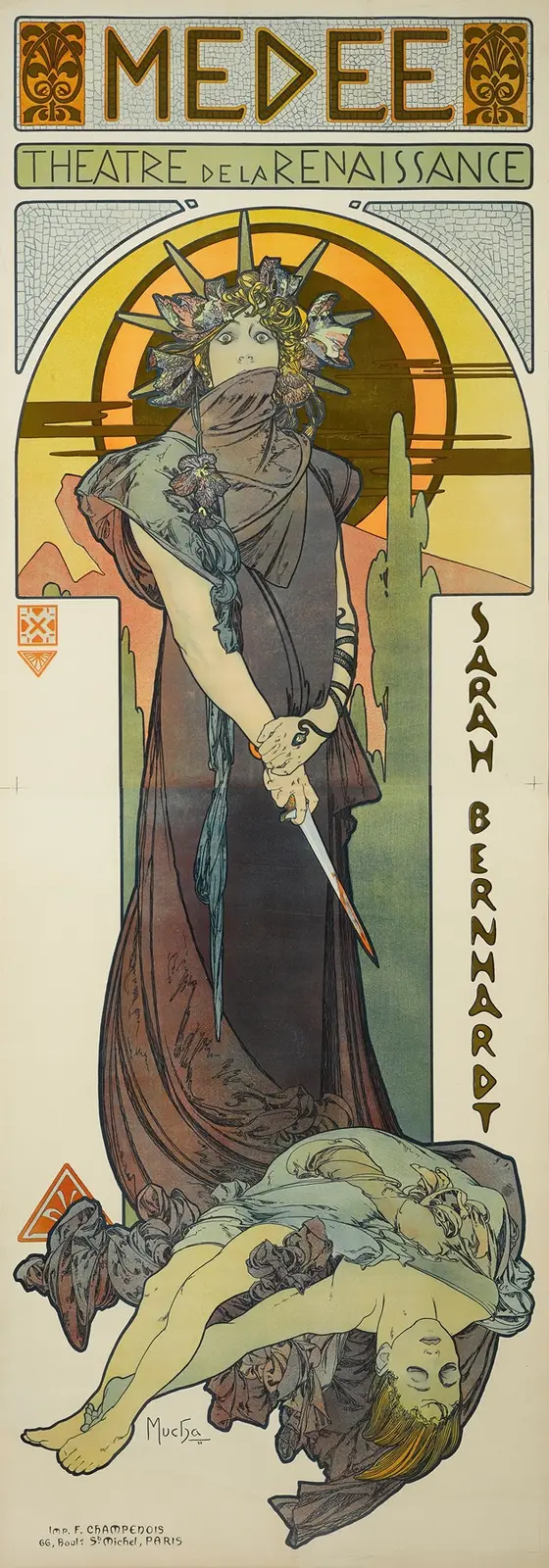
Medee
A darker Mucha built from ritual tension rather than sweetness.
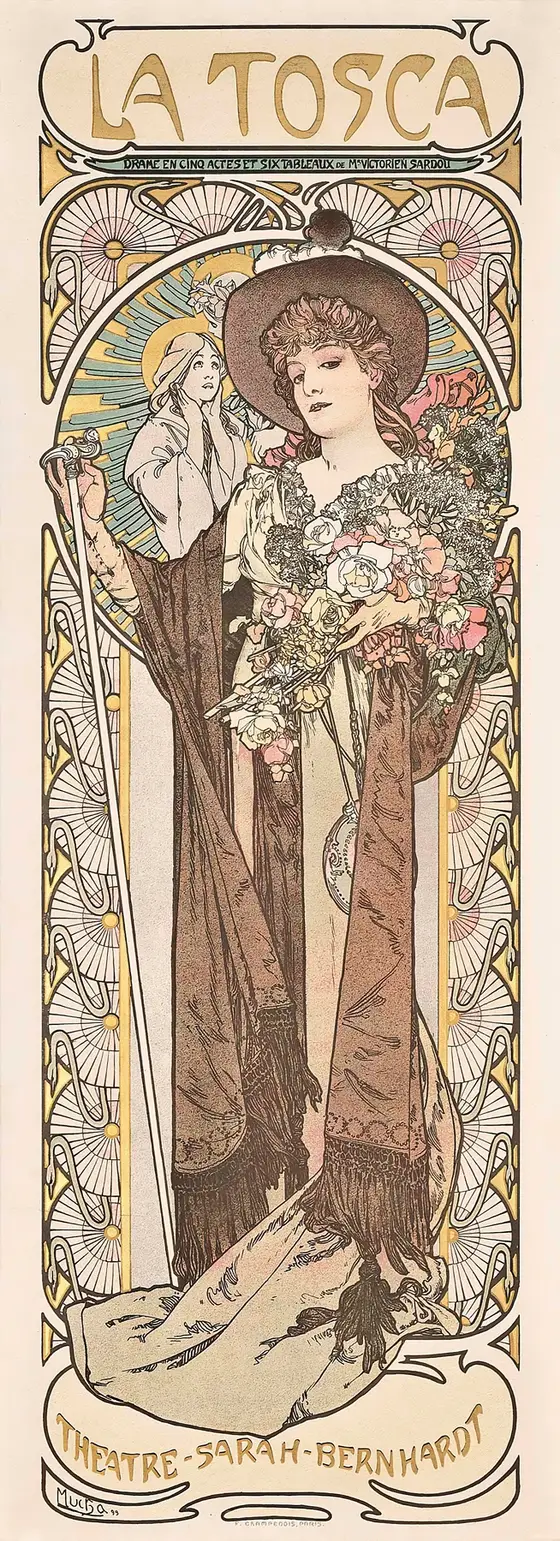
LA TOSCA
Operatic drama compressed into a tall image of ritual tension.
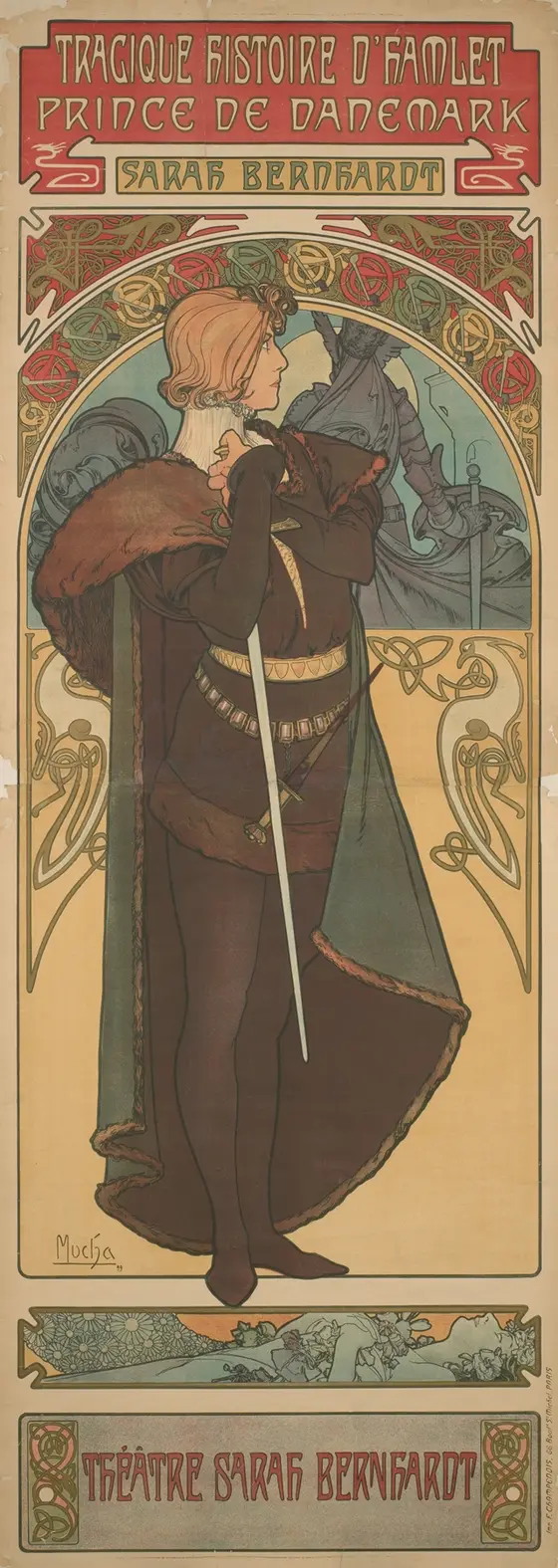
Sarah Bernhardt as Hamlet
Bernhardt as Hamlet, where theatrical identity becomes a monumental emblem of role and presence.