An image built for the city
Mucha worked in an environment where the poster was not secondary to the gallery. It was an image exposed to weather, traffic, distraction, and competition. A public poster had to win attention in seconds, but it also had to remain memorable once the passer-by had moved on. That is why elegance in Mucha is never detached from function. Beauty is part of the mechanism that fixes the image in memory.
The poster as a staged encounter
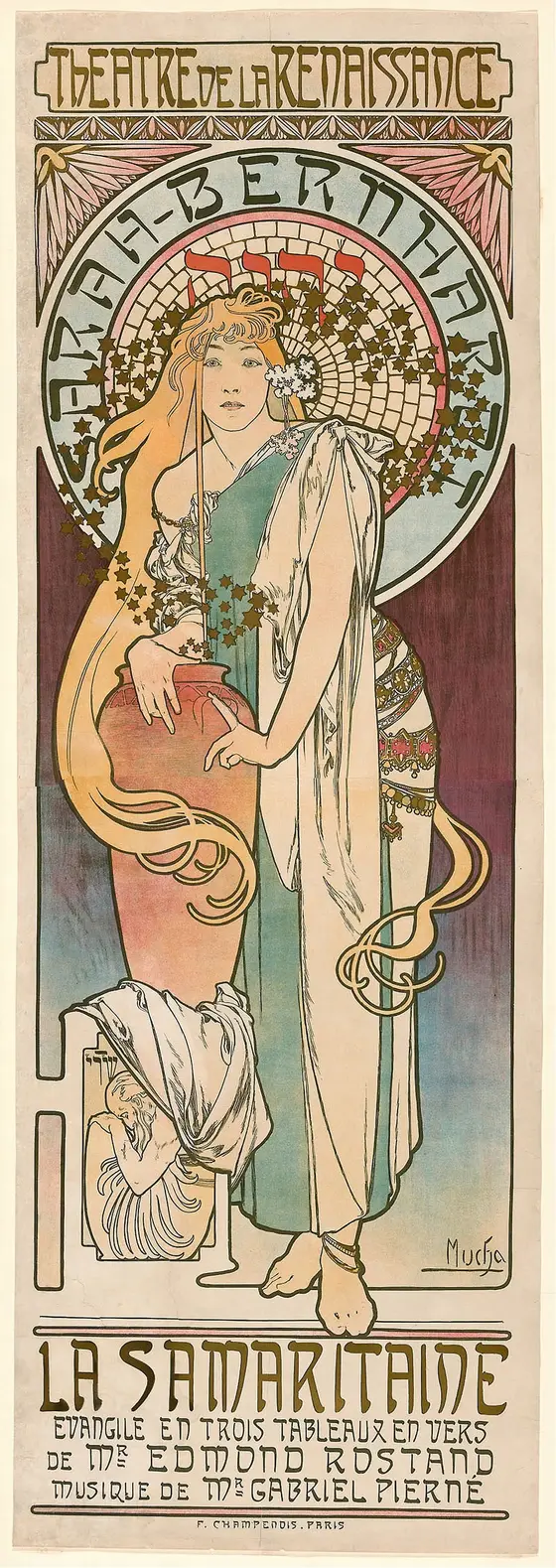
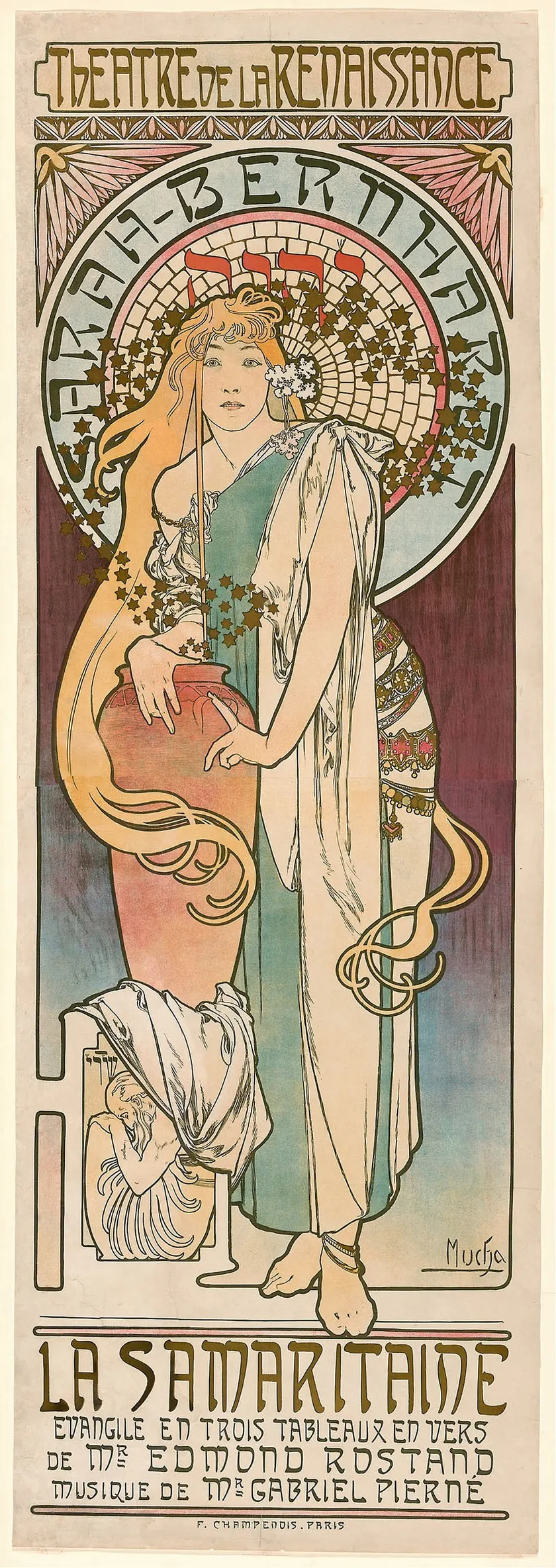
Works such as La Samaritaine matter because they do not merely announce a product or an event. They choreograph the meeting between viewer and image. Vertical format slows the act of looking, the figure stabilizes the scene, and the ornamental surround produces an atmosphere of exception. The poster does not just say “look here.” It tells the viewer what kind of attention to give and what emotional register to enter.
Ornament as attention design
What we now call decorative style was also a strategic part of visual communication. Lines, halos, flowers, and elaborate frames are not decorative surplus. They guide the eye, create hierarchy, and elevate the perceived status of a brand or public figure. In Mucha, ornament turns publicity into ceremony. That is one reason the works still feel slower and richer than many modern advertisements: they are constructed to persuade through atmosphere as much as through legibility.
Commodity, prestige, and public memory
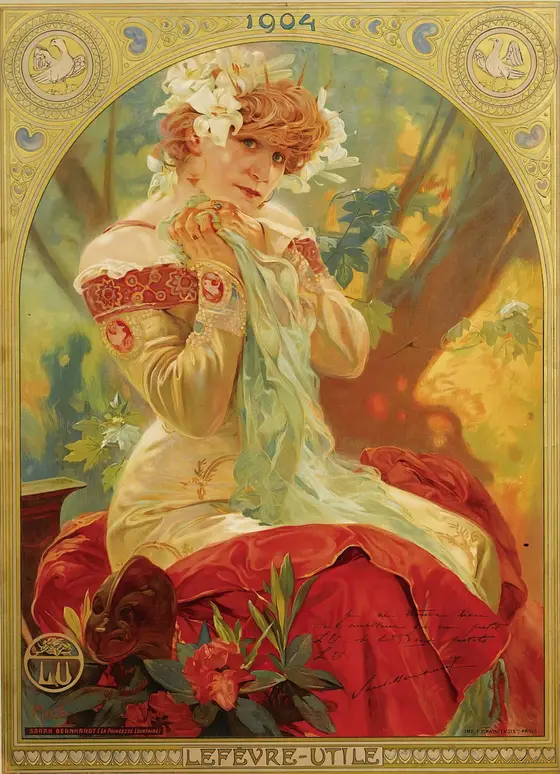
This is especially clear when we compare commercial posters with star images such as Sarah Bernhardt. In both cases, Mucha is not selling a neutral object. He is building prestige around a name, a role, or a product. The poster becomes a public surface where commerce borrows the authority of ritual, theatre, and symbolic framing. That is a stronger claim than saying Mucha made advertisements beautifully. He made advertising capable of behaving like cultural image.
Why this matters for the archive
This essay matters because it keeps the site from treating posters as merely “applied” works beside supposedly more serious art. Mucha’s advertisements are central to understanding how modern public images operate. They show an artist discovering how style can direct the gaze, shape social value, and turn visual attention into persuasion.
Continue reading
Related essays in the same route
These essays stay within the same curatorial question, but change the medium, artwork, or public situation.
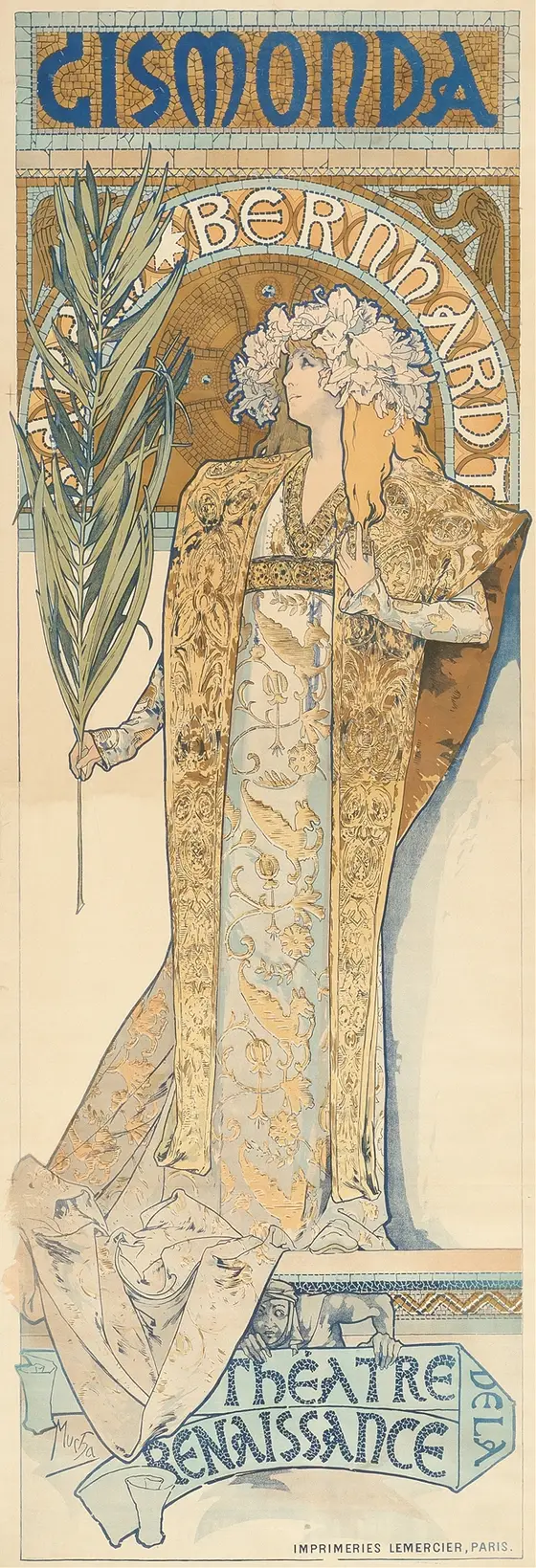
Sarah Bernhardt and the making of a public star image
Mucha's Sarah Bernhardt works matter because they do more than advertise performances. They produce a new kind of public stardom built from scale, poise, and ritualized visibility.
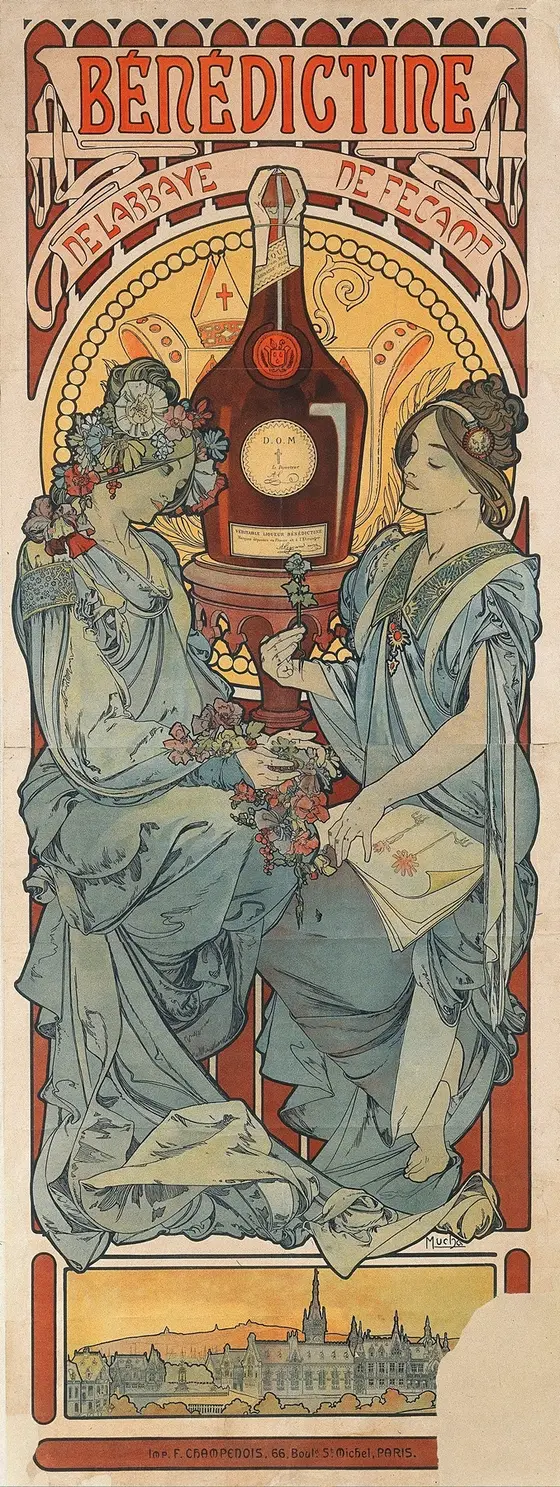
Luxury and public persuasion
Mucha's commercial works matter because they rarely sell through pressure. They persuade by staging luxury, dignity, and the feeling that the product already belongs to a higher cultural register.
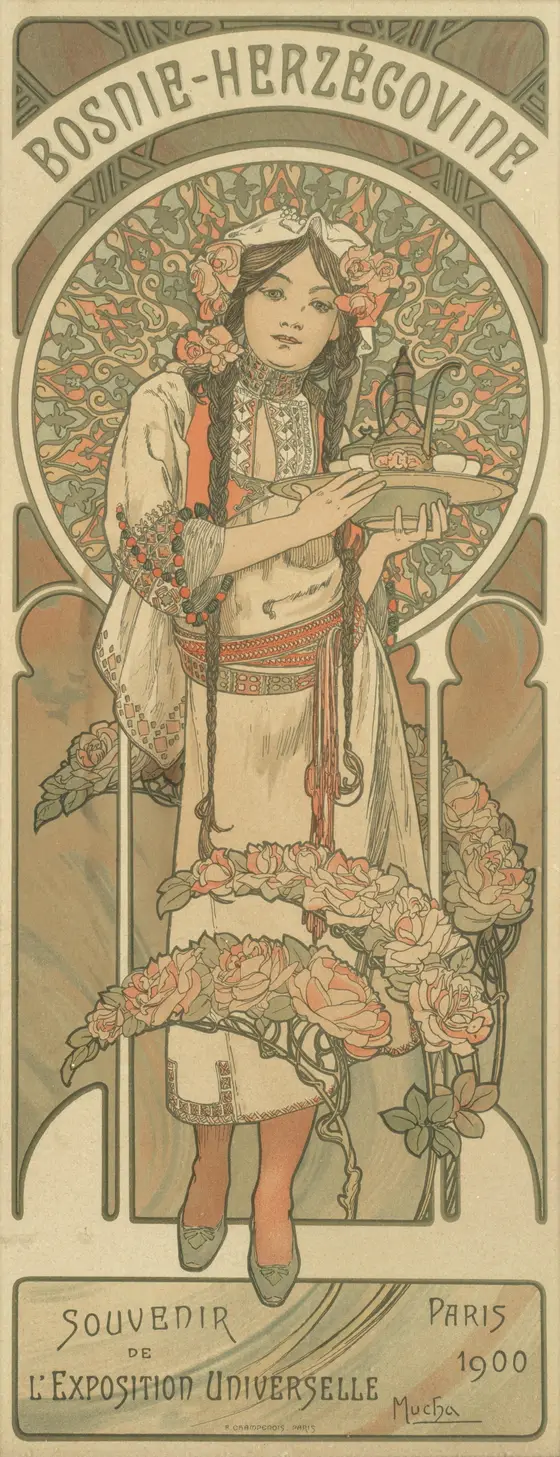
Civic image from exposition to festival
Mucha's civic works matter because they show him moving from product publicity toward the representation of institutions, nations, and ceremonial public life.