The poster artist slows down
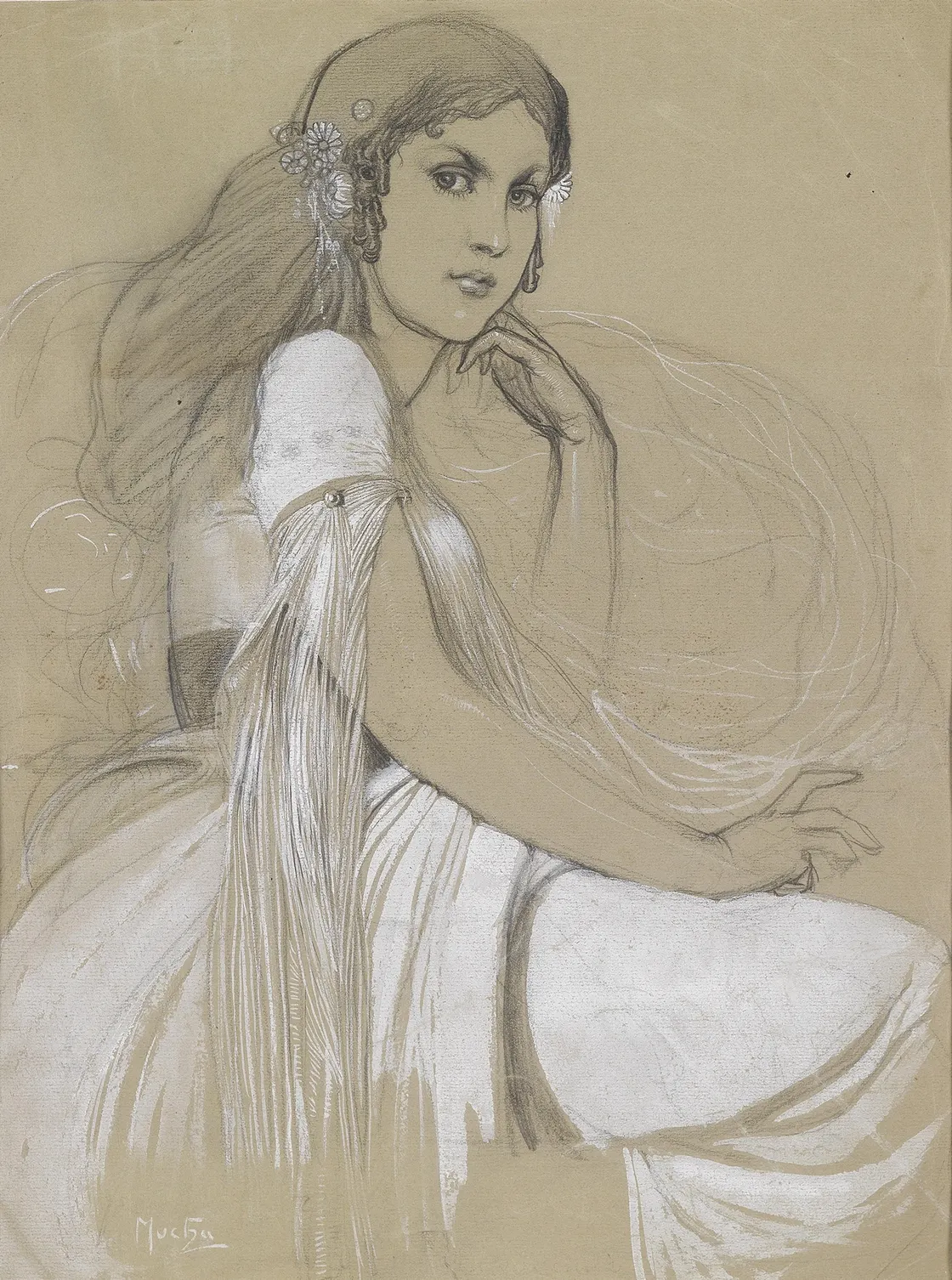
One of the simplest ways to misread Mucha is to imagine that his mature achievement is exhausted by public image-making. The later portraits and studies show a different tempo. The image no longer needs to announce itself from a distance. It can stay close to the sitter, to posture, and to the charge of quiet attention. Slowness here is not weakness. It is a different mode of intensity.
Presence instead of proclamation
In works such as Jaroslava Muchová or Portrait of a Young Woman in Folk Costume, symbolic framing remains important, but it is less theatrical than in the Paris posters. The emphasis shifts toward presence. The viewer is not dazzled into recognition; the viewer is asked to remain with a face, a costume, or a bodily pose long enough for the image to thicken. This is a different contract between image and spectator.
Gesture, stillness, and ethical attention
Later Mucha becomes especially powerful in the way he handles stillness. A bowed body, a reserved gaze, or a frontal calm can carry more weight than ornamental abundance alone. These works ask for a form of ethical attention because they refuse to consume the sitter as mere spectacle. They slow the viewer into relation. That is why the later archive matters so much for balancing the more iconic public works.
Private does not mean apolitical
It would be a mistake to treat these quieter works as detached from larger cultural questions. Even when the scale becomes intimate, the image still negotiates identity, dignity, gendered presence, and cultural memory. A private portrait can also participate in public meaning. Mucha’s later work makes that overlap visible by allowing closeness and representation to coexist.
Why the archive needs this quieter register
This later mode is essential for the project because it protects Mucha from becoming a single-style brand. The archive becomes stronger when it can show not only the public voice of Mucha, but also the quieter and more attentive way he handles a human figure. That deeper contrast is precisely what an essay can articulate better than a standard object page.
Continue reading
Related essays in the same route
These essays stay within the same curatorial question, but change the medium, artwork, or public situation.
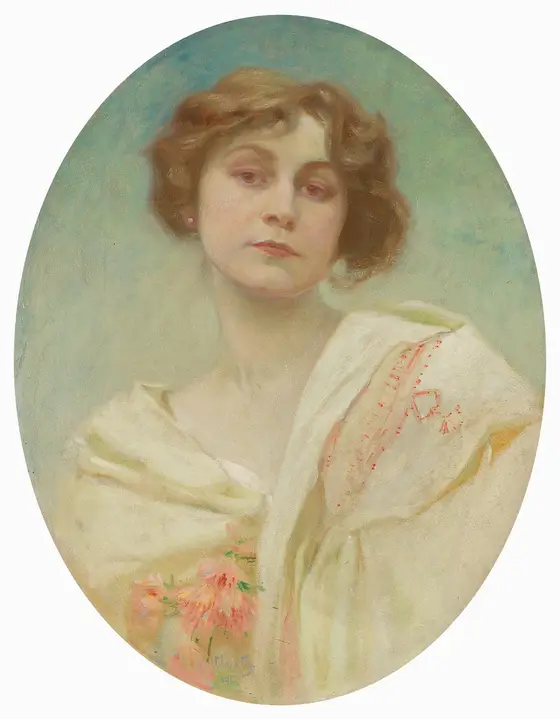
Costume, portrait, and the staging of identity
In Mucha's later portraits, clothing is never only descriptive. It becomes a way of turning a sitter into a bearer of cultural memory and public meaning.
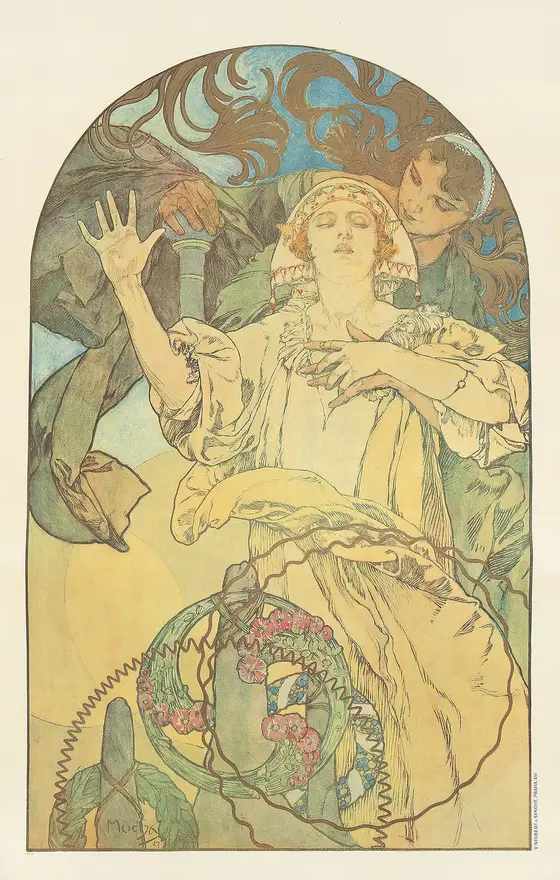
After Paris: Mucha's late public image
The later Mucha does not abandon the public sphere. He returns to it differently, giving posters and publicity a slower authority than the Paris years required.
Related works
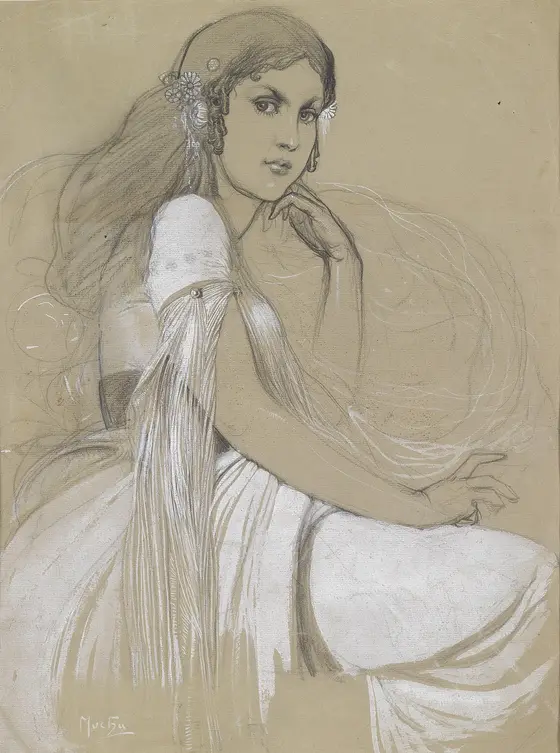
Jaroslava Muchová
A late portrait of Mucha's daughter in which public emblem gives way to a more concentrated personal presence.
Portrait of a Young Woman in Folk Costume
A portrait in which folk dress turns a private sitter into a carrier of cultural identity.
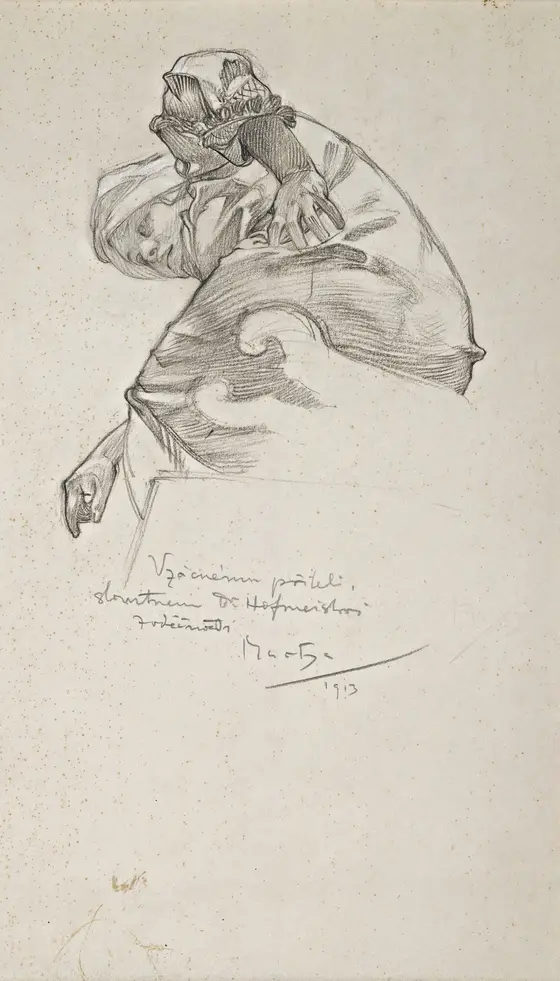
Woman Bending Over
A later figure study showing Mucha concentrating on bodily weight, movement, and compressed gesture.