Costume as structure
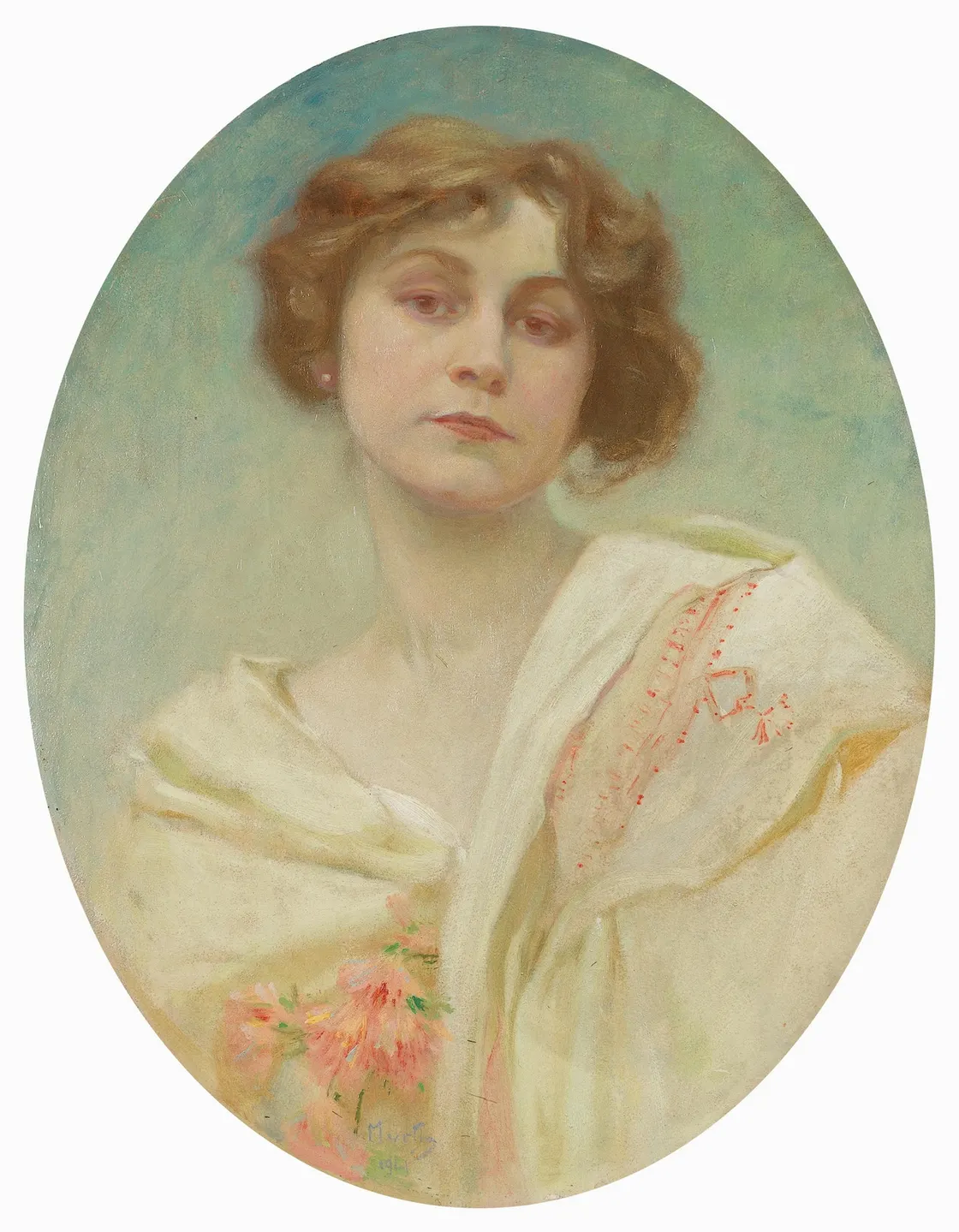
It is too weak to say that costume in these works simply provides atmosphere. In Mucha, costume structures the reading of the sitter. It places the body inside history, regional memory, and symbolic affiliation. The portrait becomes more than likeness because dress acts as a second frame around the face. Before we register psychology, we register textile, silhouette, and the public code those elements carry.
Textile as cultural language
Folk dress matters here because it is not neutral material. Pattern, embroidery, and layered fabric operate like a visible archive. They condense locality, memory, and social imagination into the picture surface. Mucha does not record costume ethnographically in a detached way. He composes it so that clothing becomes a bearer of dignity and continuity. The sitter is not only wearing culture; she is staged as one of its living forms.
Private model, public register
That is why family portraits matter so much. They are intimate in subject yet public in register. A daughter or a young woman is not presented as a merely private person. She appears inside a visual vocabulary that makes identity visible, legible, and ceremonially composed. The portrait asks the viewer to move beyond biography toward representation, but without losing the closeness of the human presence.
Late Mucha beyond monumentality
These works are also important because they complicate the easy story that the late Mucha is legible only through monumental history painting. The later archive also thinks about nation, memory, and belonging through scale reduction. Instead of epic narrative, it uses posture, textile, and frontal calm. Instead of monumental crowd scenes, it invests a single figure with cultural weight.
Reading identity in the archive
For the site, this creates an essential bridge between portraiture and the national imagination of Mucha’s later years. The viewer begins to see that identity in these images is staged through fabric, stillness, posture, and presentation as much as through facial likeness. That is precisely the level of reading where an essay must go deeper than a gallery caption.
Continue reading
Related essays in the same route
These essays stay within the same curatorial question, but change the medium, artwork, or public situation.
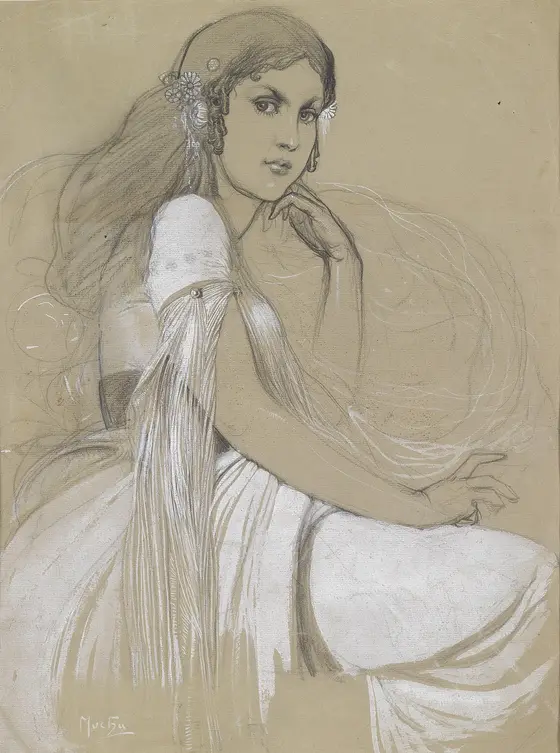
Late Mucha and the turn toward private presence
Mucha's later work often matters most where it becomes quieter. The poster voice recedes and a more concentrated sense of presence begins to carry the image.
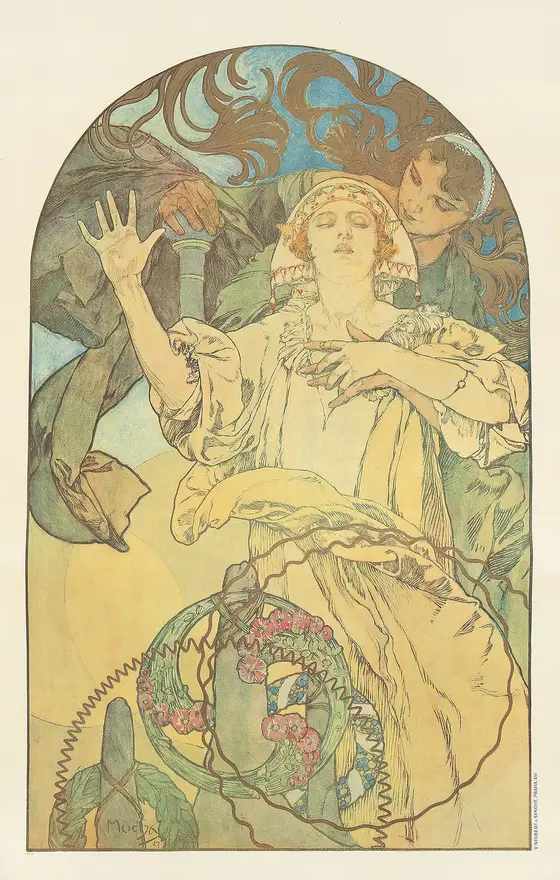
After Paris: Mucha's late public image
The later Mucha does not abandon the public sphere. He returns to it differently, giving posters and publicity a slower authority than the Paris years required.
Related works
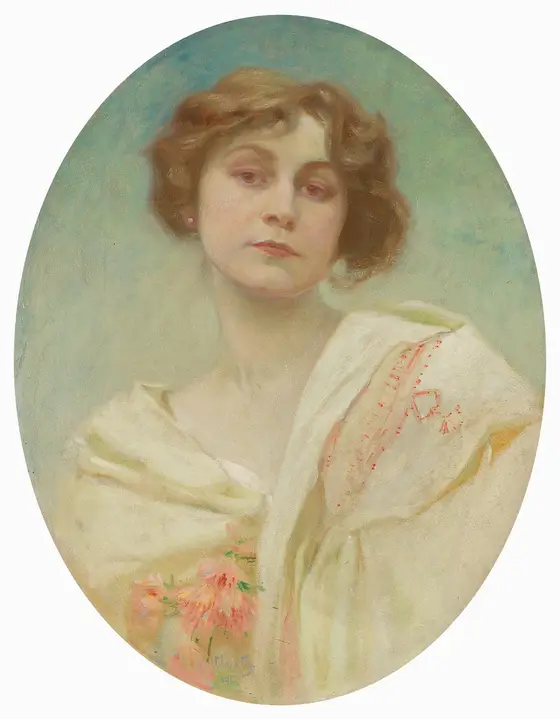
Portrait of a Young Woman in Folk Costume
A portrait in which folk dress turns a private sitter into a carrier of cultural identity.
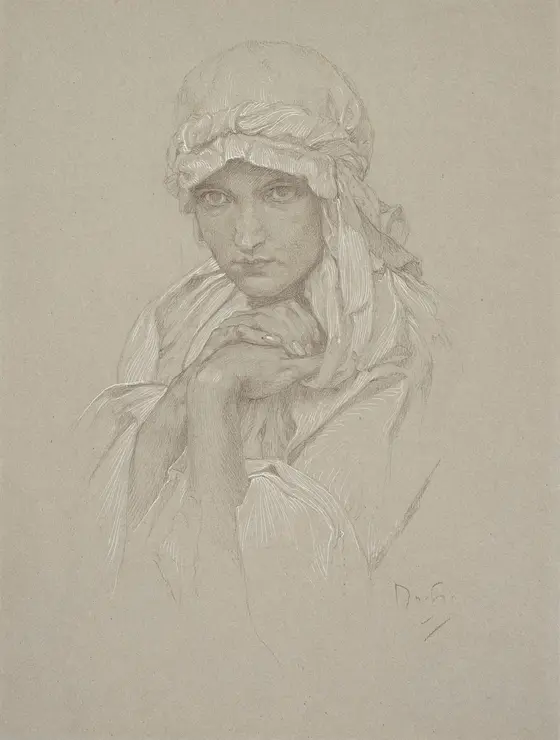
Portrait of the Artist's Daughter in Slavic Dress
A family portrait that joins personal intimacy with Slavic representation and Mucha's later cultural identity.
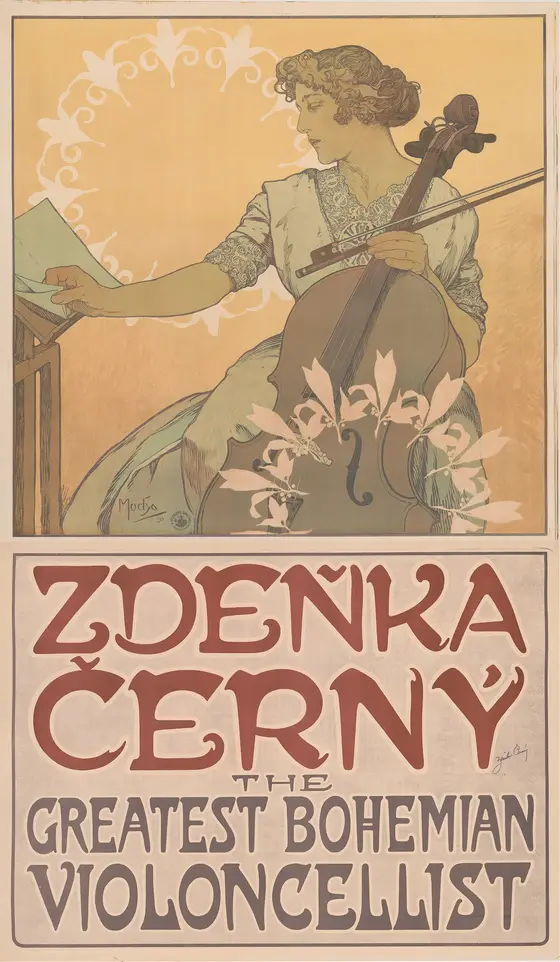
Zdenka Cerny, The Greatest Bohemian Violoncellist
A public musical portrait where the performer is given the dignity and stillness of Mucha's mature style.