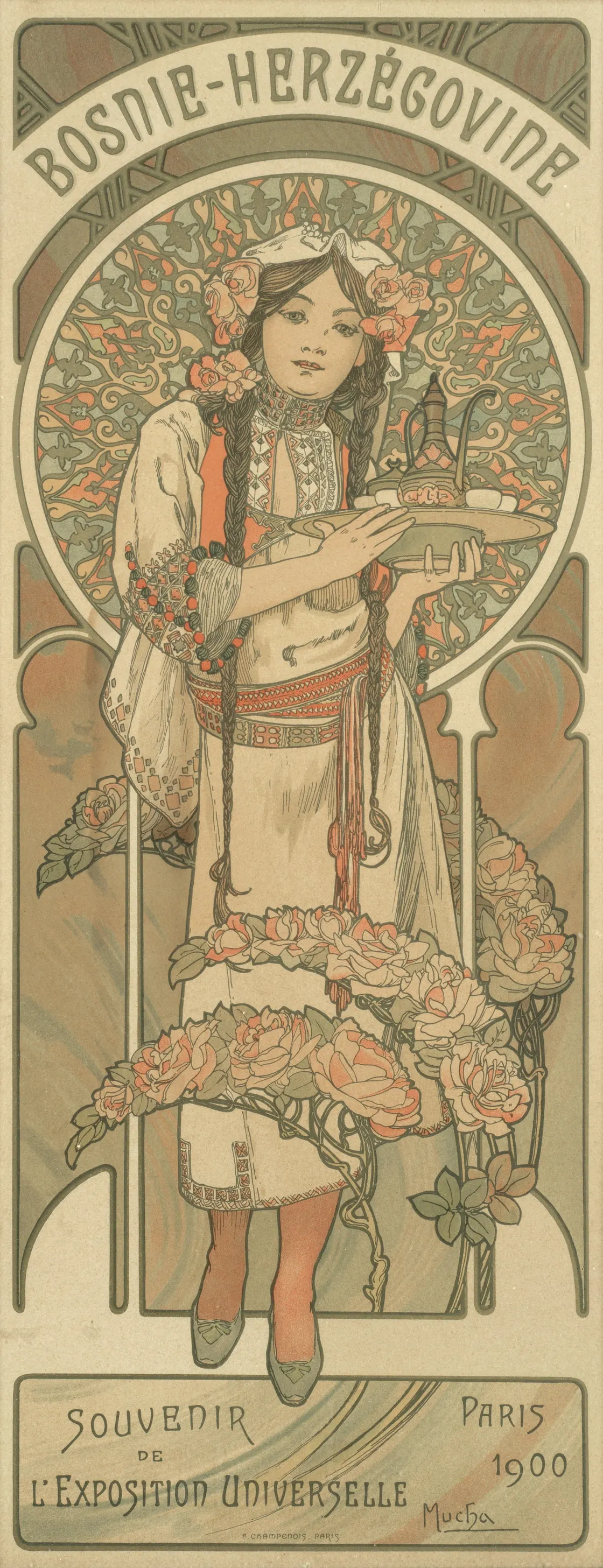
The public image is not neutral
When Mucha works for expositions, festivals, or civic prestige, the task changes. The image is no longer selling a consumer object. It is shaping the appearance of a collective body. That means the work has to do more than attract attention. It has to organize legitimacy, belonging, and ceremonial tone.
Ceremony as visual method
Bosnie-Herzegovine stages political and cultural representation through monumentality. Poster for The Sokol Festival in Prague carries the same logic into a later Czech civic register. Even Zdenka Cerny belongs nearby because it gives public culture the stillness of ceremony rather than the urgency of salesmanship. In each case, public visibility is being disciplined into dignity.
Collective identity has to be pictured
This is a crucial shift from commercial publicity. A product can be individualized. A civic image has to stand in for a larger group, institution, or imagined public. That is why posture, frontal presence, symbolic framing, and heraldic calm matter so much. Mucha is not only making an attractive image. He is giving visual form to the claim that a collective entity deserves reverence and attention.
From advertising to representation
These works matter because they widen the archive’s picture of Mucha. They show that publicity is only one part of his public language. Representation, ceremony, and collective identity are just as central.
Why the essay has to go further
A gallery page can note commission, date, and medium. The essay has to explain the harder question: how public imagery shifts when the client is no longer a commodity but a nation, institution, or civic ritual. That is where Mucha’s political and ceremonial intelligence comes into view.
Continue reading
Related essays in the same route
These essays stay within the same curatorial question, but change the medium, artwork, or public situation.
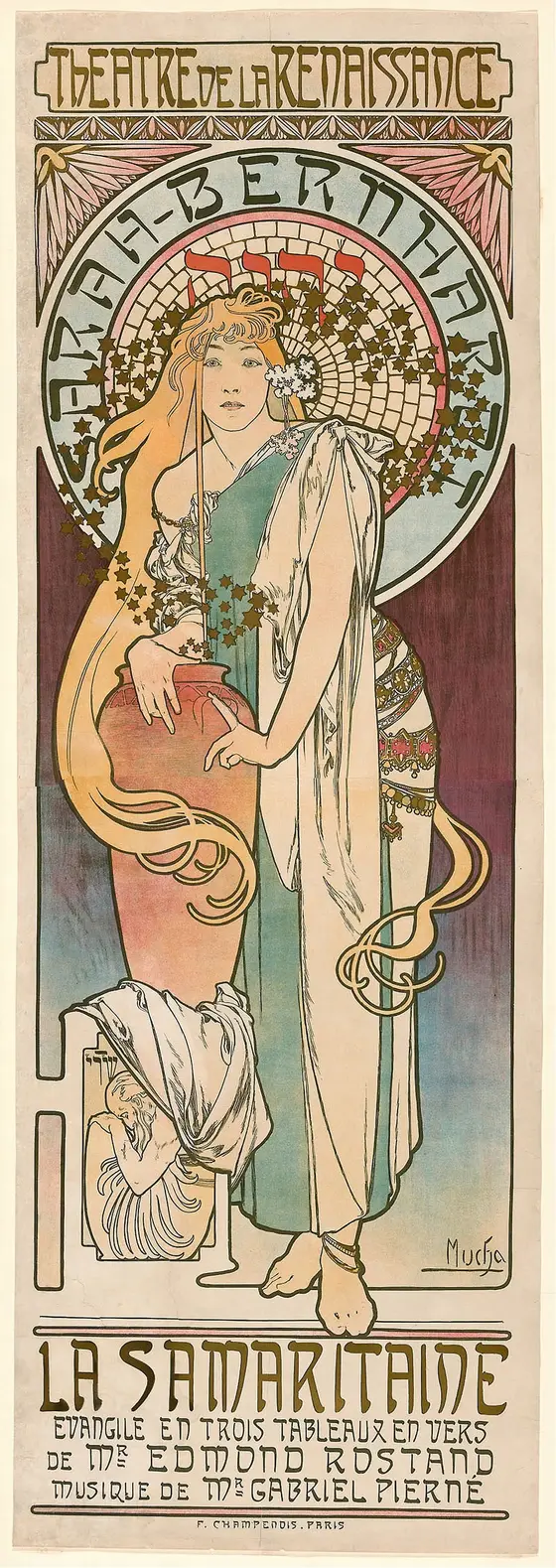
Advertising, theatricality, and Mucha's ability to stop the gaze
Mucha is not only an artist of ornament. He is also a maker of images that can halt the gaze within seconds and construct an aura of exceptionality.
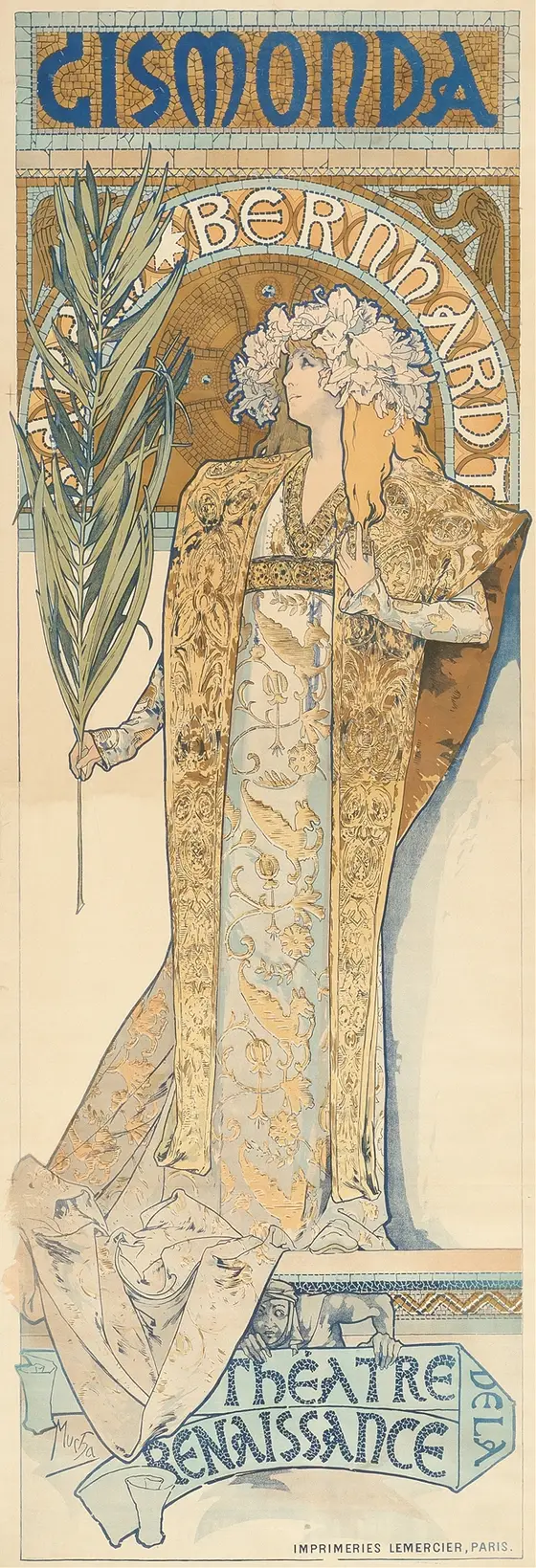
Sarah Bernhardt and the making of a public star image
Mucha's Sarah Bernhardt works matter because they do more than advertise performances. They produce a new kind of public stardom built from scale, poise, and ritualized visibility.
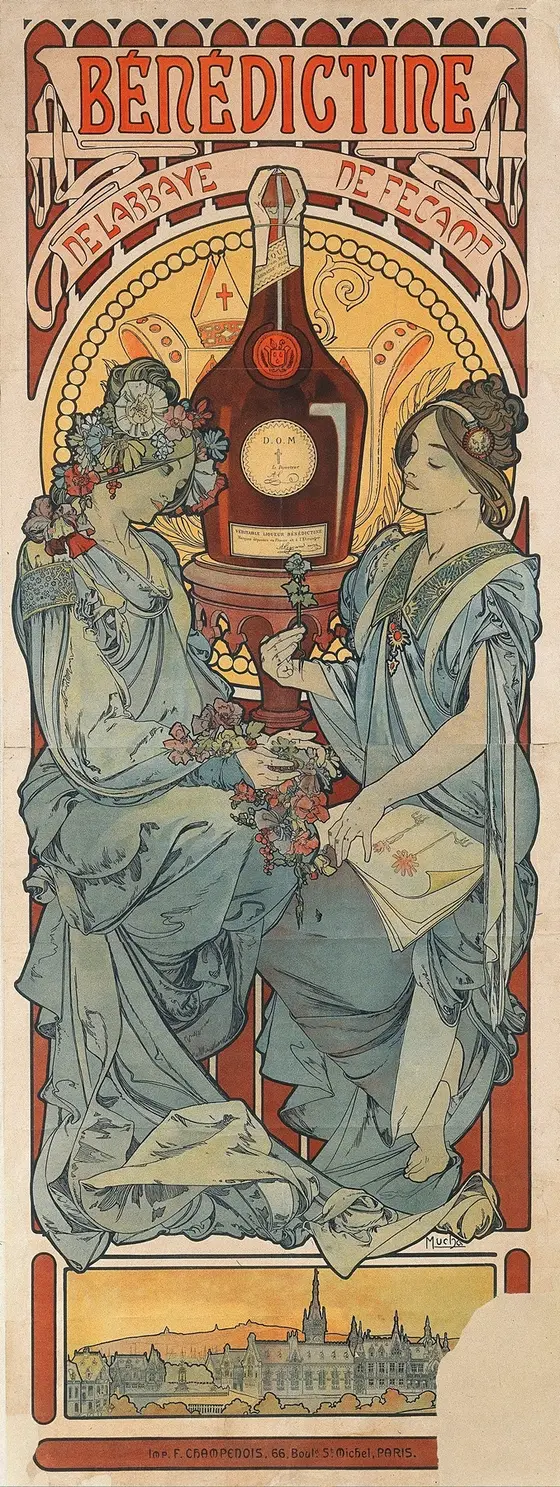
Luxury and public persuasion
Mucha's commercial works matter because they rarely sell through pressure. They persuade by staging luxury, dignity, and the feeling that the product already belongs to a higher cultural register.
Related works
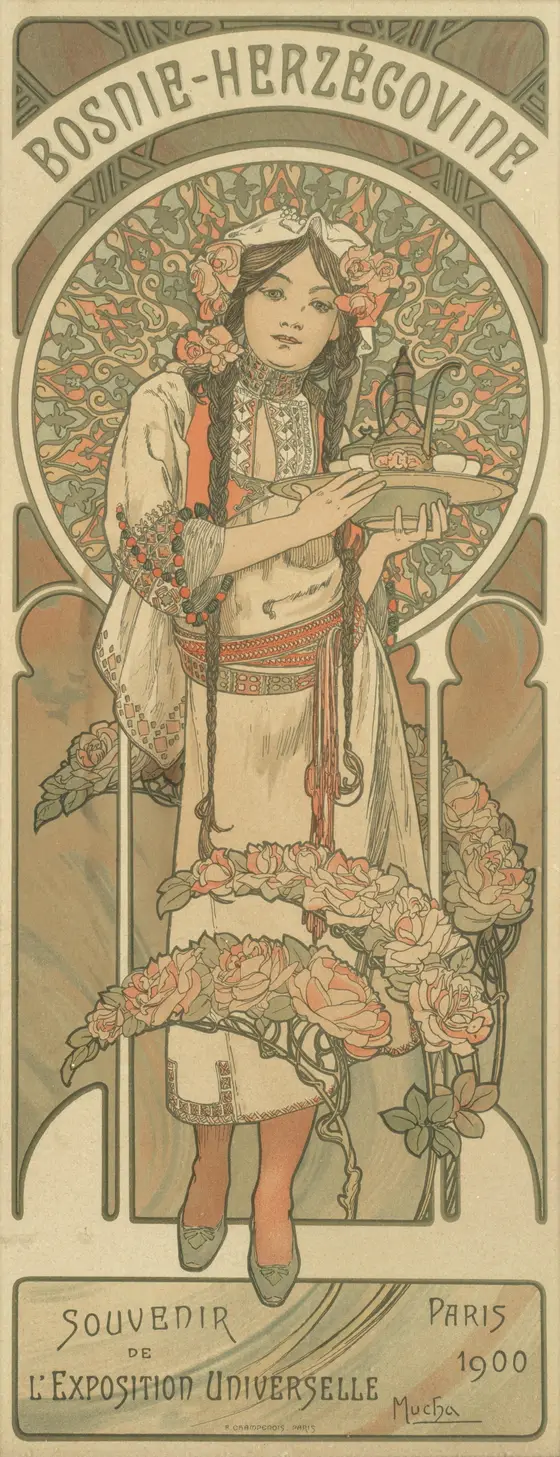
Bosnie-Herzegovine - L’exposition Universelle, Paris
A representational commission sharpened into ceremonial political image-making.
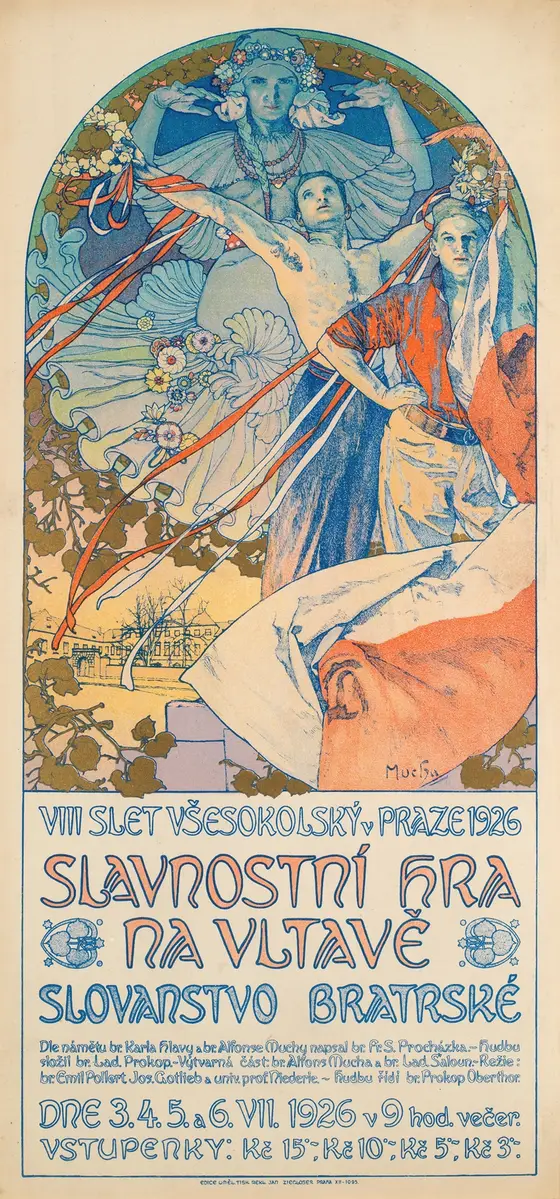
Poster for The Sokol Festival in Prague
A civic festival turned into a confident public emblem of physical culture, citizenship, and ceremonial rhythm.
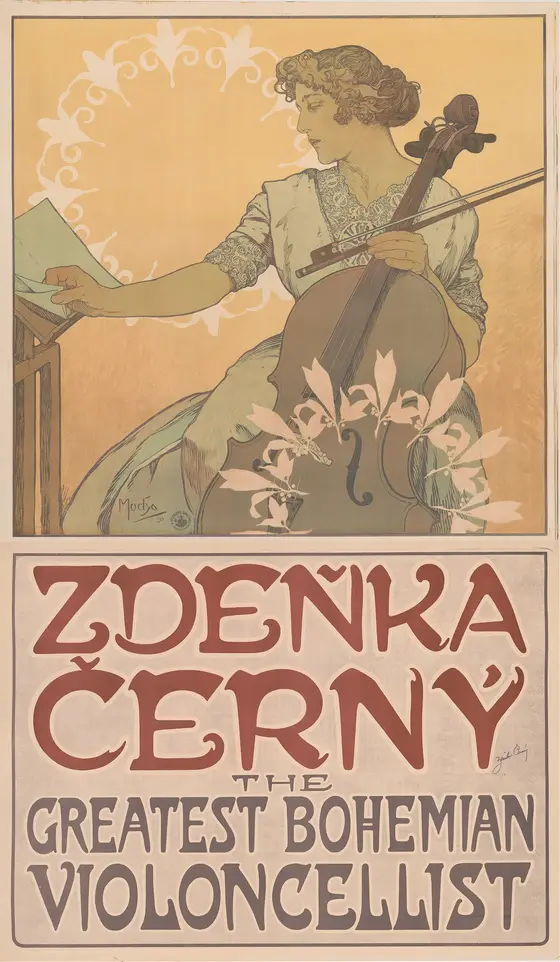
Zdenka Cerny, The Greatest Bohemian Violoncellist
A public musical portrait where the performer is given the dignity and stillness of Mucha's mature style.