
Not private devotion alone
The temptation is to place works like Pater Noster or the Le Pater frontispiece outside the public domain of Mucha’s image-making, as though they belonged to an inward religious register that had little to do with posters, magazines, or cultural publicity. That reading misses what is visually happening. These works still stage attention. They still regulate the gaze through verticality, ornament, and public-facing clarity. The devotional image does not withdraw from public form; it intensifies it differently.
Spirituality as image discipline
Pater Noster is decisive because it treats prayer as a shared visual form rather than a merely private sentiment. The same is true of La Passion d’Edmond Haraucourt, where sacred drama and musical prestige are fused into a ceremonial poster surface. Even the Le Pater frontispiece behaves less like a secluded page than like a condensed public emblem prepared for circulation. In all three cases, spirituality is visualized as disciplined seriousness rather than inward obscurity.
Between book, poster, and ceremony
What ties these works together is not only religion. It is Mucha’s ability to move between media without losing visual authority. Book illustration, cultural poster, and devotional print all become adjacent formats in a larger system of image-making. The image does not need to shout to act publicly. It can slow, elevate, and stabilize.
Public seriousness has a style
That is why these works are so important for the site. They show that public image is not limited to commerce, celebrity, or civic spectacle. There is also a public form of seriousness, and Mucha knows how to construct it. Verticality, symmetry, ornamental restraint, and solemn rhythm become tools for making spiritual content culturally legible.
Why this matters in the archive
This group is important because it prevents the archive from splitting Mucha into separate compartments: decorative poster artist here, spiritual illustrator there. The same artist is working across all of them, shaping not only beauty but the public form of seriousness. That continuity is precisely the kind of argument that only an essay can fully make.
Continue reading
Related essays in the same route
These essays stay within the same curatorial question, but change the medium, artwork, or public situation.
Related works
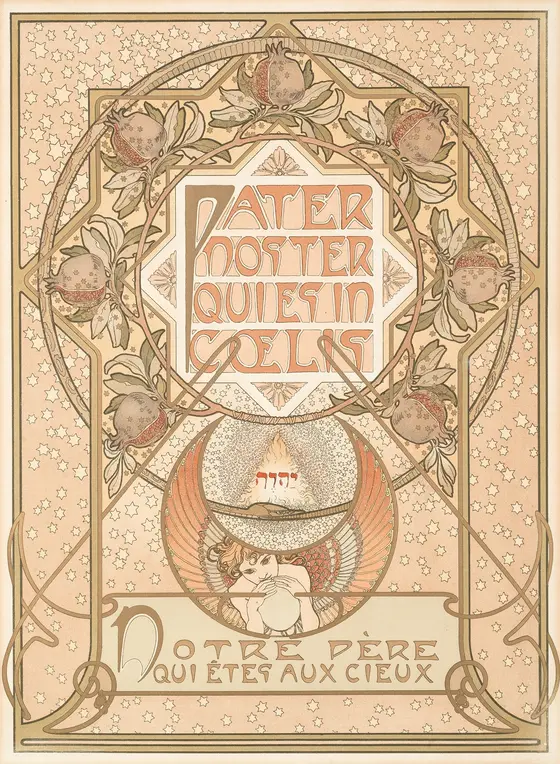
Pater Noster
A spiritual image translated into a public-facing vertical where prayer becomes cultural emblem and ceremonial presence.
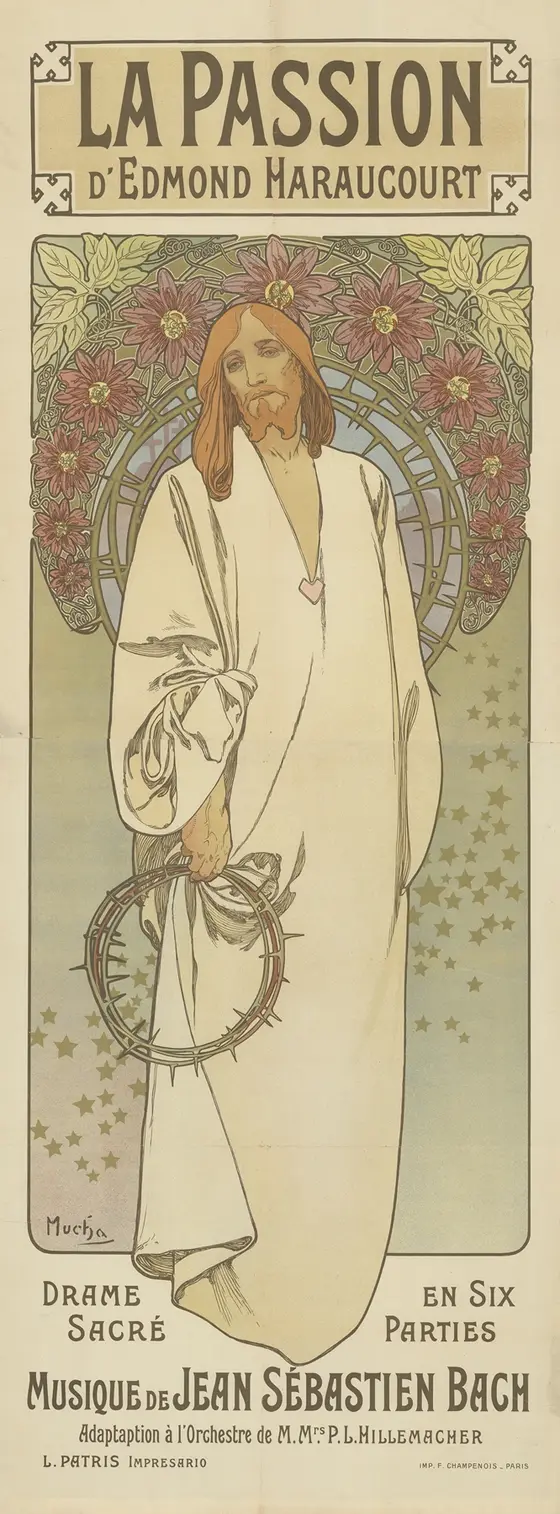
La Passion d'Edmond Haraucourt
A cultural poster in which spiritual drama, musical prestige, and monumental scenography are fused into one vertical statement.
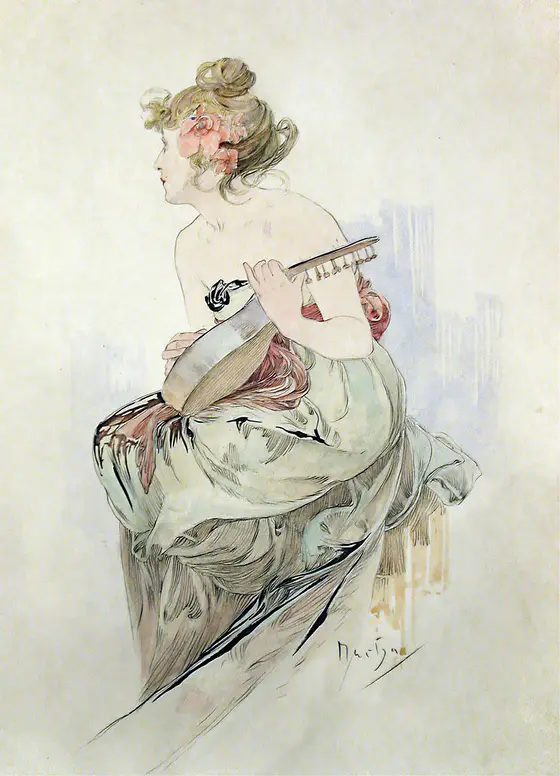
From The Frontispiece Of Le Pater
A frontispiece in which book culture and spiritual material are condensed into a focused vertical between illustration and public image.