Series and decorative structure
The Seasons and serial rhythm
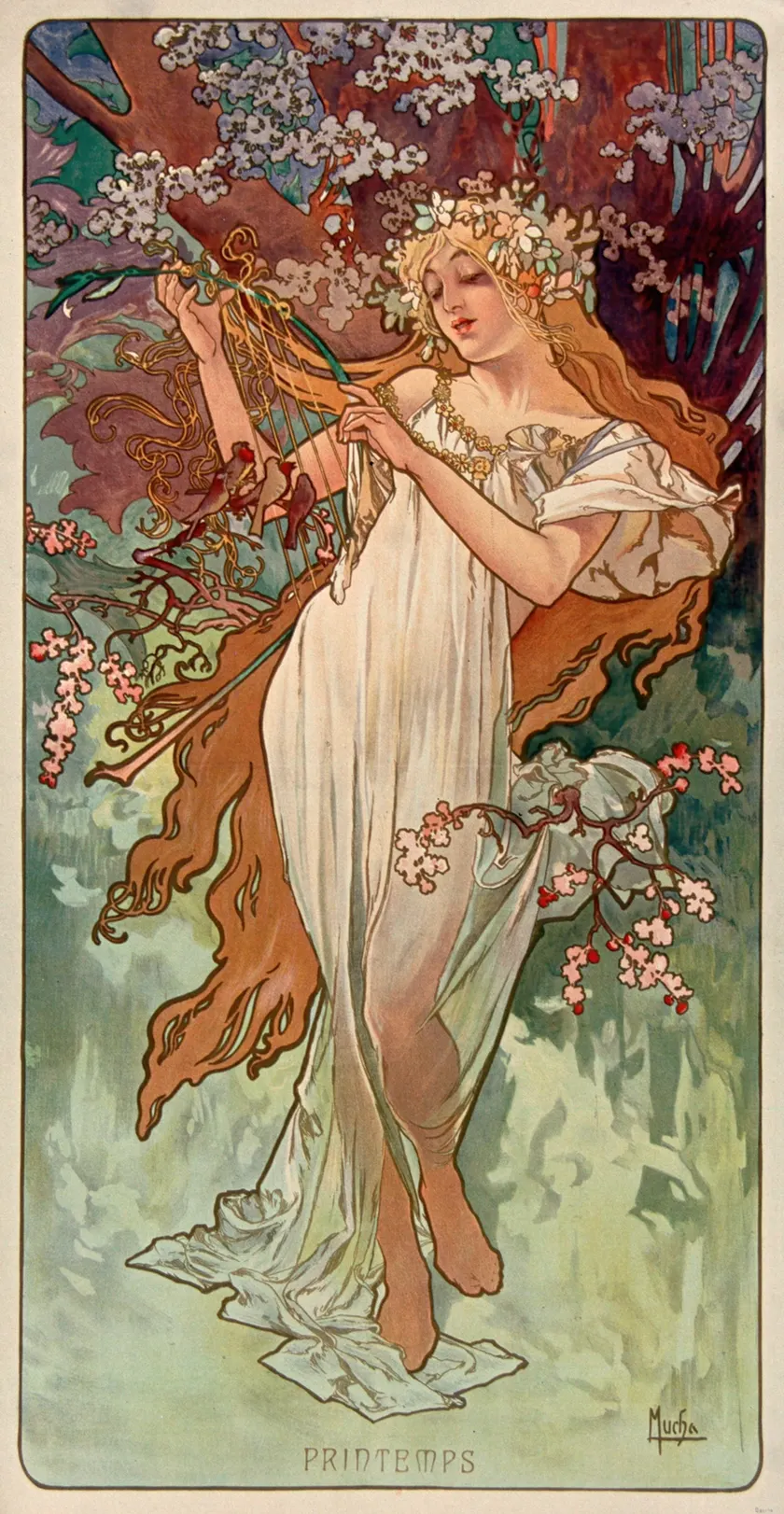
The Seasons matter because they show Mucha thinking in sequences. Each panel works alone, but the deeper effect comes from rhythm, variation, and return across the set.
More than four decorative panels
The Seasons are often reduced to a familiar Art Nouveau motif. But their importance lies in serial thinking. The four sheets are not interchangeable ornaments. They are variations arranged as a cycle. The meaning of each panel depends partly on what the neighboring panels are doing.
Mood through sequence
Spring, summer, autumn, and winter distribute climate, posture, vegetation, and color temperature across a patterned continuum. Mucha is not only depicting nature. He is organizing time into a visual rhythm. The eye learns difference through repetition: a similar format returns, but the emotional register, vegetation, gesture, and density keep shifting.
Continue reading
More in this reading route
Symbolism and composition
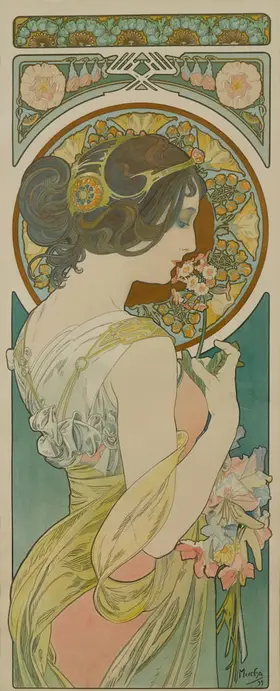
The female figure, ornament, and the slow reading of Mucha's image
The longer we look at Mucha, the clearer it becomes that ornament is not background. It is an active part of expression, atmosphere, and meaning.
Ornament and serial pairing
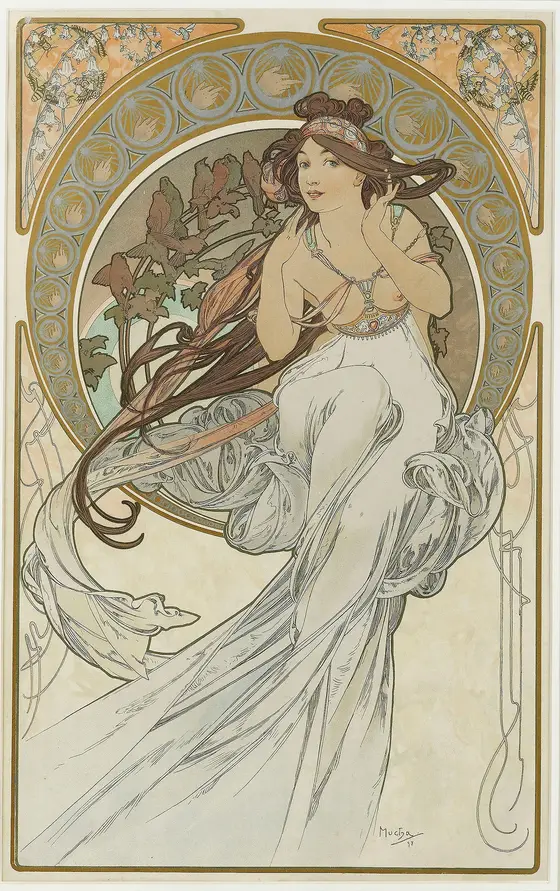
Decorative constellations and paired panels
Mucha's paired decorative panels matter because they show ornament working structurally, not as surface excess. Meaning emerges through echo, counterpart, and visual correspondence.
Related works
 5 explained symbols
Les Saisons - printemps
Spring staged as a gentle transition of bloom, fresh air, and awakening lightness.
 4 explained symbols
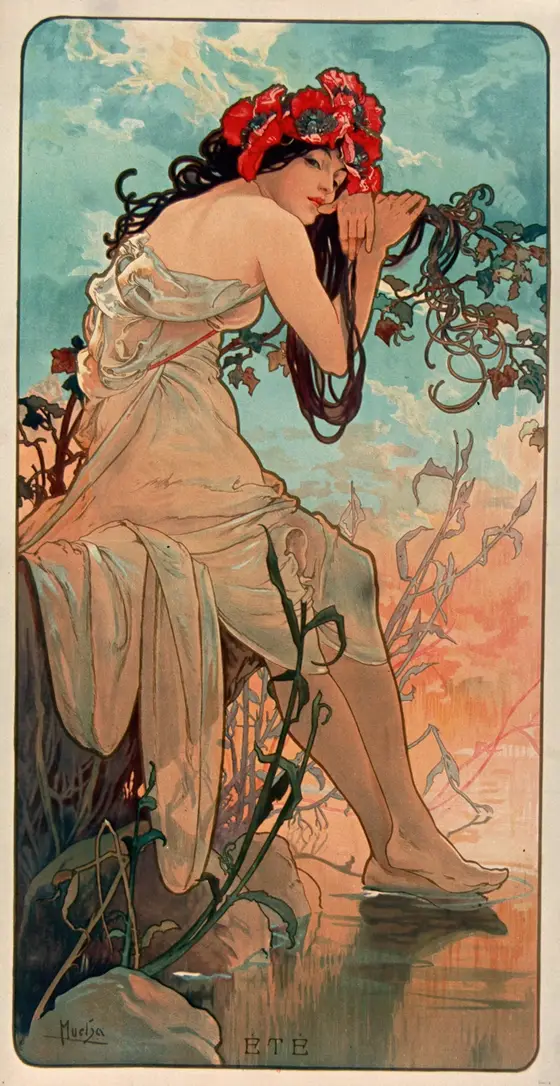
Les Saisons - ete
Summer, where warmth, water, and calm sensuality cohere into one vertical mood.
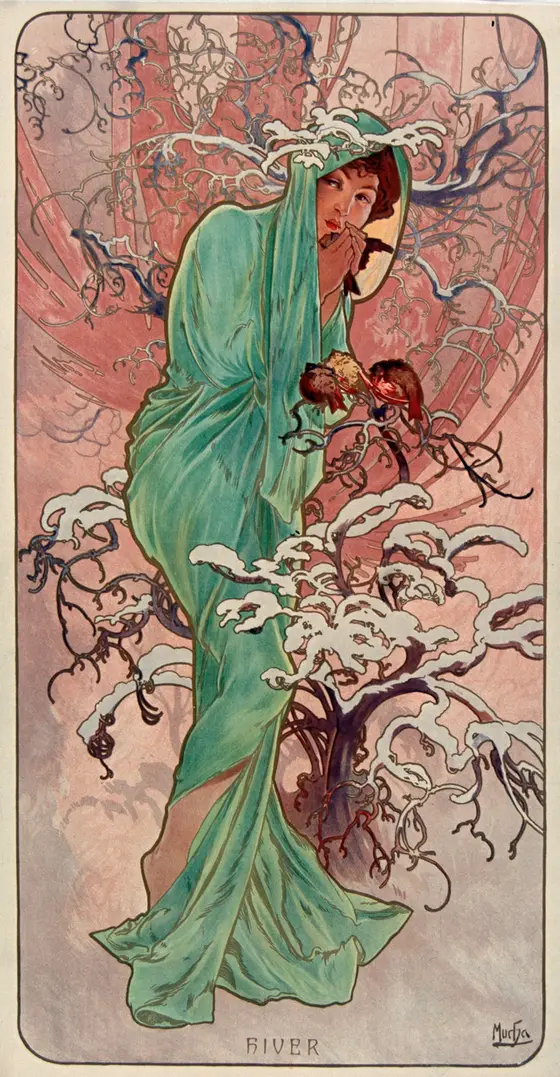 4 explained symbols
Les Saisons - hiver
Winter conceived as the cold, tightened, yet richly ornamental pole of the series.