Theatre and celebrity image
Medee: the sun, the veil and the fallen child
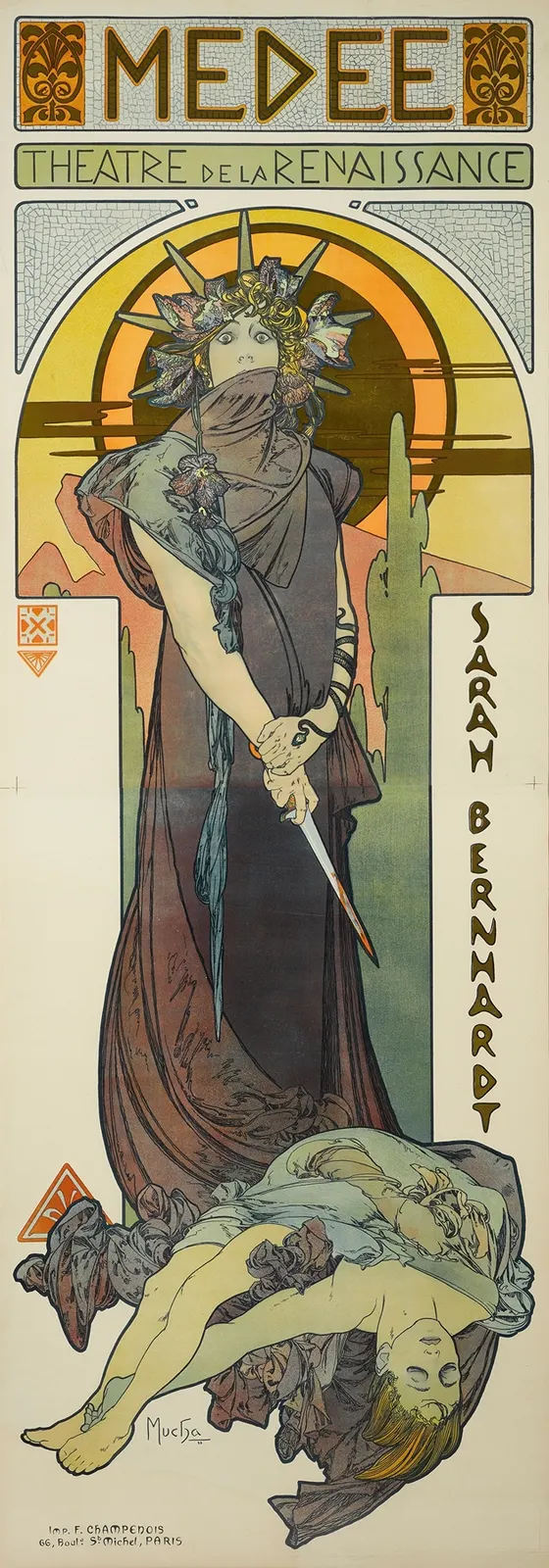
Mucha's 1898 poster for Mendès's Médée shows Sarah Bernhardt veiled before a sun disc, with a bloodied dagger and a fallen child below. This essay reads its bands, lettering and detail.
A tragedy on a hoarding
In the autumn of 1898 Sarah Bernhardt appeared as Medea in Médée, a play by Catulle Mendès. The Victoria and Albert Museum’s record gives its first production at the Théâtre de la Renaissance in Paris as 28 October 1898, and describes the poster as a colour lithograph printed on two joined sheets. Mucha’s design for the production is catalogued here as Medee, a sheet of 1898. The Museum of Modern Art lists a copy of about 206 by 76 centimetres, which is the tall, narrow column Mucha was using for Bernhardt in these years.
The subject was a hard one to sell. Medea is the woman who, abandoned by Jason, takes revenge by killing her own children. A poster has seconds to work on a passer-by, and this one does not soften the story: the dagger and the child are both in the picture. What the poster has to decide is how much to show, and how to show it without losing the order and legibility that Mucha’s posters are known for.
Related works
 5 explained symbols
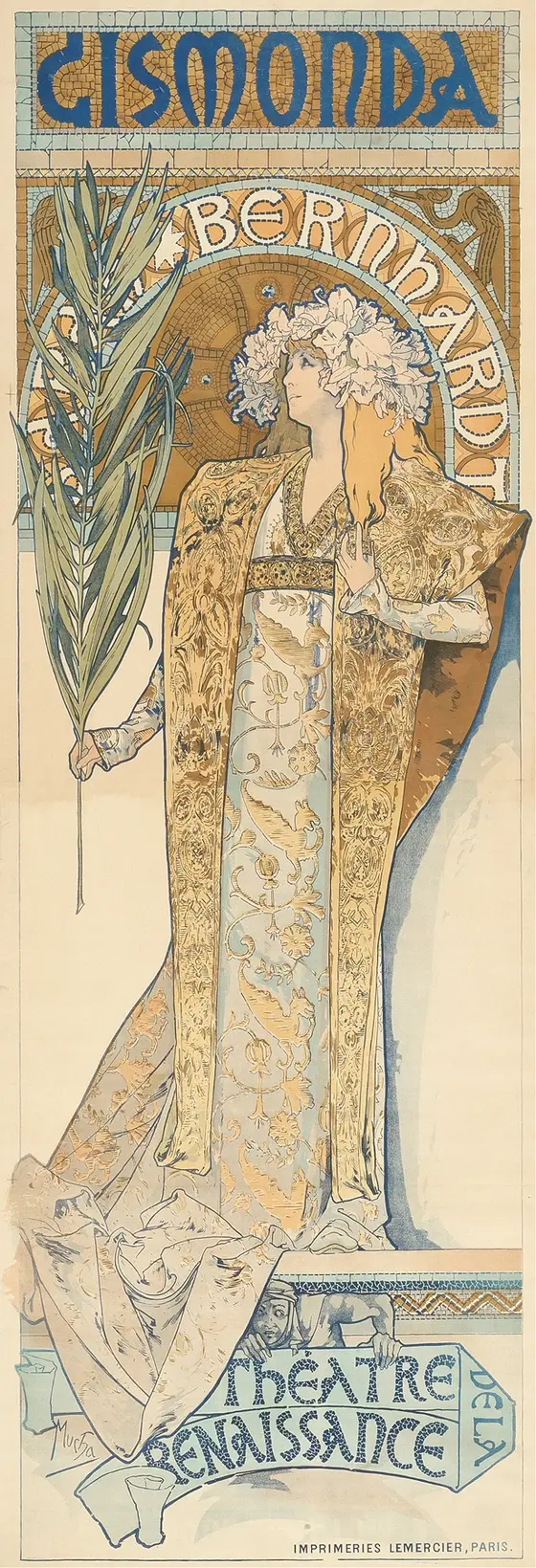
Gismonda
The Bernhardt breakthrough poster that announced Mucha to Paris.
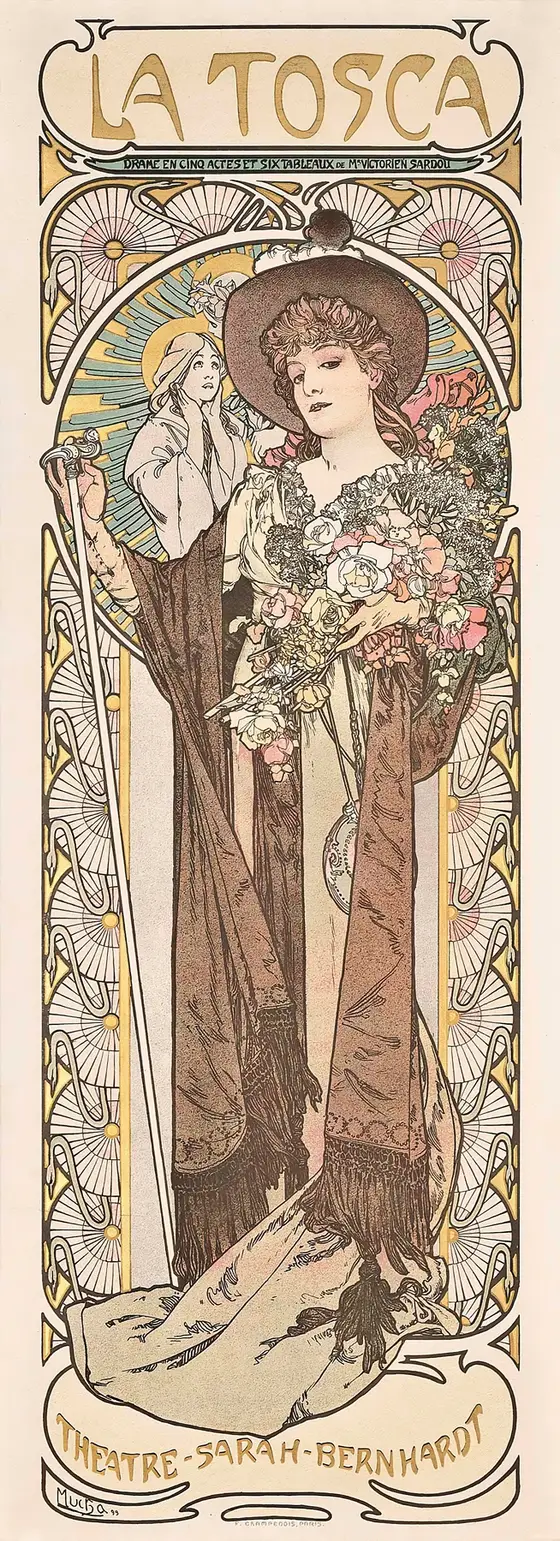
LA TOSCA
Operatic drama compressed into a tall image of ritual tension.
 5 explained symbols
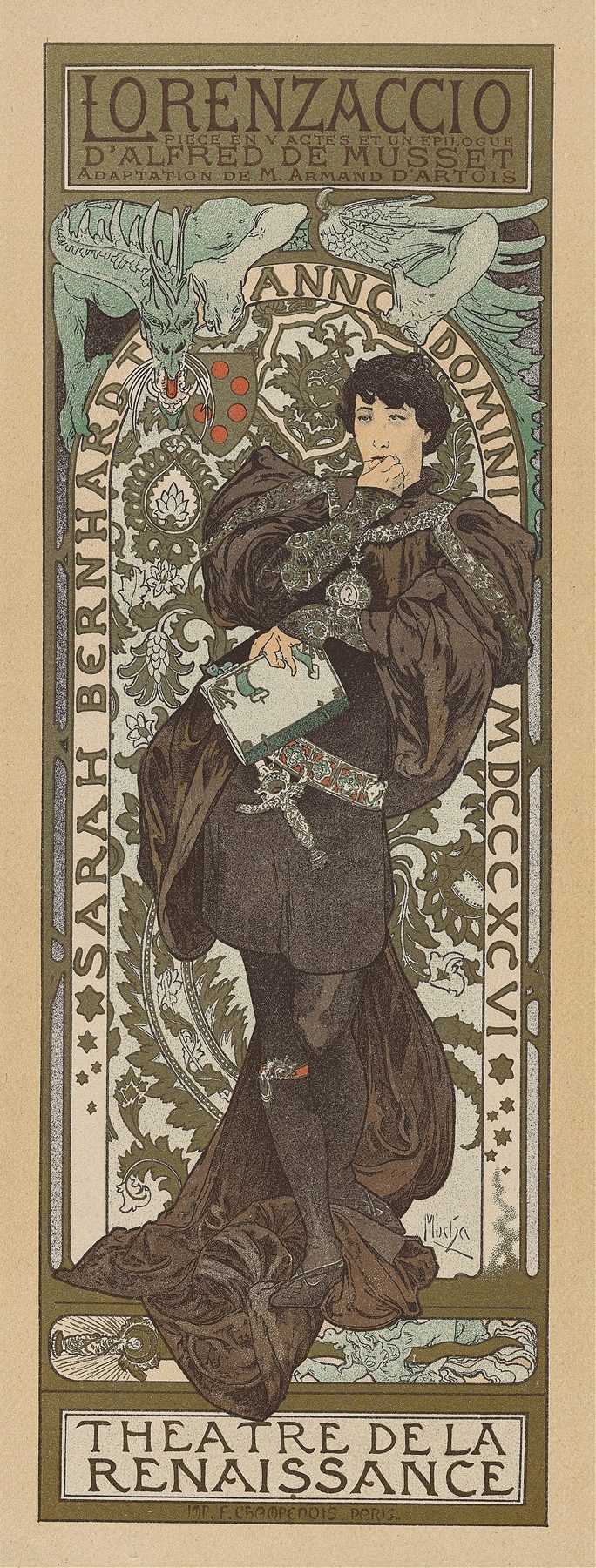
Lorenzaccio
Bernhardt in a dark doublet before a damask arch and a green dragon.
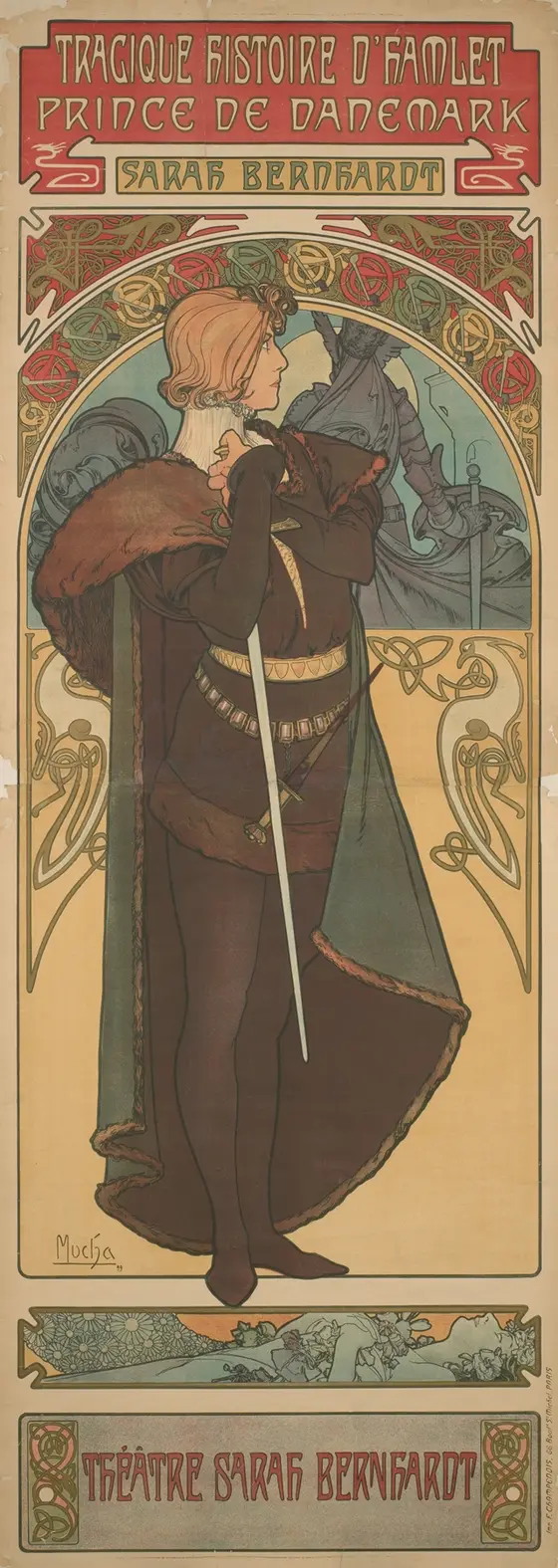
Sarah Bernhardt as Hamlet
Bernhardt as Hamlet, where theatrical identity becomes a monumental emblem of role and presence.