Explore the work of Alphonse Mucha down to the last detail.
Why each work was made, how it was printed, what hides in every flower and fold — with deep-zoom close enough to read the litho grain.
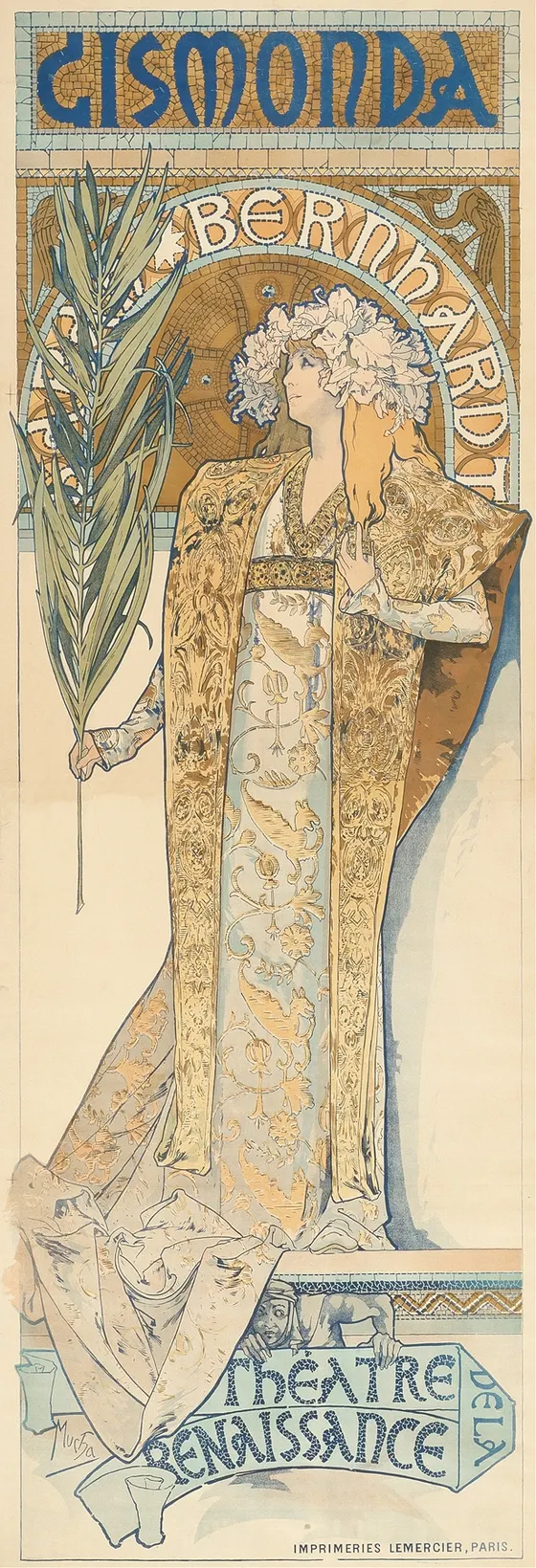 Open Gismonda →
Who was Alphonse Mucha
From a Moravian town to the Paris boulevards and back
Alphonse Mucha was born in 1860 in Ivančice, Moravia. By way of theatre scenery in Vienna and study in Munich he reached Paris in 1887, where he spent ten years as an illustrator before a single poster made him the most sought-after designer in the city.
That poster was Gismonda for Sarah Bernhardt (1894). The Seasons, advertisements, calendars and exhibition commissions followed, turning his style into an international language of Art Nouveau. In 1910 he returned home and gave the rest of his life to the Slav Epic and to the public image of a new state.
- 1860Born in Ivančice
- 1894Gismonda, the breakthrough
- 1910Return to Bohemia
- 1939Dies in Prague
New on the site
- New in the gallery: The Ruby (Le Rubis)
- New in the gallery: Étoile Polaire
- New essay: Lorenzaccio: a hesitant Bernhardt before a green dragon
- New symbols explained in Les Saisons - hiver.
- New symbols explained in Les Saisons - printemps.
- New in the gallery: Maude Adams as Joan of Arc
- New in the gallery: Leslie Carter
- New in the gallery: Ivy
- New in the gallery: Chocolat Idéal
- New essay: La Dame aux Camélias: a white figure under a sky of stars
- New symbols explained in Les Saisons - automne.
- New symbols explained in Les Saisons - ete.
- New in the gallery: La Trappistine
- New in the gallery: Cycles Perfecta
- New symbols explained in Lorenzaccio.
- New symbols explained in La Dame aux Camélias.
- Introducing the artist: Gustav Klimt
- New in the gallery: Ilsée, princesse de Tripoli
- New in the gallery: Rêverie du soir
- New essay: Job: smoke, hair and mosaic in a cigarette-paper poster
Curated paths
Guided routes through the collection — not just a grid.
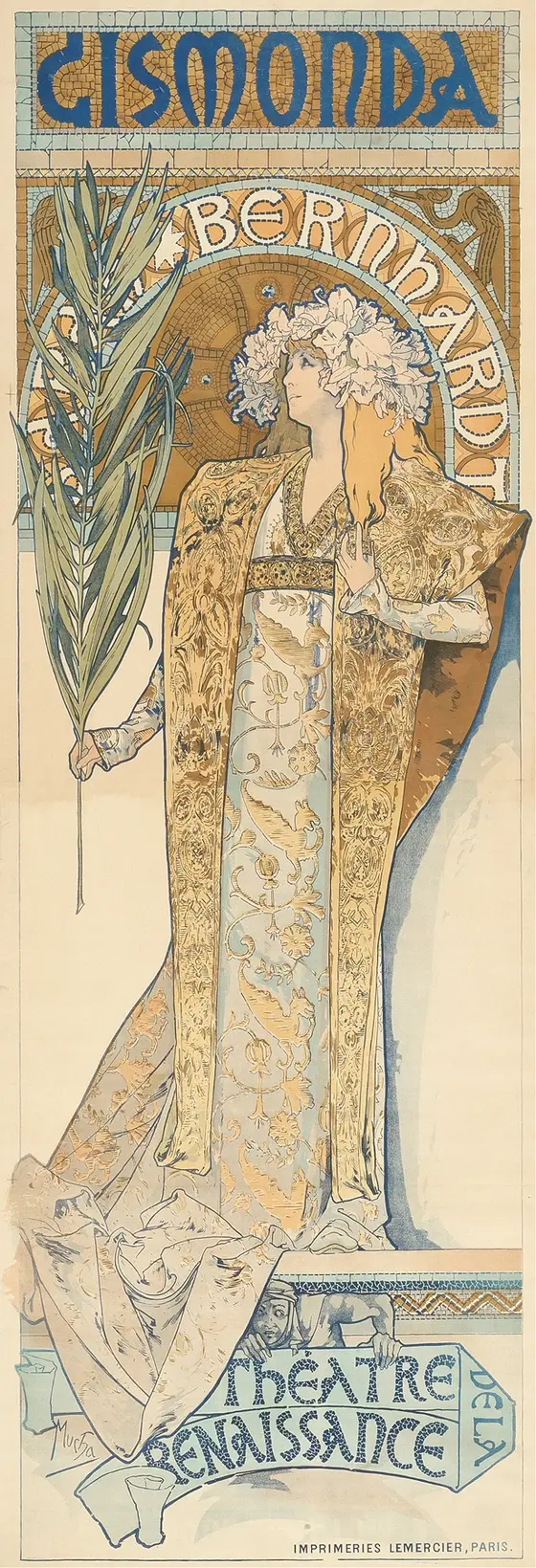
Towering posters in which Mucha turned the actress into an almost liturgical public image.
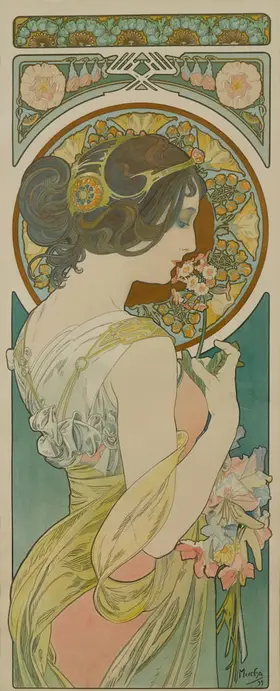
Panels and allegories in which ornament forms almost cosmic systems of mood, pairing, and visual echo.

One of Mucha's clearest serial statements, where changes in nature become changes in mood, palette, and feminine presence.
Selected works
Hover to zoom · click to explore 5 explained symbols Gismonda
1894-1895 · Theatre poster, color lithograph
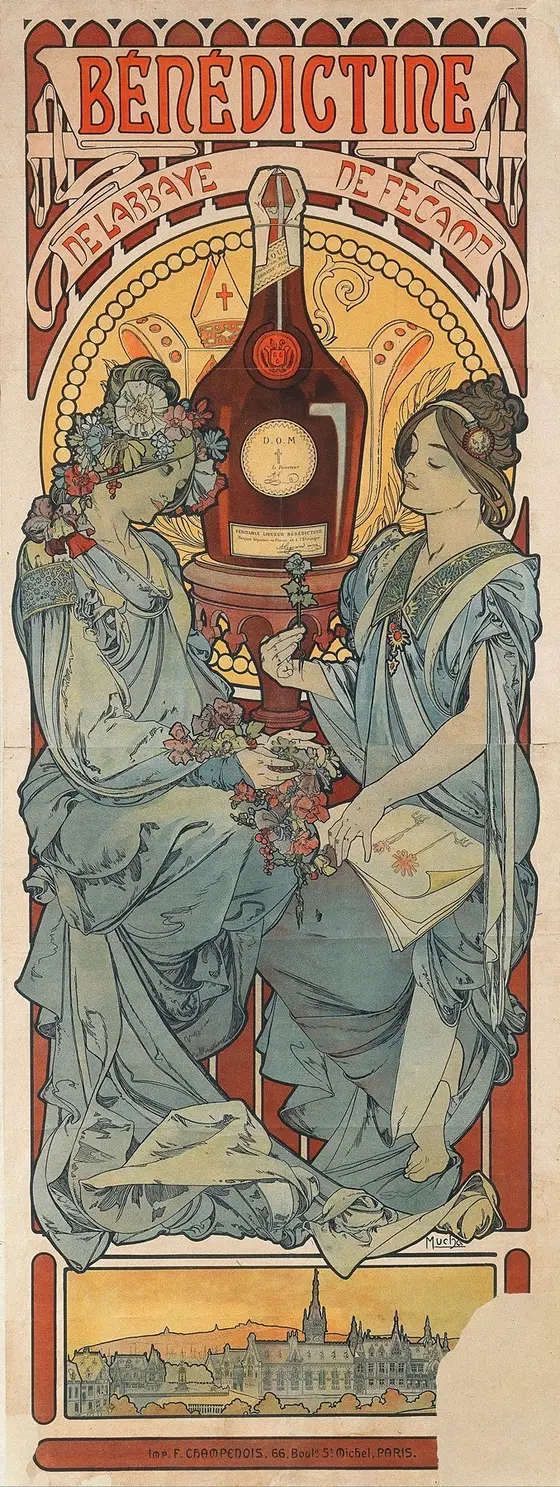
Bénédictine
1896 · Advertising poster, color lithograph
 5 explained symbols
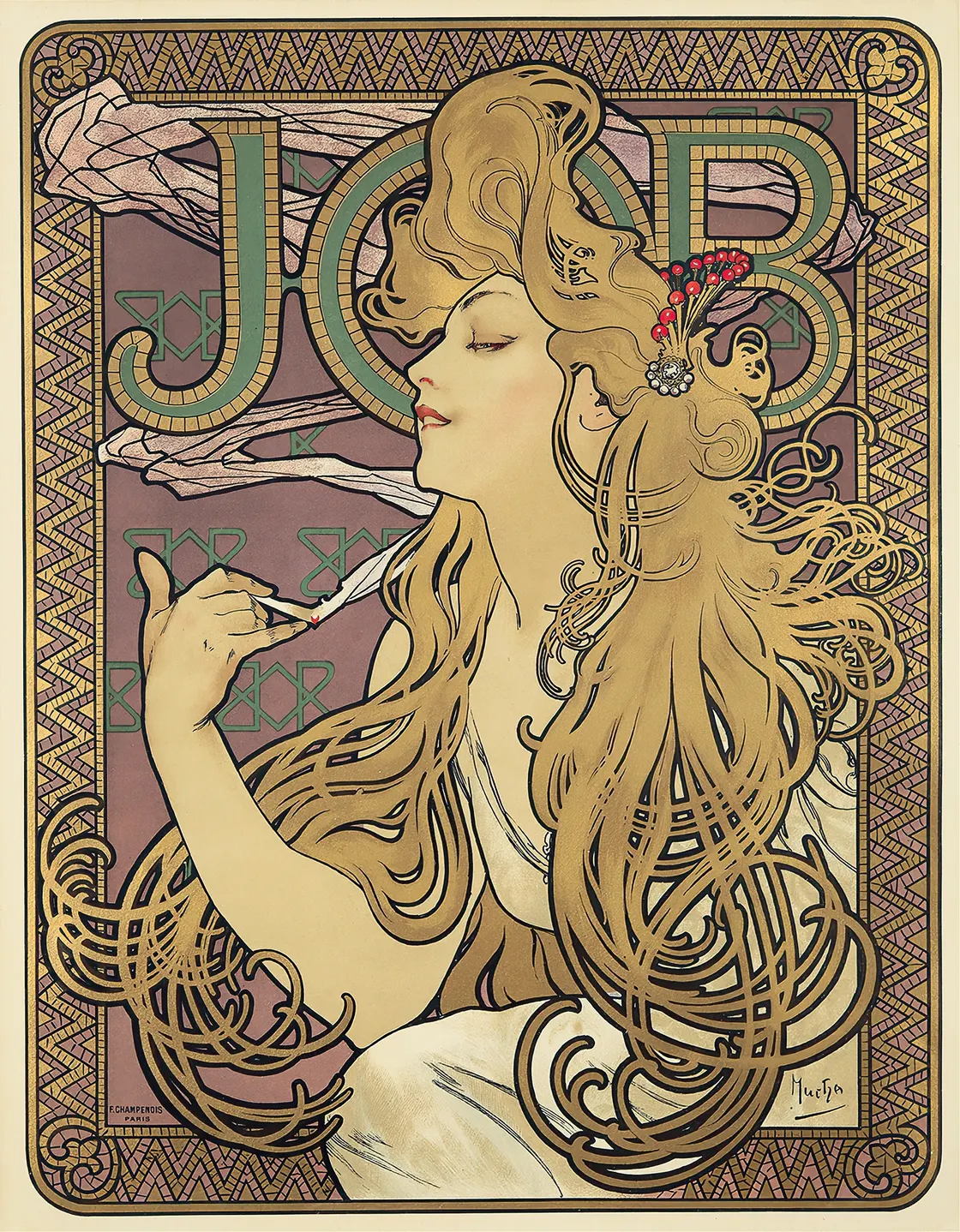
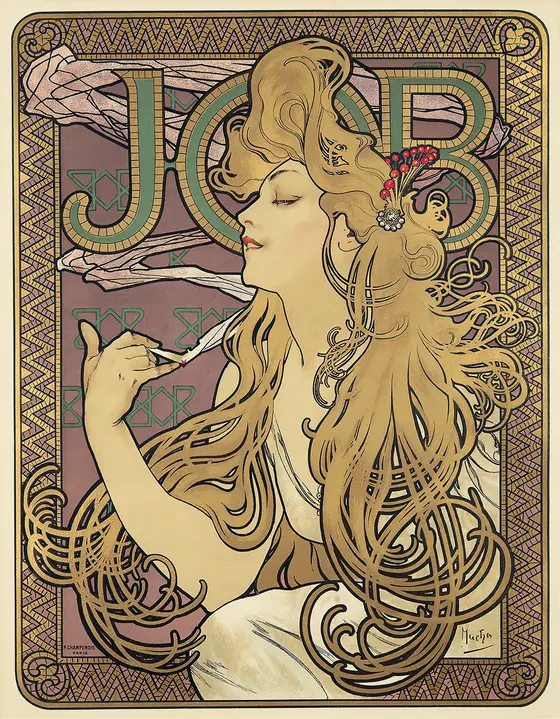
Job
1896 · Advertising poster, color lithograph
 5 explained symbols
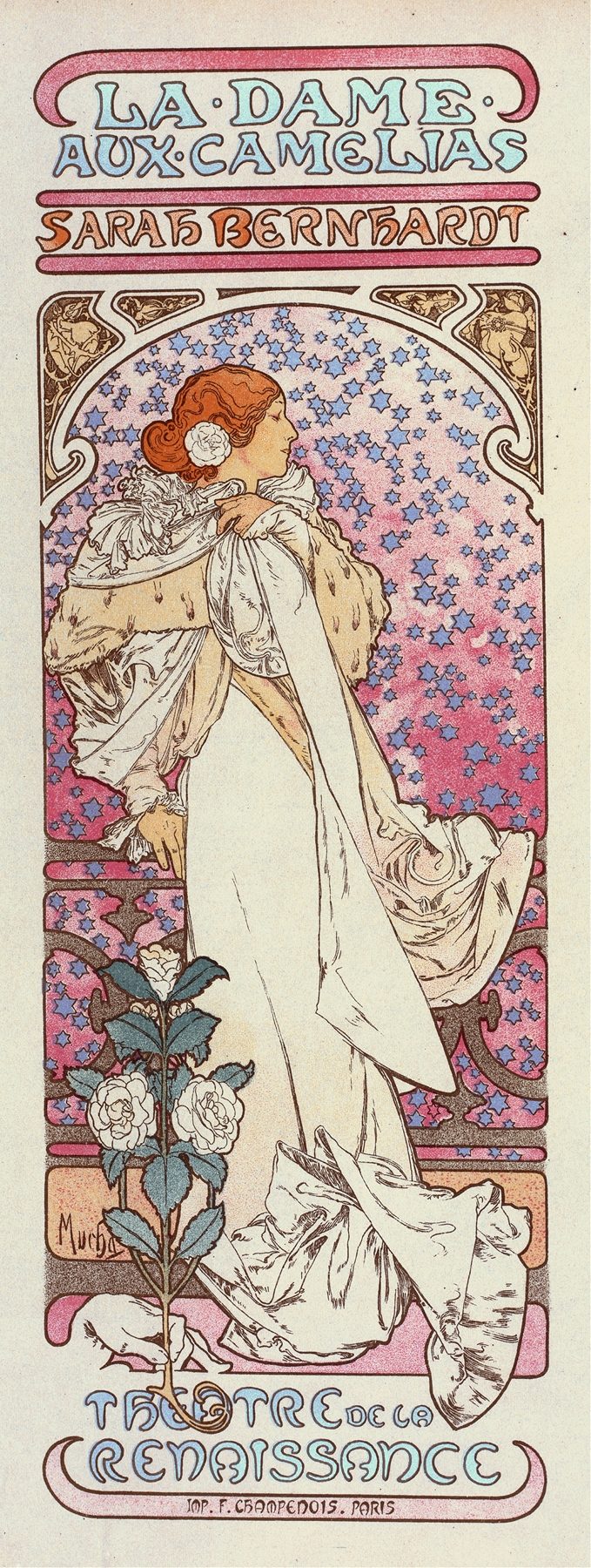
La Dame aux Camélias
1896 · Theatre poster, colour lithograph
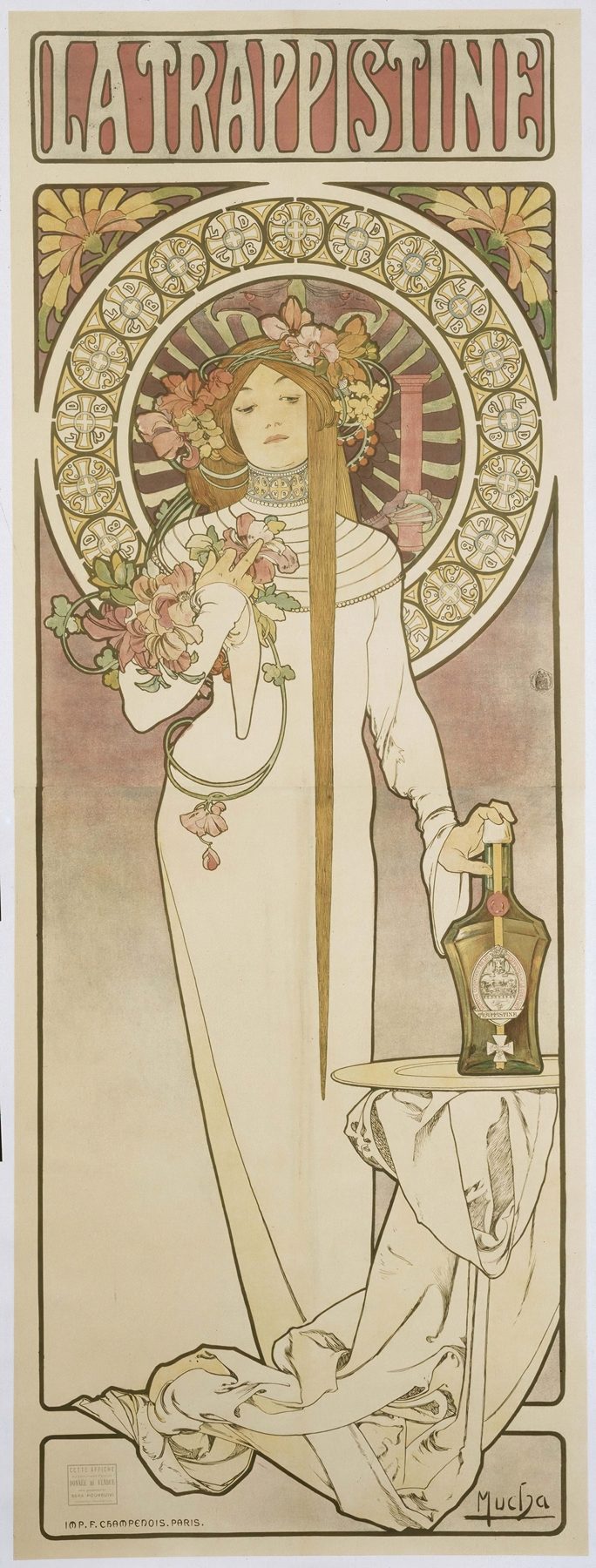
La Trappistine
1896 · Colour lithograph
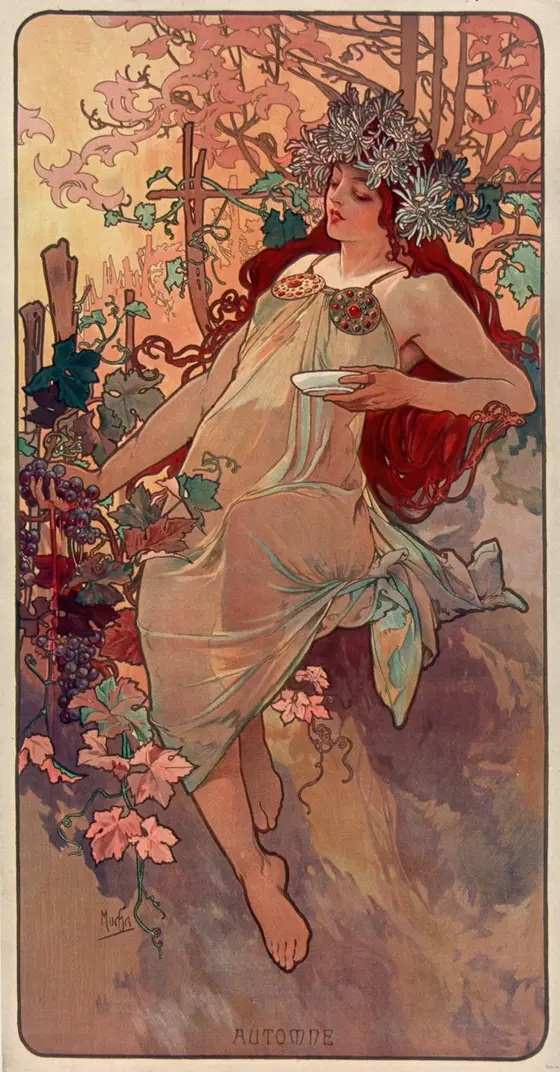 4 explained symbols
Les Saisons - automne
1896 · Decorative panel, color lithograph
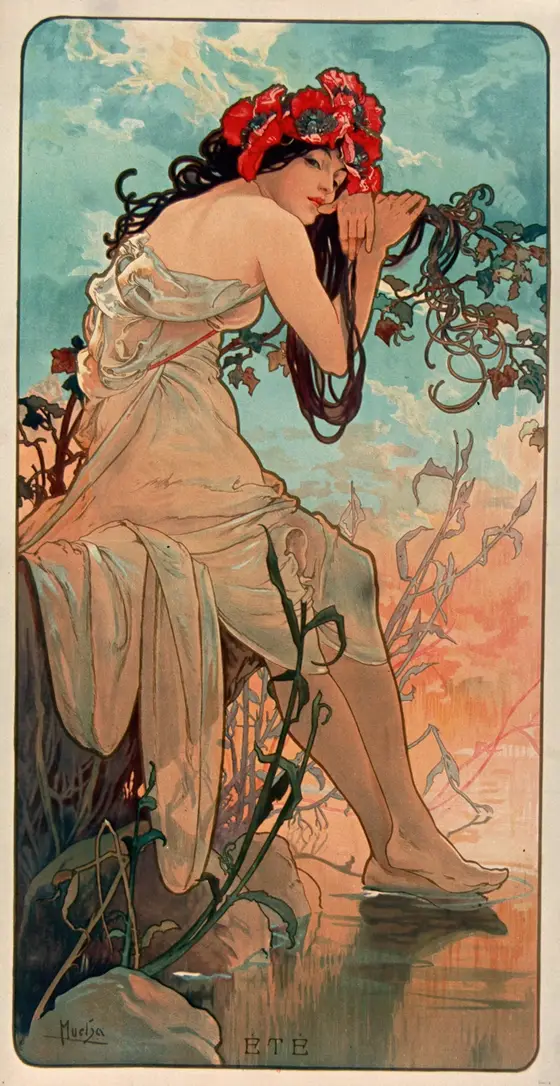 4 explained symbols
Les Saisons - ete
1896 · Decorative panel, color lithograph
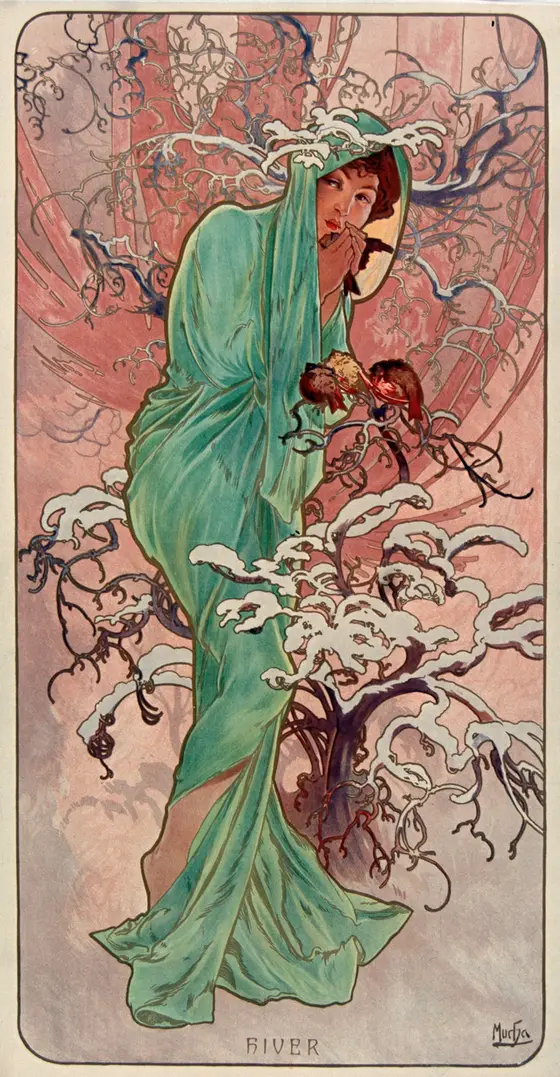 4 explained symbols
Les Saisons - hiver
1896 · Decorative panel, color lithograph
5 explained symbols Les Saisons - printemps
1896 · Decorative panel, color lithograph
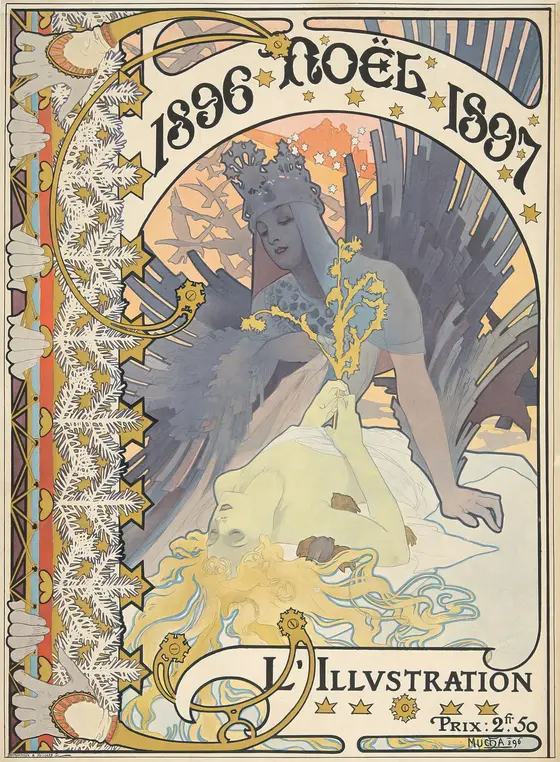
L’Illustration, Noël, 1896
1896 · Magazine poster, color lithograph
Latest essays
Open essays →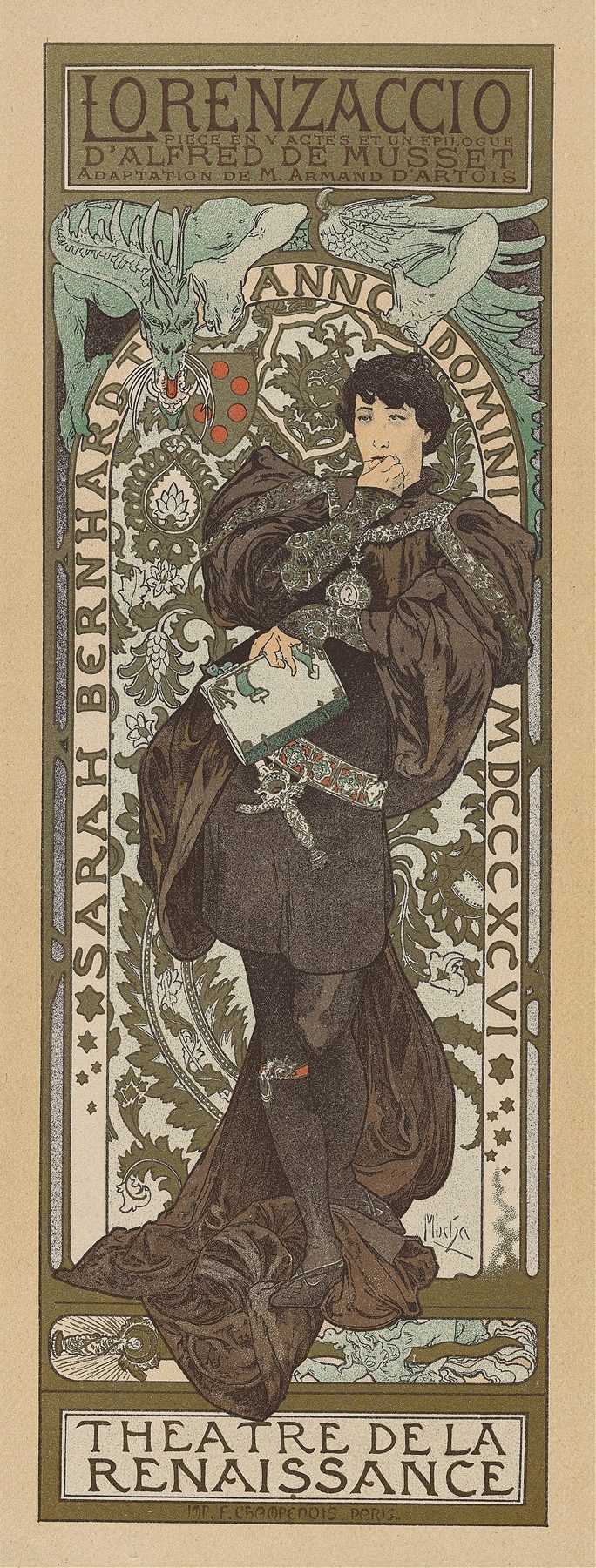
Theatre and celebrity image
Lorenzaccio: a hesitant Bernhardt before a green dragon
Mucha's 1896 poster for Musset's Lorenzaccio dresses Sarah Bernhardt in dark Renaissance cloth and sets her under a damask arch and a green dragon. This essay reads its palette, ornament and detail.
Theatre and celebrity image
La Dame aux Camélias: a white figure under a sky of stars
Mucha's 1896 poster for Sarah Bernhardt shows no scene from the play: a single profile, a white camellia and a field of blue stars carry the whole story. This essay reads it line by line.
Advertising and prestige
Job: smoke, hair and mosaic in a cigarette-paper poster
Mucha's Job poster turns a trademark, a cigarette and a cascade of hair into one ornamental system. This essay follows its lettering, smoke and gold line in deep zoom.
Keep the lights on the gallery
An independent, ad-free project. Members read every essay, unlock deeper notes on the works and the choice of visual system, and fund new writing.
- The full gallery & deep zoom
- Curated paths and essays
- Symbols explained in the works
- Monthly newsletter
- Everything in Visitor
- Members' deeper notes on selected works
- Choice of the site's visual system
- You fund new essays and research
- Everything in Patron
- More than twice the support
- Helps add new works and essays faster