Ornament as relation
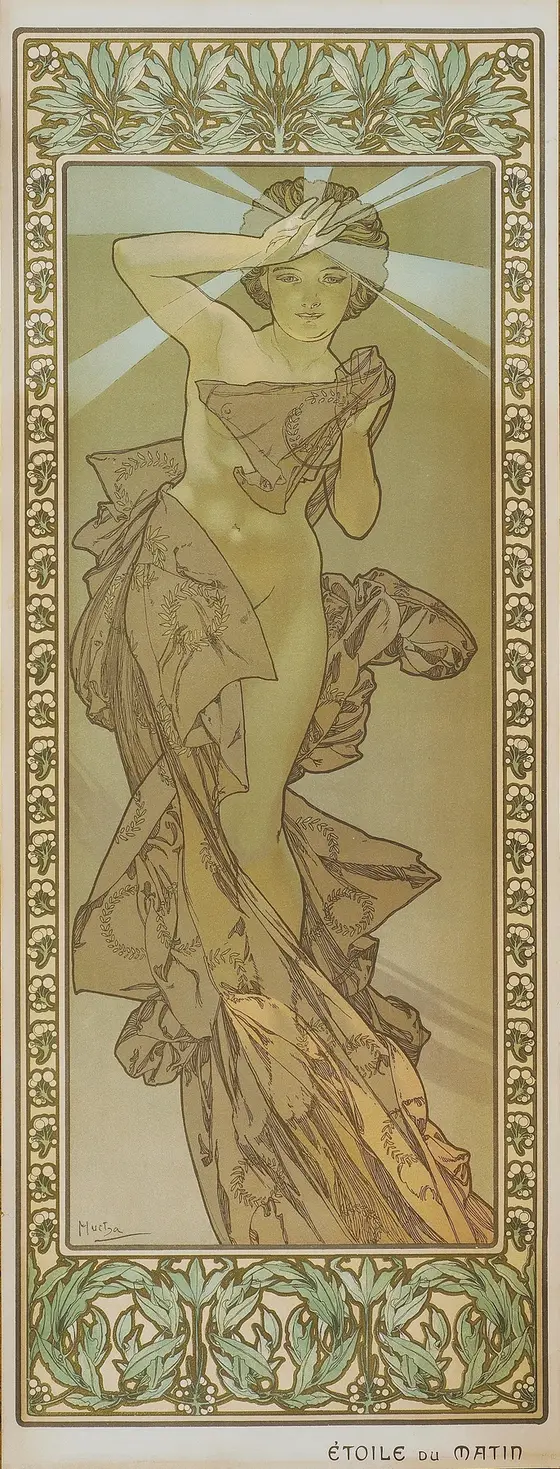
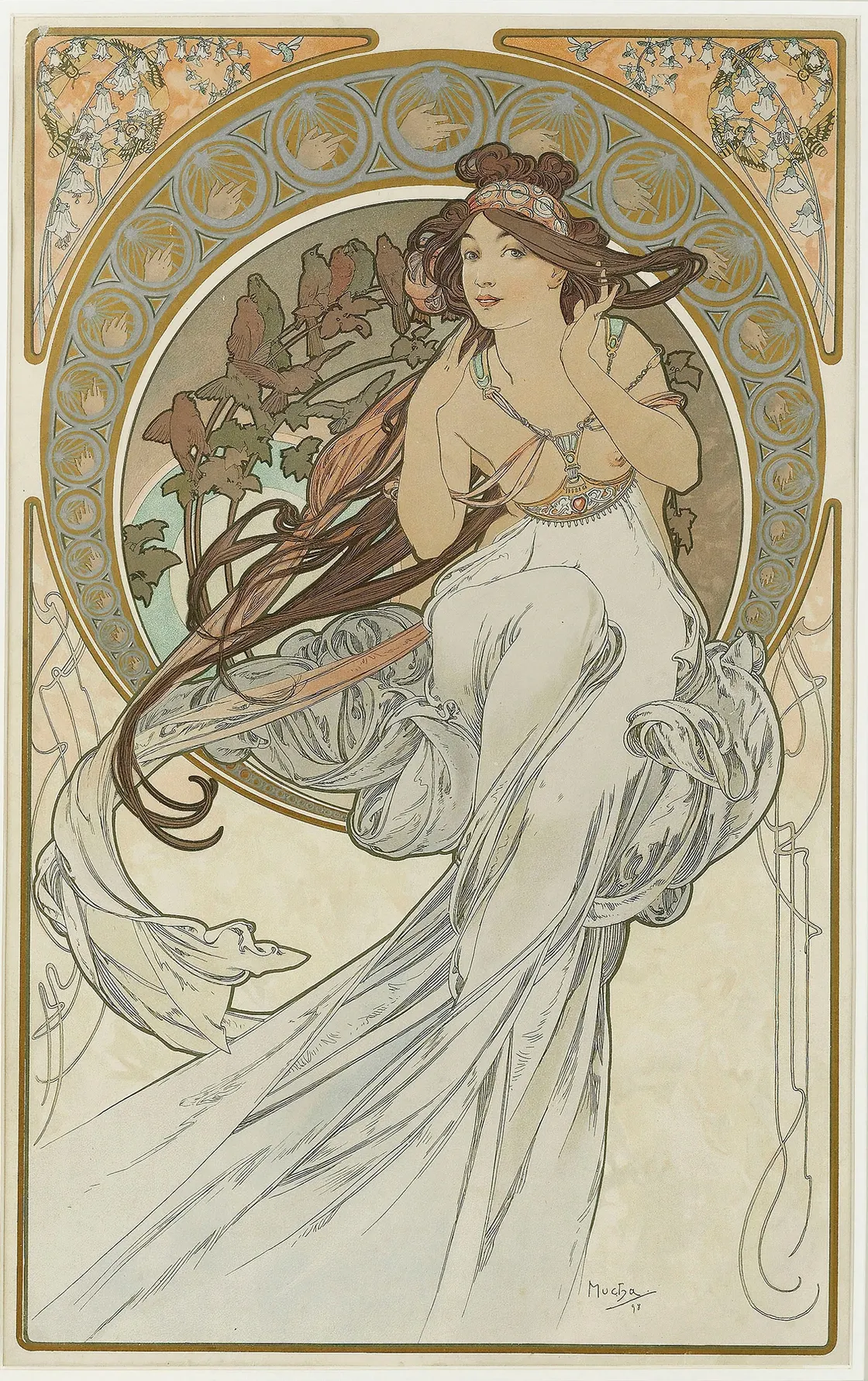
In paired panels, ornament is never only a frame. It binds one image to another, creating a field of comparison. The viewer starts reading correspondences, contrasts, and rhythm across multiple sheets. The meaning of a line, color accent, or gesture grows stronger when it echoes elsewhere in the set.
The panel as system
The Arts and the star panels are valuable because they show Mucha composing in relational units. One sheet gains force from the presence of its partner. Decorative language becomes a system rather than a single flourish. The panel format is ideal for this because it allows resemblance and difference to stay visible at once.
Counterpart is part of the image
That point matters because the paired work cannot be reduced to two isolated objects hung next to each other. Counterpart belongs to the image from the start. Evening gains force beside morning; one art form becomes clearer beside another. Mucha makes relation itself decorative. The viewer does not just consume a picture. The viewer compares, anticipates, and balances.
Why this changes the reading
Once ornament is understood this way, Mucha appears less as a maker of pretty surfaces and more as an architect of patterned visual thought. The decorative panel becomes a curatorial structure in itself.
Why this belongs in essay form
An object page can describe one panel well. The essay has to recover the logic of pairing and show how meaning travels between sheets. Without that relational reading, decorative panels are too easily mistaken for elegant but isolated images.
Continue reading
Related essays in the same route
These essays stay within the same curatorial question, but change the medium, artwork, or public situation.

The female figure, ornament, and the slow reading of Mucha's image
The longer we look at Mucha, the clearer it becomes that ornament is not background. It is an active part of expression, atmosphere, and meaning.

The Seasons and serial rhythm
The Seasons matter because they show Mucha thinking in sequences. Each panel works alone, but the deeper effect comes from rhythm, variation, and return across the set.