Theatre and celebrity image
Sarah Bernhardt and the making of a public star image
Mucha's Sarah Bernhardt works matter because they do more than advertise performances. They produce a new kind of public stardom built from scale, poise, and ritualized visibility.
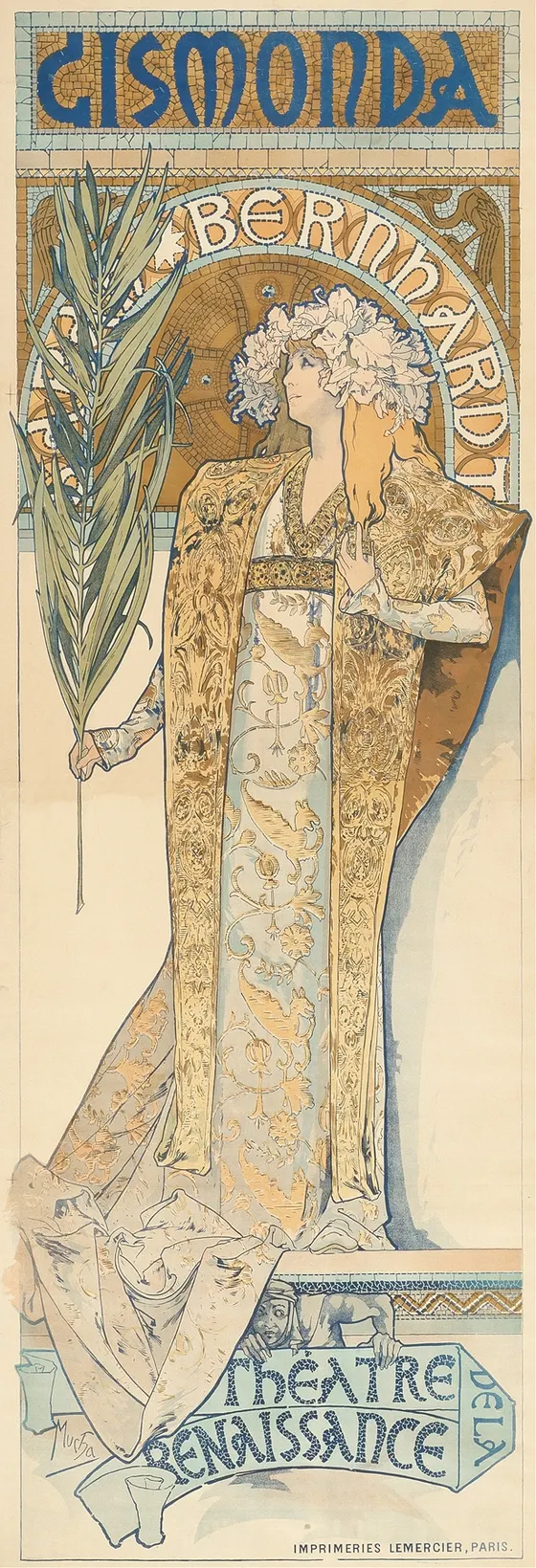
Not simply theatre advertising
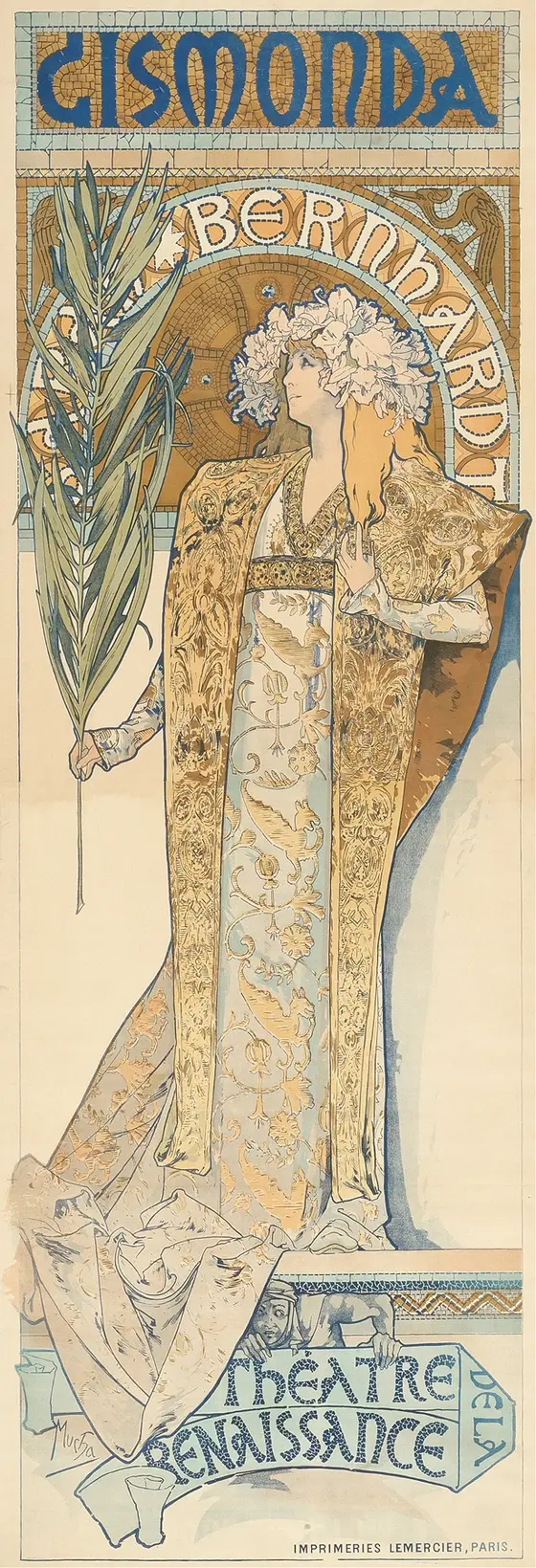
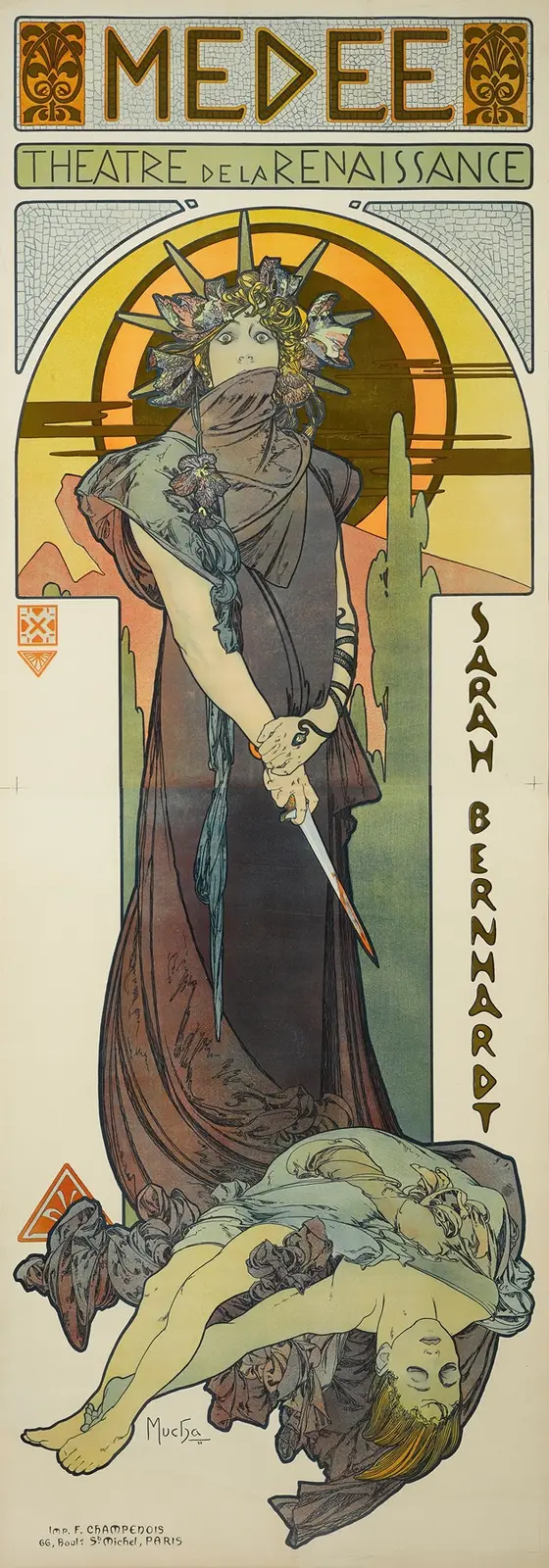
The common shorthand says that Mucha made posters for Sarah Bernhardt. That is true, but insufficient. These images do not only announce a production. They build a public body around the actress, one that exceeds any single performance. The poster becomes a site where theatre crosses into modern celebrity culture.
Height, stillness, authority
Gismonda is decisive because of its calm. The poster does not shout. It elongates Bernhardt, isolates her, and gives her a ceremonial stillness that changes the public meaning of celebrity. Medee and Sarah Bernhardt as Hamlet show that this logic survives across very different dramatic roles. Mucha is not illustrating character alone. He is standardizing a mode of elevated presence.
Continue reading
More in this reading route
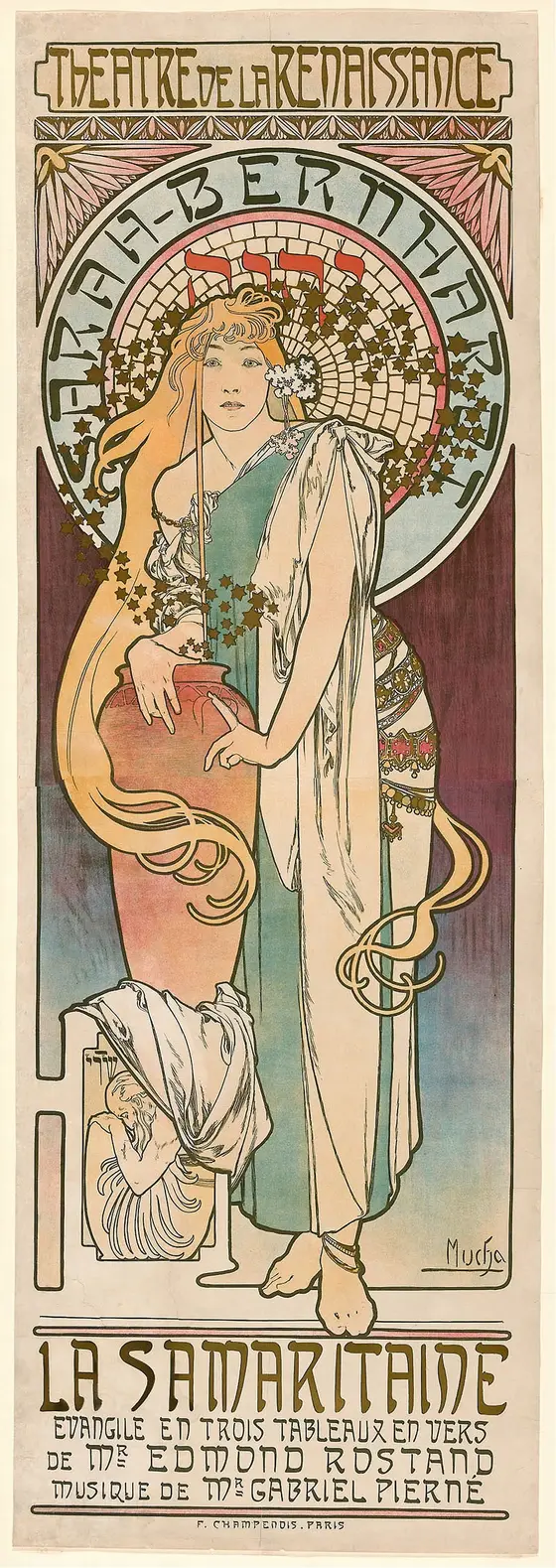
Advertising and visual communication
Advertising, theatricality, and Mucha's ability to stop the gaze
Mucha is not only an artist of ornament. He is also a maker of images that can halt the gaze within seconds and construct an aura of exceptionality.
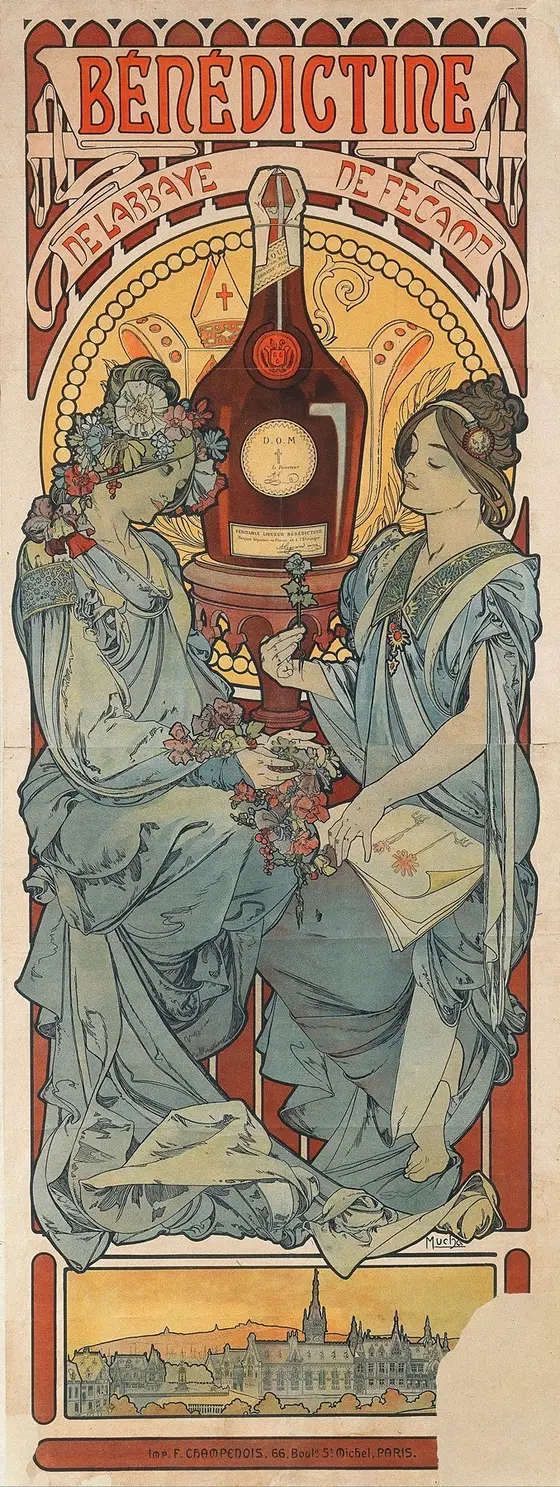
Advertising and prestige
Luxury and public persuasion
Mucha's commercial works matter because they rarely sell through pressure. They persuade by staging luxury, dignity, and the feeling that the product already belongs to a higher cultural register.
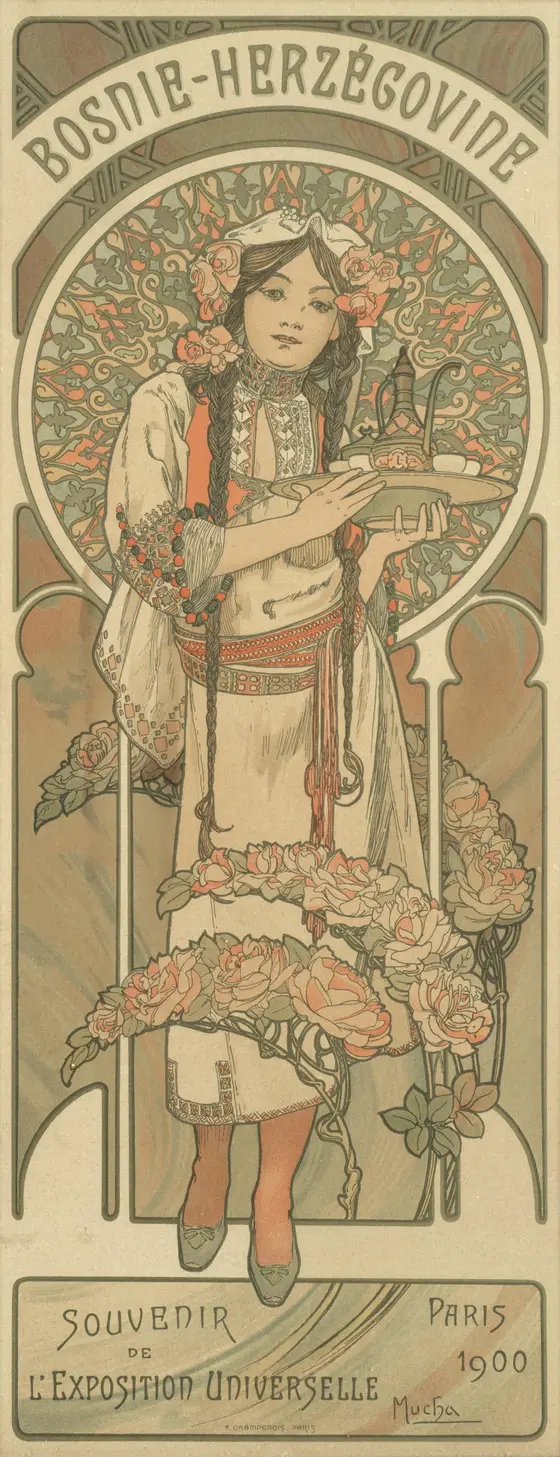
Civic and national representation
Civic image from exposition to festival
Mucha's civic works matter because they show him moving from product publicity toward the representation of institutions, nations, and ceremonial public life.
Related works
 5 explained symbols
Gismonda
The Bernhardt breakthrough poster that announced Mucha to Paris.
 5 explained symbols
Medee
A darker Mucha built from ritual tension rather than sweetness.
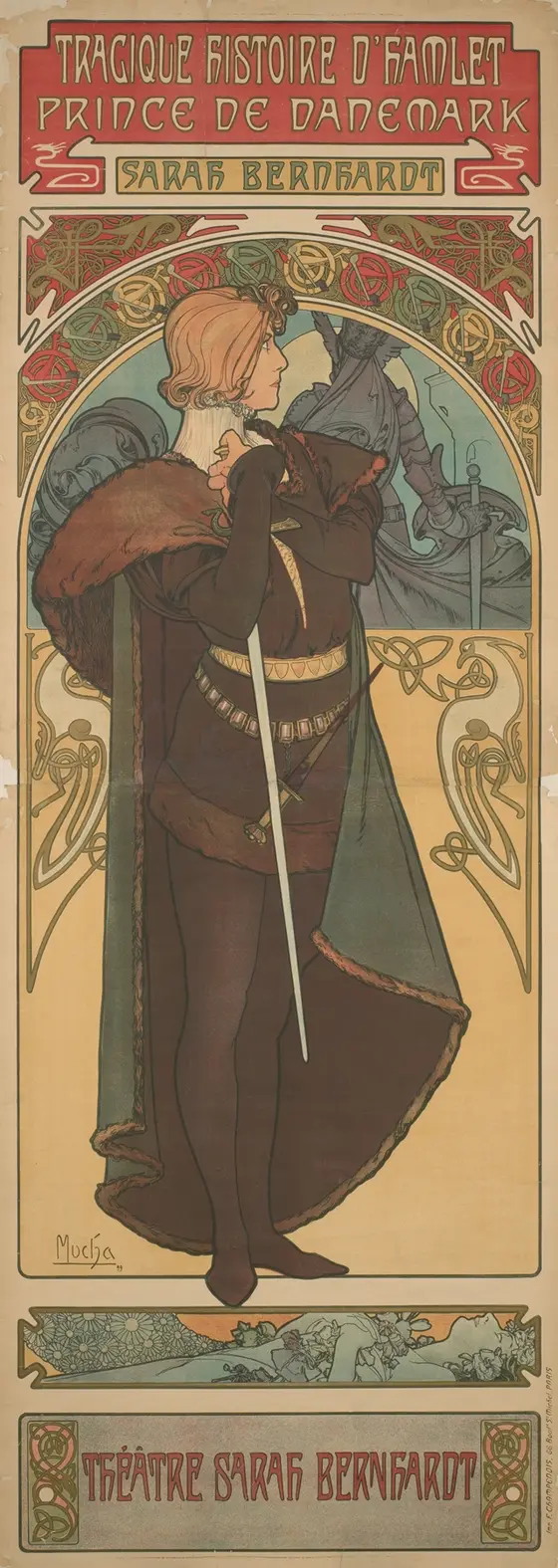
Sarah Bernhardt as Hamlet
Bernhardt as Hamlet, where theatrical identity becomes a monumental emblem of role and presence.