The Byzantine arch
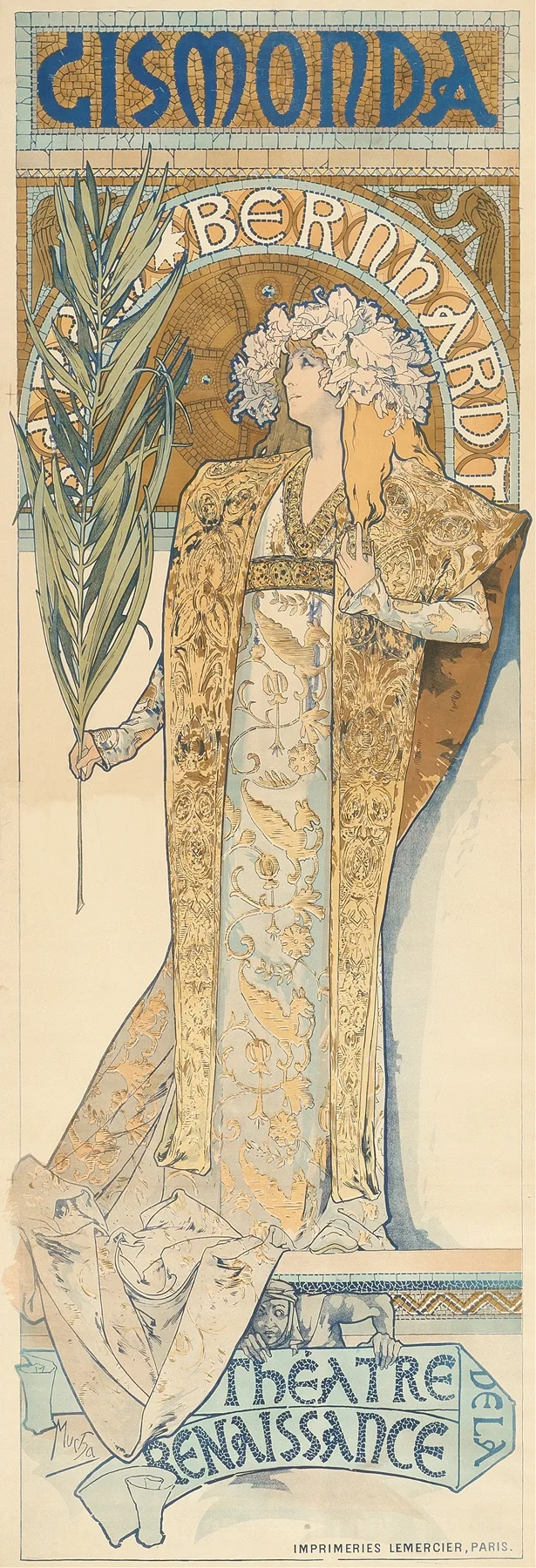
A mosaic-tiled arch frames her head like a halo, borrowed from Byzantine church decoration and flattened into pure ornament.
The calm profile
Bernhardt's face is turned in a serene three-quarter profile, closer to an icon than a stage photograph, the template for the Art Nouveau woman.
The palm frond
She holds a palm branch from the play's Palm Sunday procession, the poster's only direct nod to the plot of Gismonda.
The mosaic robe
Her Byzantine-style robe is built from tessellated mosaic patterning, printed in muted gold and rose instead of the primary colours every rival poster used.
The impossible format
At nearly two metres tall and unusually narrow, the poster broke the boulevard mould, life-size, jewel-like, impossible to mistake for anything else.
Short object reading
Object note
This page stays close to the sheet itself: composition, historical setting, and the work's place in the archive.
The poster that changed everything
Gismonda remains one of the decisive turning points in Mucha’s career. Its extraordinary vertical format and calm monumental figure broke sharply from the noisier poster language around it. Instead of shouting, the image commands attention through stillness, refinement, and proportion.
Historical context
The commission for Sarah Bernhardt is central to the mythology of Mucha’s rise in Paris. Yet the poster matters for more than biography. It demonstrates how he could turn theatrical publicity into a public image of prestige, one that helped redefine what a modern poster could look like.
Place in the archive
No editorial gallery of Mucha makes sense without Gismonda. It is the clearest entry point for understanding why his visual language became instantly recognizable and culturally influential.
Go deeper
Related essays
These essays step back from the sheet and open the broader argument around medium, public role, and curatorial context.
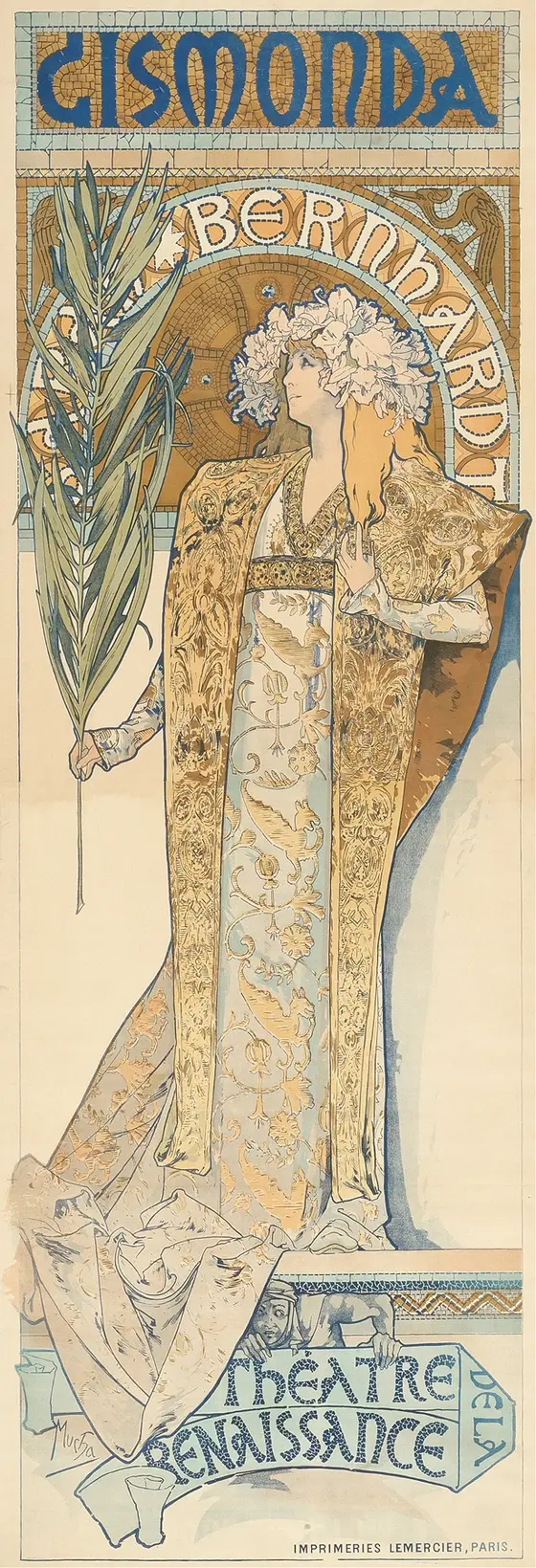
Sarah Bernhardt and the making of a public star image
Mucha's Sarah Bernhardt works matter because they do more than advertise performances. They produce a new kind of public stardom built from scale, poise, and ritualized visibility.
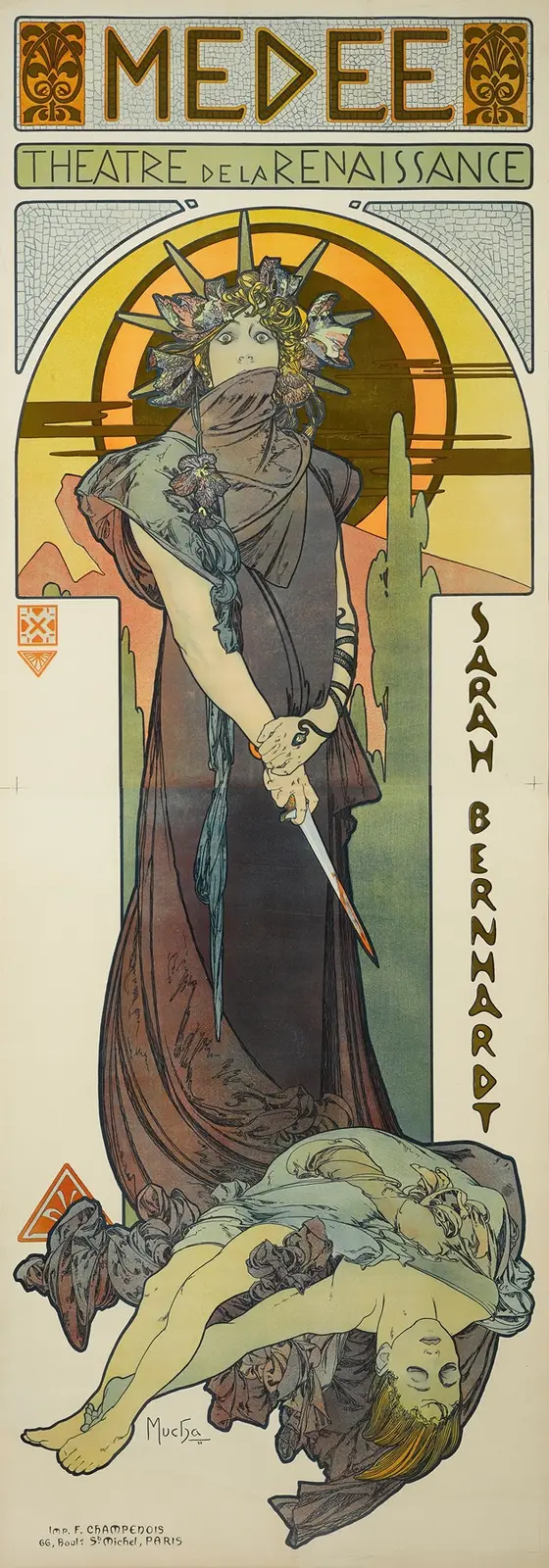
Medee: the sun, the veil and the fallen child
Mucha's 1898 poster for Mendès's Médée shows Sarah Bernhardt veiled before a sun disc, with a bloodied dagger and a fallen child below. This essay reads its bands, lettering and detail.
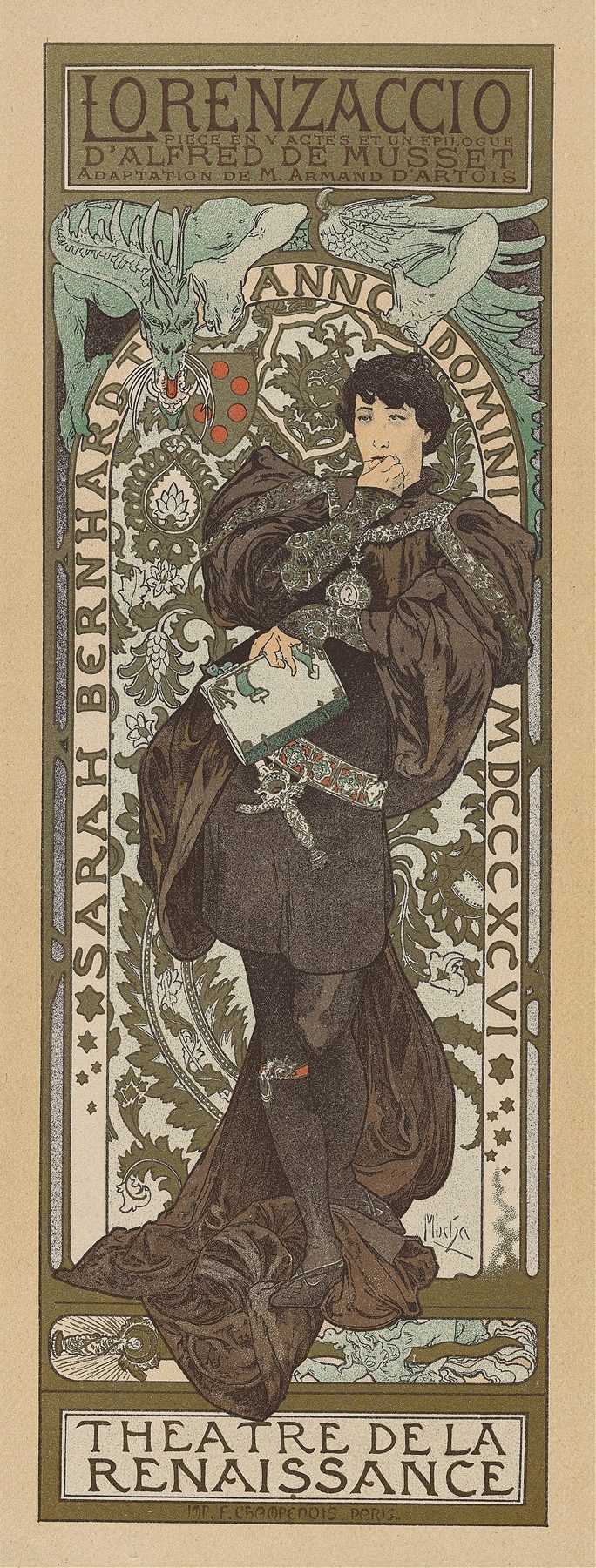
Lorenzaccio: a hesitant Bernhardt before a green dragon
Mucha's 1896 poster for Musset's Lorenzaccio dresses Sarah Bernhardt in dark Renaissance cloth and sets her under a damask arch and a green dragon. This essay reads its palette, ornament and detail.
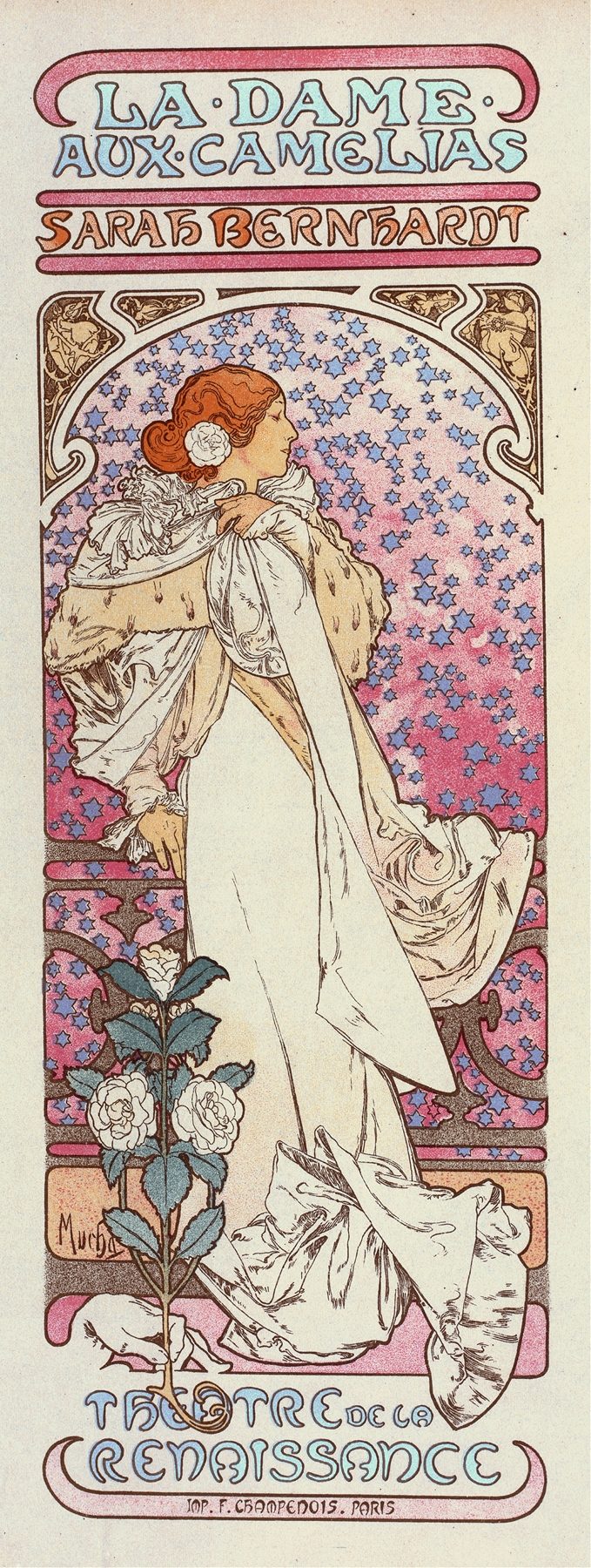
La Dame aux Camélias: a white figure under a sky of stars
Mucha's 1896 poster for Sarah Bernhardt shows no scene from the play: a single profile, a white camellia and a field of blue stars carry the whole story. This essay reads it line by line.