Spiked halo
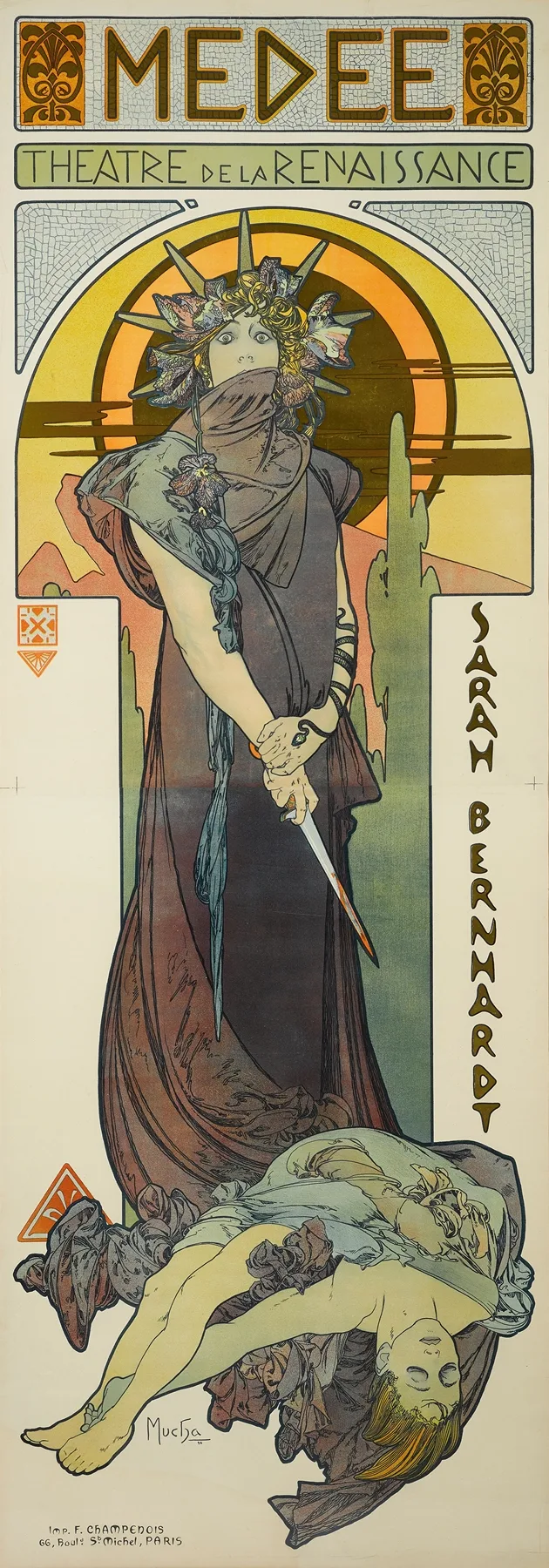
Her spiked crown repeats the rays of the sun disc behind her head, turning the actress into an icon. A formal observation, not a documented symbol.
The veiled face
A drape covers the lower half of her face, leaving only wide, staring eyes. The tension builds before the eye reaches the dagger.
Serpent bracelet
The snake coiled round her forearm and hand is one of Mucha's best-known jewels. Georges Fouquet made it from his design for Sarah Bernhardt.
Bloodied dagger
The blade is bloodied at the tip and points down. In Catulle Mendès's 1898 play, Medea kills her own children to take revenge on Jason.
The fallen child
A lifeless child lies at her feet. Mucha shows not the act but its aftermath, which gives the scene its cold stillness.
Short object reading
Object note
This page stays close to the sheet itself: composition, historical setting, and the work's place in the archive.
Dramatic departure
Medee is important because it interrupts the simplified idea that Mucha only produced graceful decorative femininity. Here the mood is sharper and more severe. The composition still depends on control and ornament, but the emotional register is charged with danger and tragic theatre.
Historical context
Mucha’s association with Sarah Bernhardt shaped some of the most memorable poster images of the period. In this context, Medee shows how flexibly he could adapt his style to a darker dramatic subject without losing the elegance and clarity that made his posters so effective in public space.
Place in the archive
Including Medee makes the gallery less predictable. It helps present Mucha as an artist of range, capable of handling myth, performance, and psychological tension as convincingly as beauty and commercial glamour.
Go deeper
Related essays
These essays step back from the sheet and open the broader argument around medium, public role, and curatorial context.
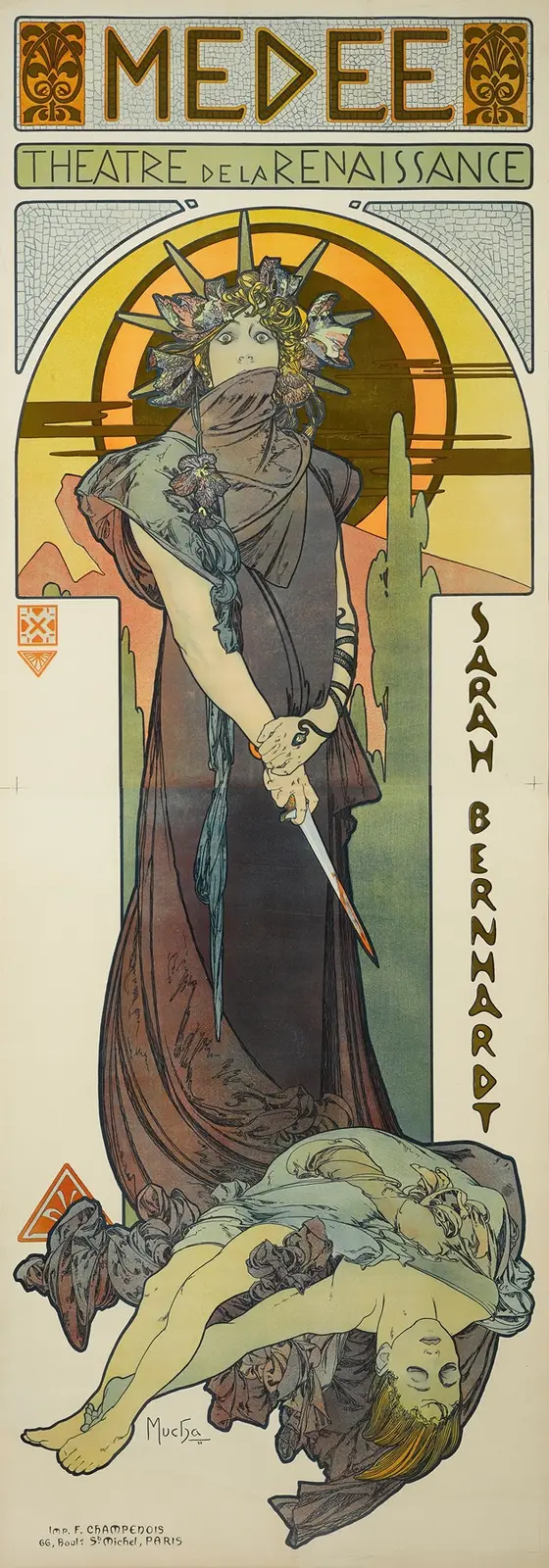
Medee: the sun, the veil and the fallen child
Mucha's 1898 poster for Mendès's Médée shows Sarah Bernhardt veiled before a sun disc, with a bloodied dagger and a fallen child below. This essay reads its bands, lettering and detail.
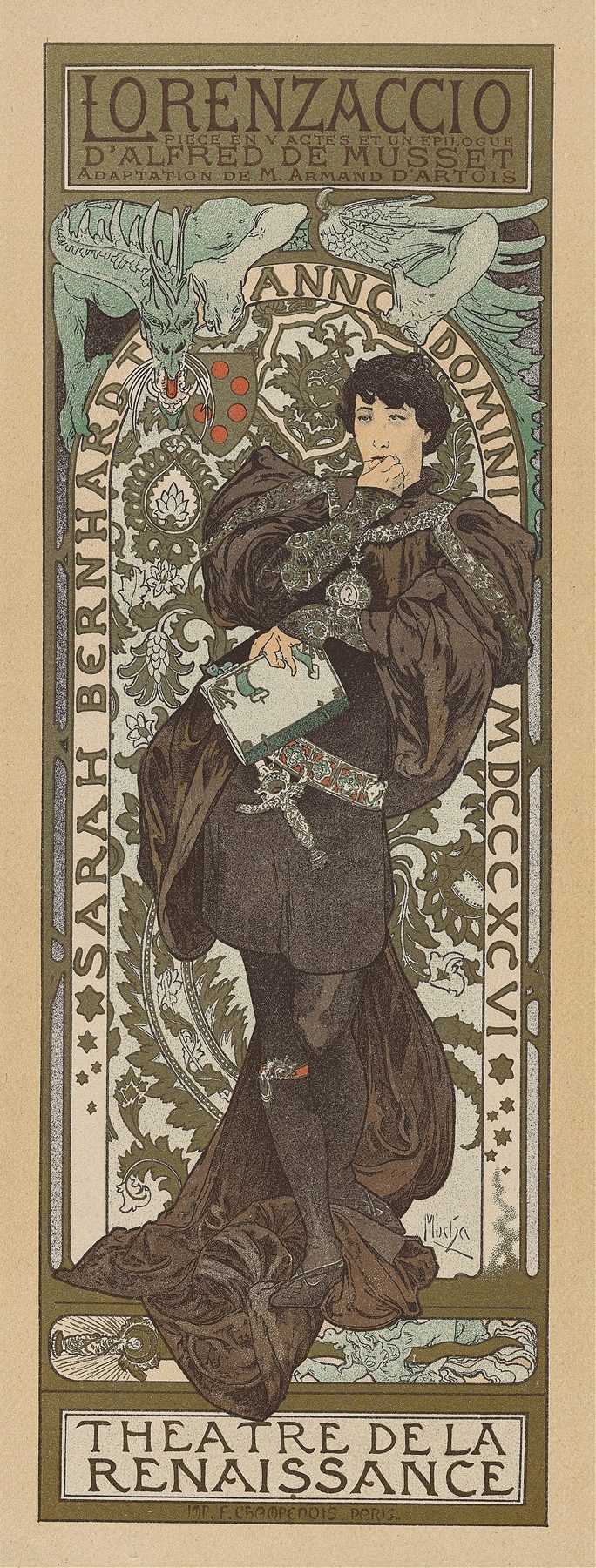
Lorenzaccio: a hesitant Bernhardt before a green dragon
Mucha's 1896 poster for Musset's Lorenzaccio dresses Sarah Bernhardt in dark Renaissance cloth and sets her under a damask arch and a green dragon. This essay reads its palette, ornament and detail.
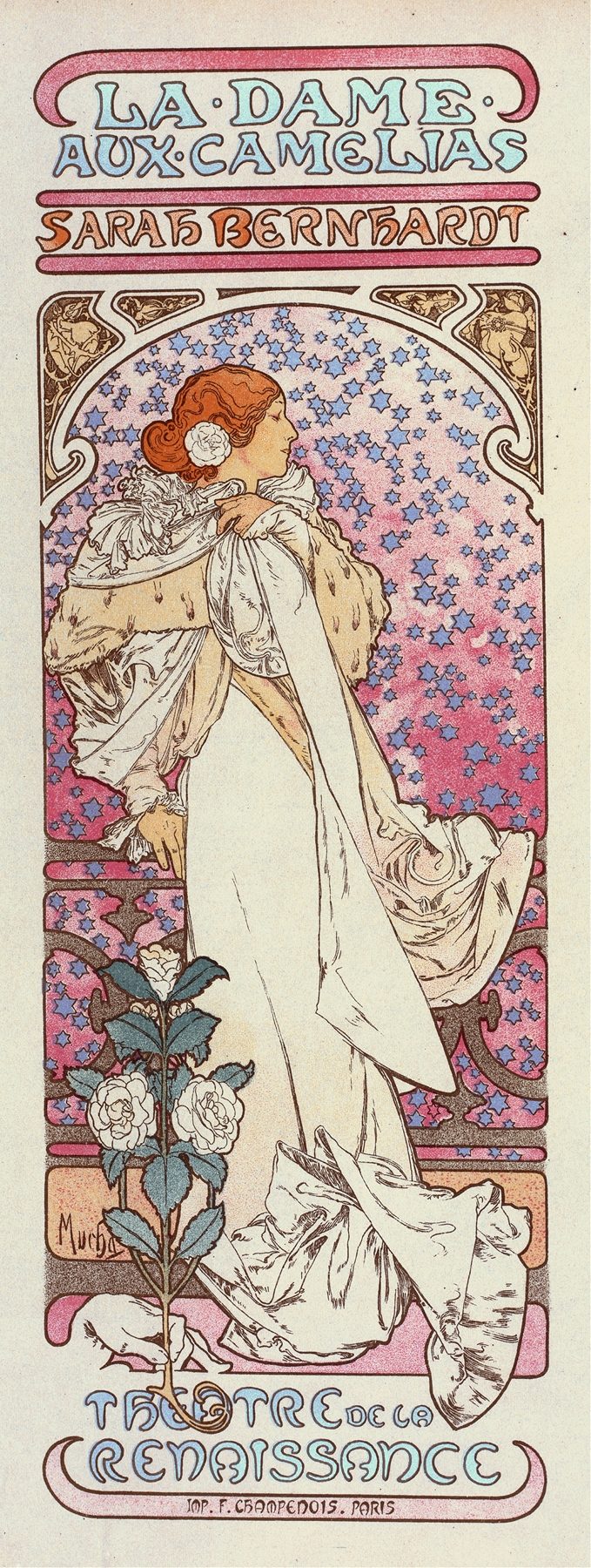
La Dame aux Camélias: a white figure under a sky of stars
Mucha's 1896 poster for Sarah Bernhardt shows no scene from the play: a single profile, a white camellia and a field of blue stars carry the whole story. This essay reads it line by line.
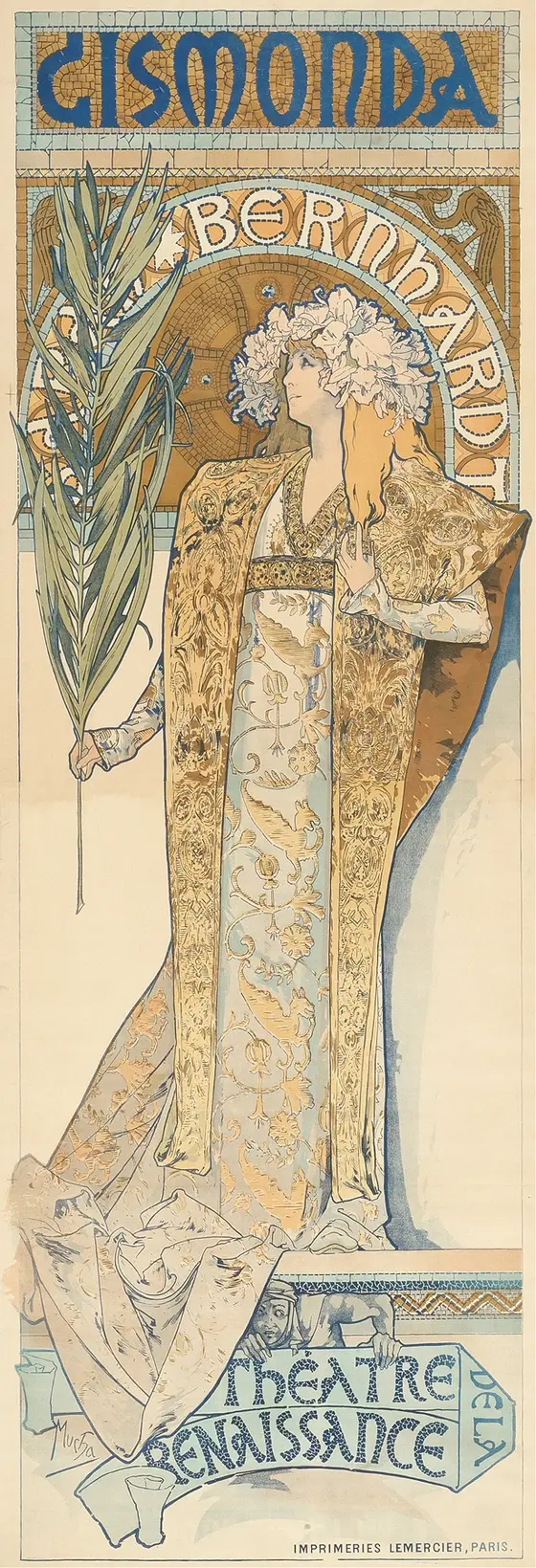
Sarah Bernhardt and the making of a public star image
Mucha's Sarah Bernhardt works matter because they do more than advertise performances. They produce a new kind of public stardom built from scale, poise, and ritualized visibility.