Short object reading
Object note
This page stays close to the sheet itself: composition, historical setting, and the work's place in the archive.
Role as public icon
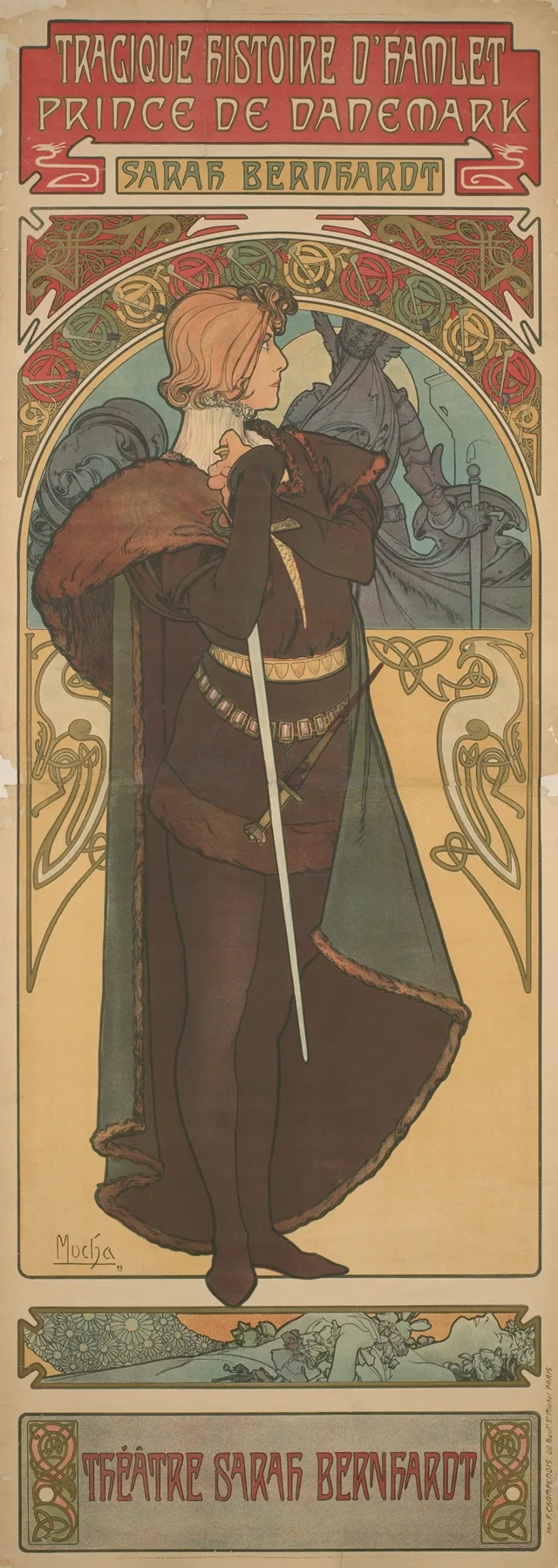
Mucha does not merely depict Bernhardt performing Hamlet. He turns the role into a public image with the same solemn vertical presence that defined his earlier theatre breakthroughs.
A later variation within the Bernhardt cycle
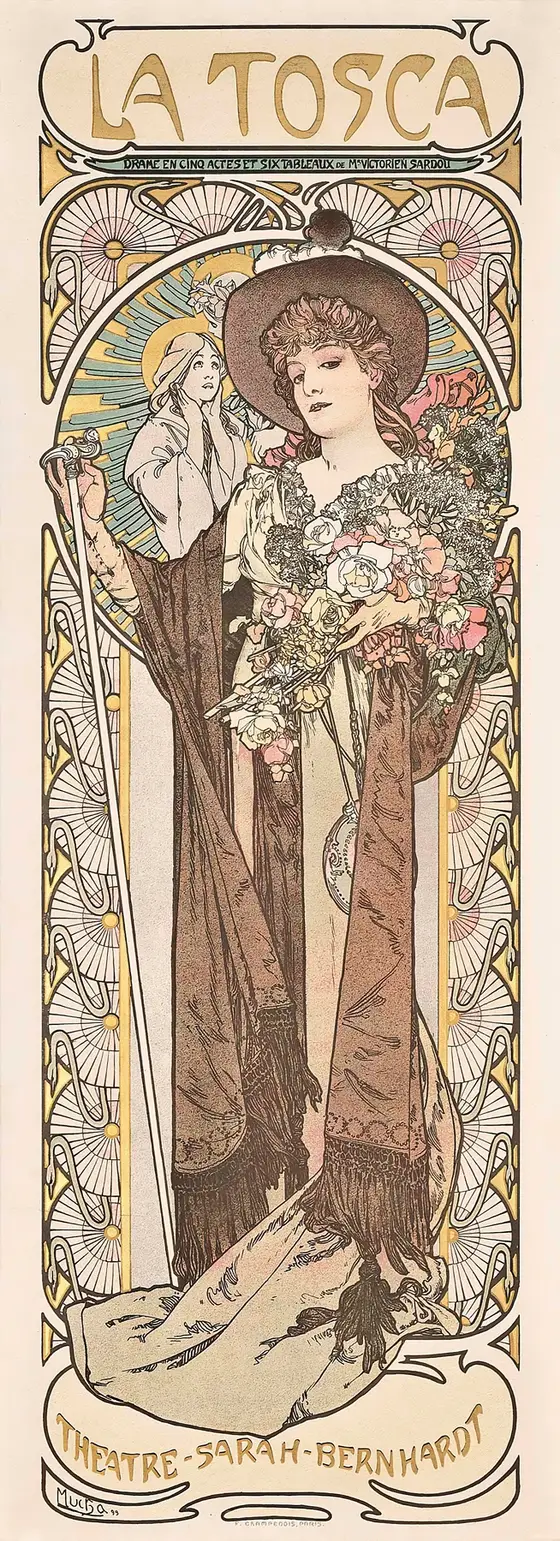
Placed beside Gismonda or Medee, the poster shows that the Bernhardt collaboration was not a single formula but an evolving language. The actress remains central, yet the iconography becomes more specifically role-bound.
Place in the archive
It deepens the Sarah Bernhardt cycle already present on the site and shows how Mucha continued to refine the relationship between theatre, persona, and monumental format.
Go deeper
Related essays
These essays step back from the sheet and open the broader argument around medium, public role, and curatorial context.
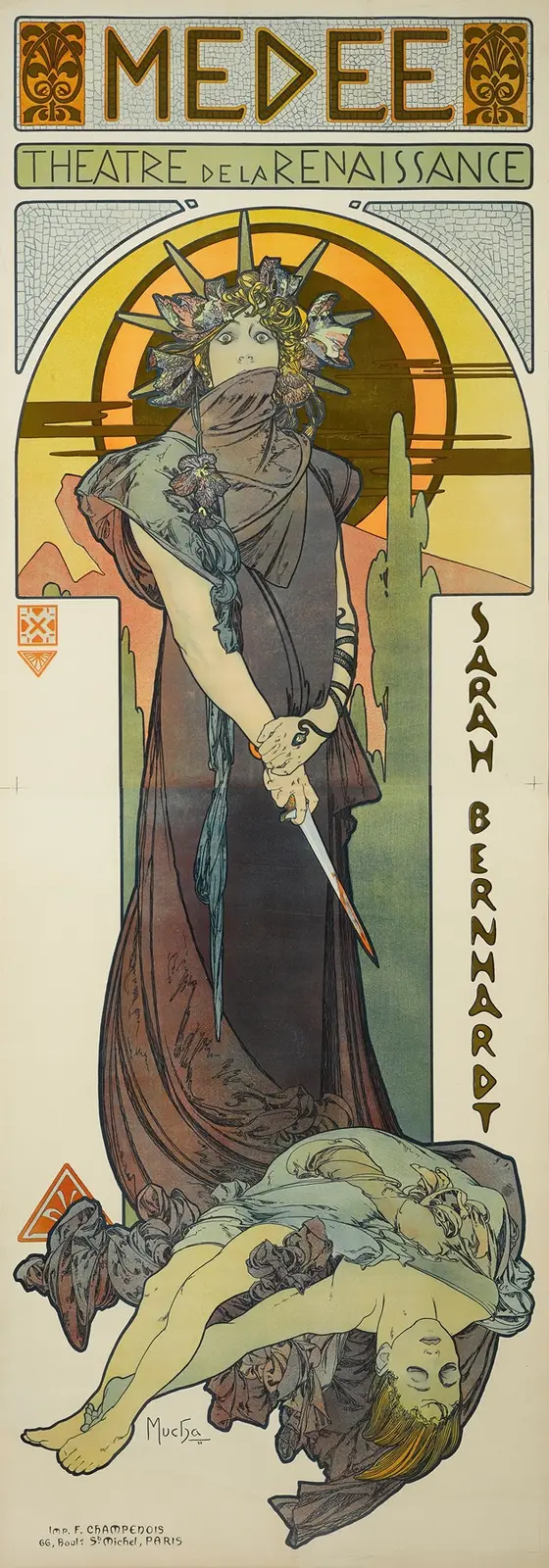
Medee: the sun, the veil and the fallen child
Mucha's 1898 poster for Mendès's Médée shows Sarah Bernhardt veiled before a sun disc, with a bloodied dagger and a fallen child below. This essay reads its bands, lettering and detail.
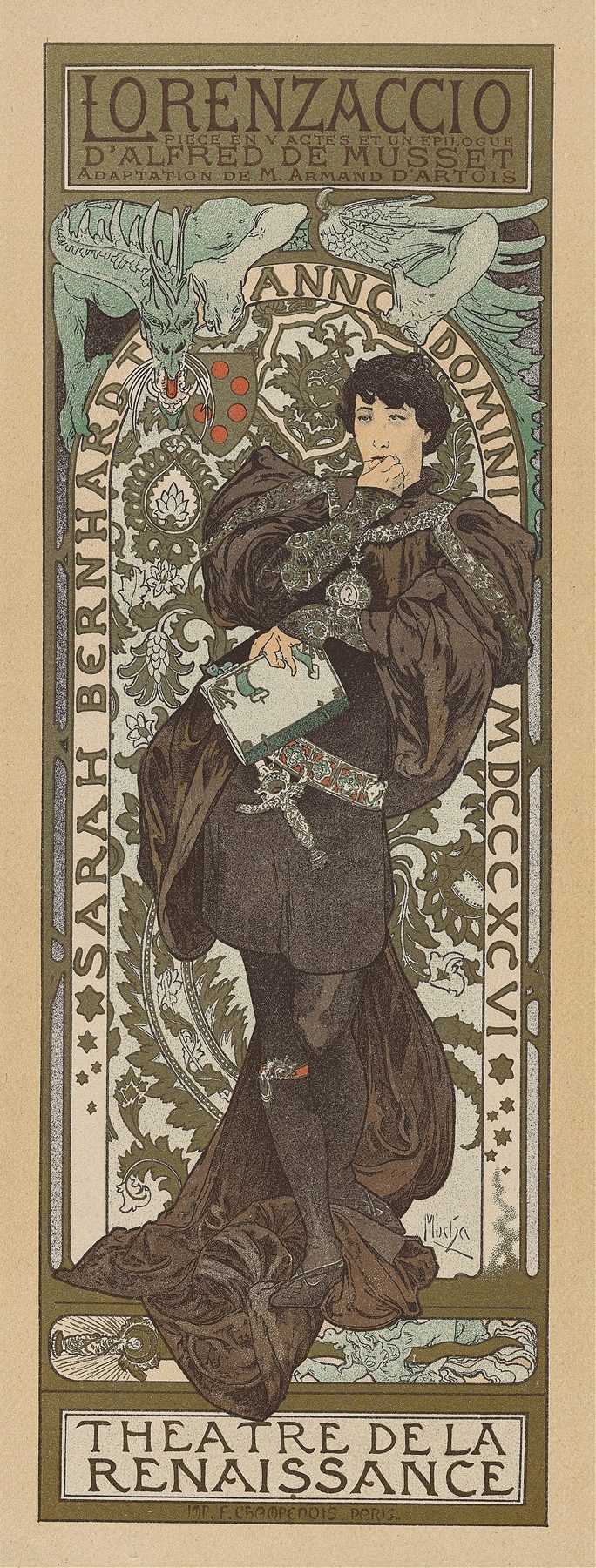
Lorenzaccio: a hesitant Bernhardt before a green dragon
Mucha's 1896 poster for Musset's Lorenzaccio dresses Sarah Bernhardt in dark Renaissance cloth and sets her under a damask arch and a green dragon. This essay reads its palette, ornament and detail.
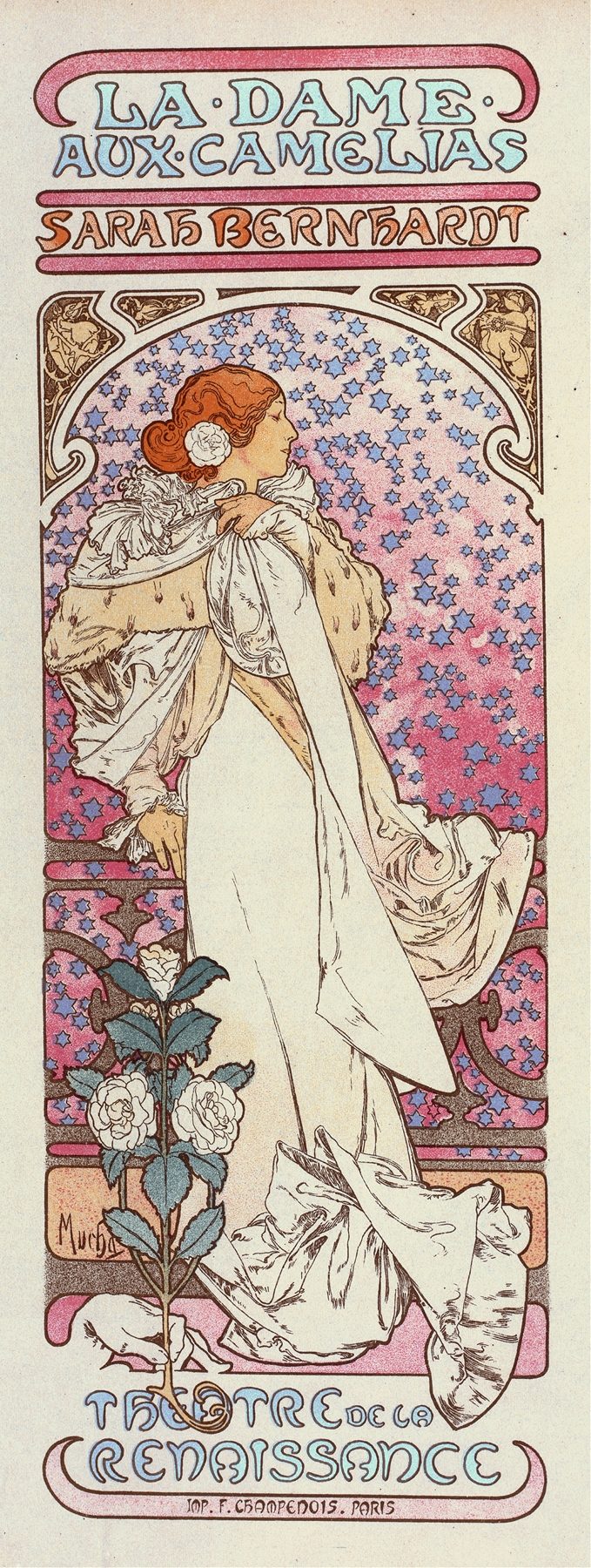
La Dame aux Camélias: a white figure under a sky of stars
Mucha's 1896 poster for Sarah Bernhardt shows no scene from the play: a single profile, a white camellia and a field of blue stars carry the whole story. This essay reads it line by line.
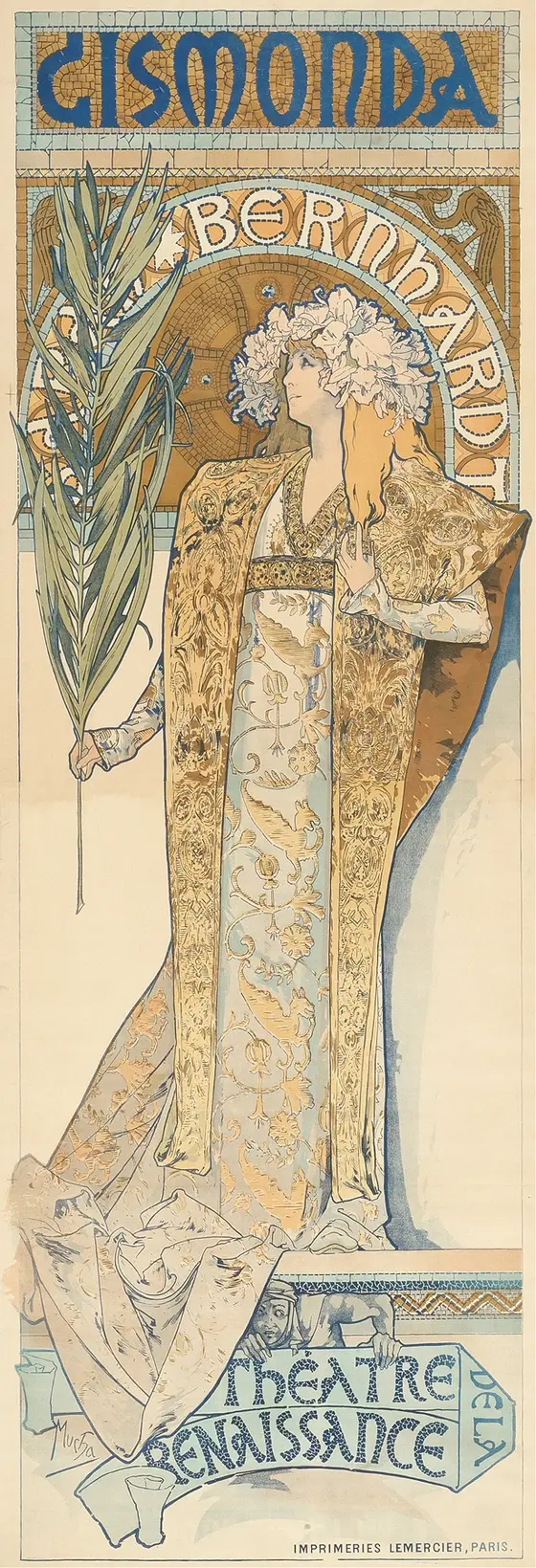
Sarah Bernhardt and the making of a public star image
Mucha's Sarah Bernhardt works matter because they do more than advertise performances. They produce a new kind of public stardom built from scale, poise, and ritualized visibility.