The Casino in the distance
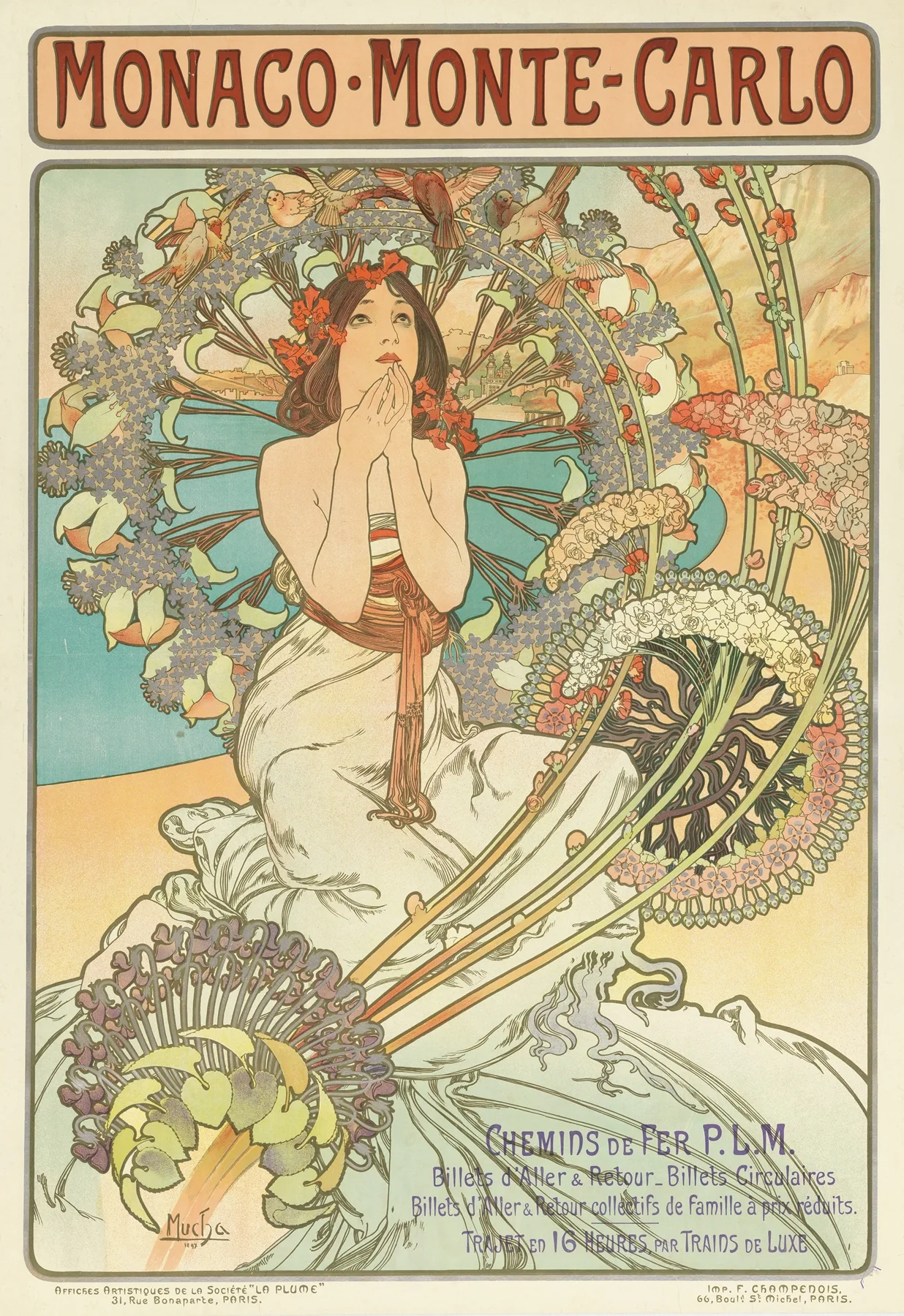
Behind her head, across the bay, rise the towers of the Monte Carlo casino, the one landmark that names the destination.
Dianthus wreath
Red dianthus, the family of carnations, are pinned in her hair and repeat in the wreath of flowers that frames her.
Birds in the wreath
Small songbirds perch and flutter among the blossoms of the upper arc, adding a note of spring to the winter-resort view.
The 16-hour journey
The printed fine print advertises return and family tickets and a trip of 16 hours by luxury trains, the poster's actual selling point.
Short object reading
Object note
This page stays close to the sheet itself: composition, historical setting, and the work's place in the archive.
Selling a destination
This poster shows Mucha applying his language to tourism rather than theatre or retail. The image offers more than information about transport. It constructs an atmosphere of pleasure, warmth, and cultivated escape, making travel itself feel like a desirable aesthetic experience.
Historical context
Late nineteenth-century travel posters were part of a wider visual competition for attention in the modern city. Mucha’s answer was not blunt persuasion. He used elegance, colour harmony, and an idealised female figure to make the destination feel culturally elevated before the viewer even read the route.
Place in the archive
Monaco, Monte-Carlo broadens the gallery’s view of Mucha as a designer of public desire. It helps explain that his style could sell not only products and performances, but also places and moods.