The year 1900
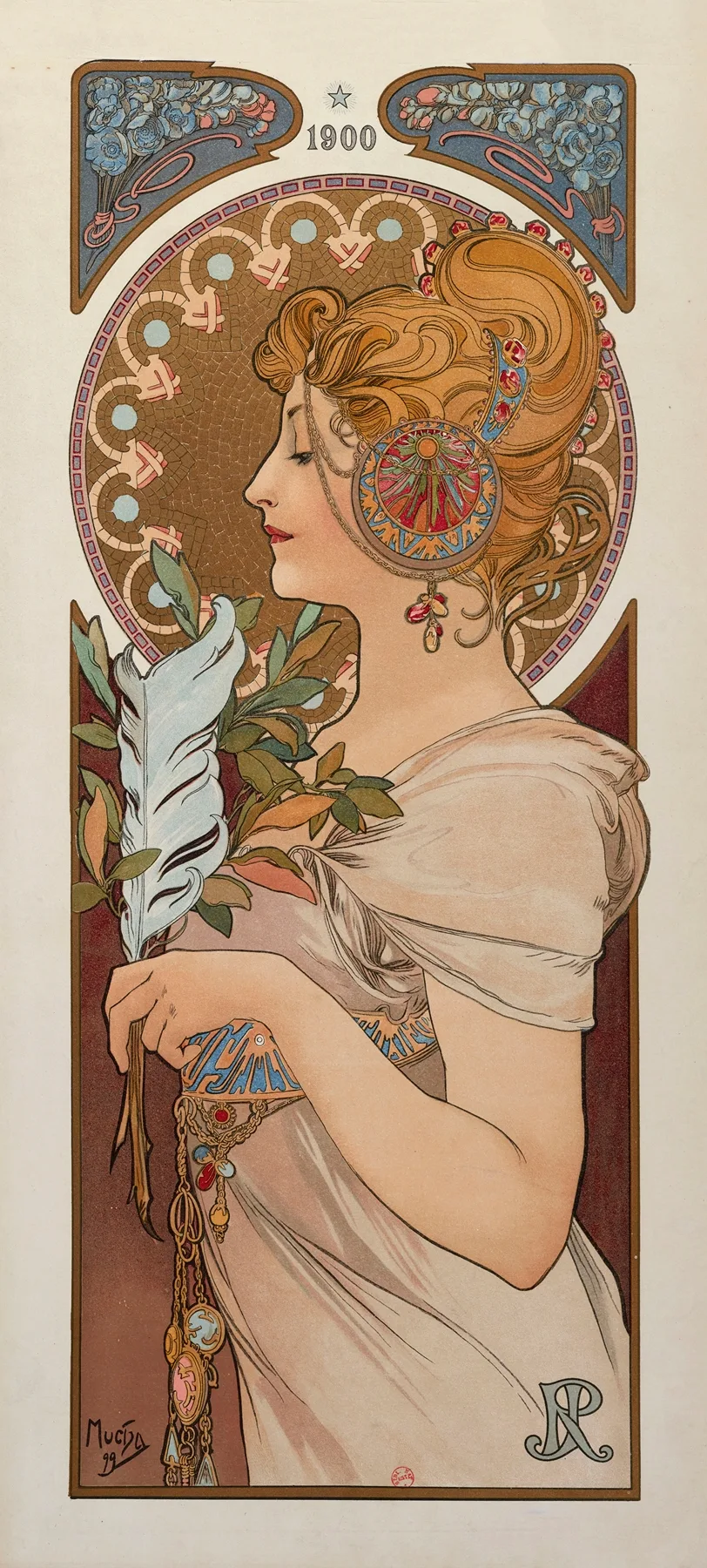
A small star and the numerals 1900 sit between the corner ornaments, dating the sheet to the turn of the century.
Mosaic halo
The circle behind her head is drawn as tesserae, tiny mosaic tiles in gold-brown. It works as a halo and gives the flat background its Byzantine feel.
The quill
She holds a large pale-blue feather, a quill pen. It is the poster's emblem for La Plume, the Paris review whose title means "the pen".
Laurel leaves
Sprigs of laurel are bundled with the quill. Museum descriptions of the print mention the bay leaves alongside the pen.
Jewelled headpiece
A round enamel-like disc with radiating colours hangs over her ear on fine chains, one of the poster's many invented jewels.
Short object reading
Object note
This page stays close to the sheet itself: composition, historical setting, and the work's place in the archive.
Visual reading
La Plume turns a periodical into a monumental surface of cultural prestige. The poster does not just advertise a magazine issue; it constructs a public identity for print culture itself.
Historical role
The work matters because it shows how central magazines and publishing networks were to Mucha’s mature public language. Print is not a neutral support here. It is one of the institutions through which his style circulates and gains authority.
Archive note
In the archive, La Plume thickens the publishing branch of Mucha’s work and makes the relation between posters, editorial culture, and reproducible image-worlds much easier to read.
Go deeper
Related essays
These essays step back from the sheet and open the broader argument around medium, public role, and curatorial context.
Related works
 5 explained symbols
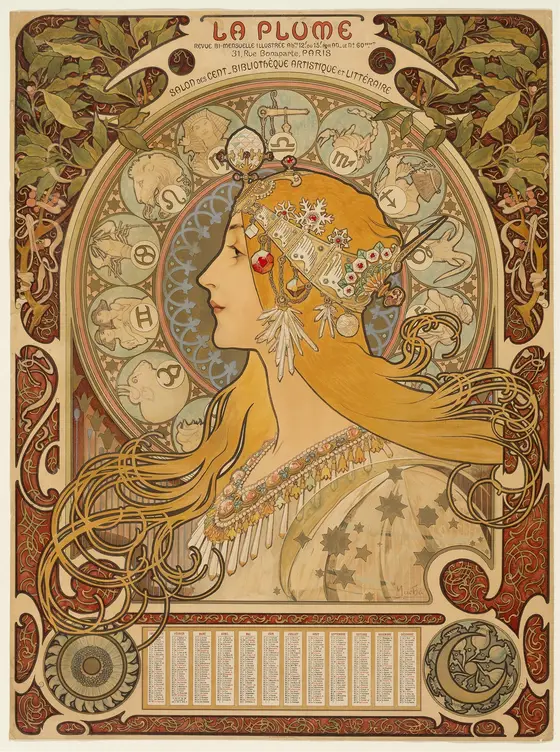
Zodiaque (La Plume)
Magazine iconography recast as cosmic branding and refined design.
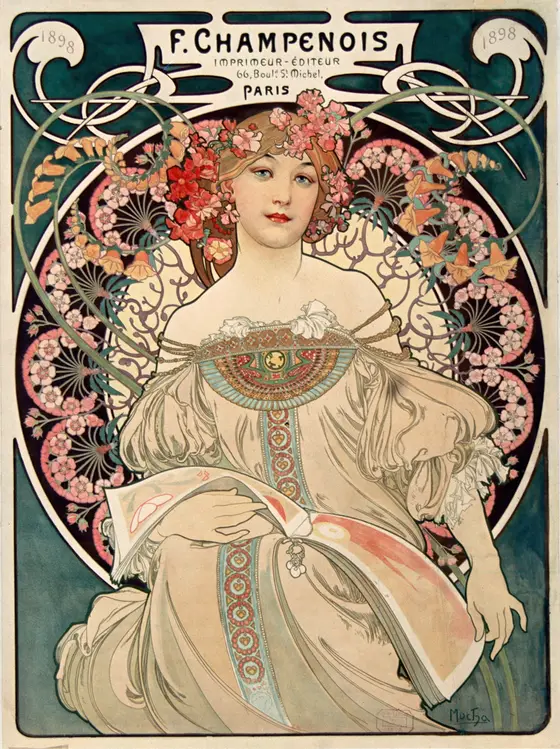
F. Champenois Imprimeur-Editeur
A poster about print that also glorifies the power of reproduction.
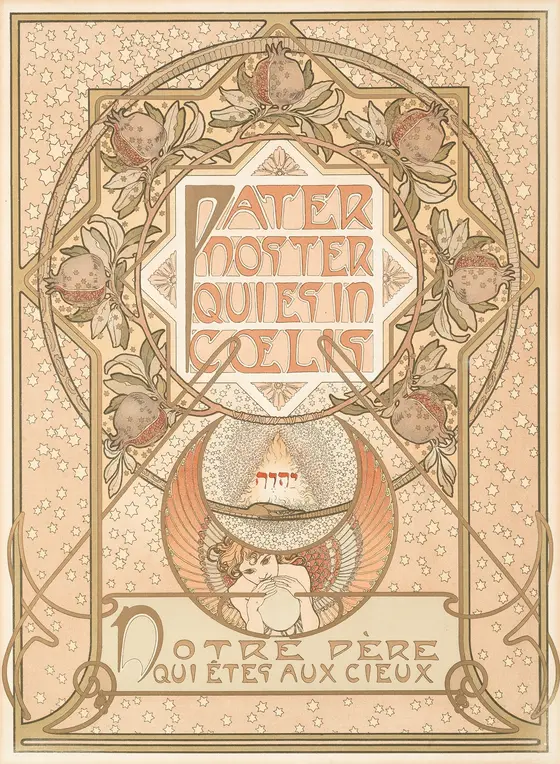
Pater Noster
A spiritual image translated into a public-facing vertical where prayer becomes cultural emblem and ceremonial presence.