Vienna Secession · Vienna, Austria
Gustav Klimt
1862–1918
Gustav Klimt was an Austrian Symbolist painter and a leading figure of the Vienna Secession, famous for his gold-leaf paintings and his frank treatment of the female body.
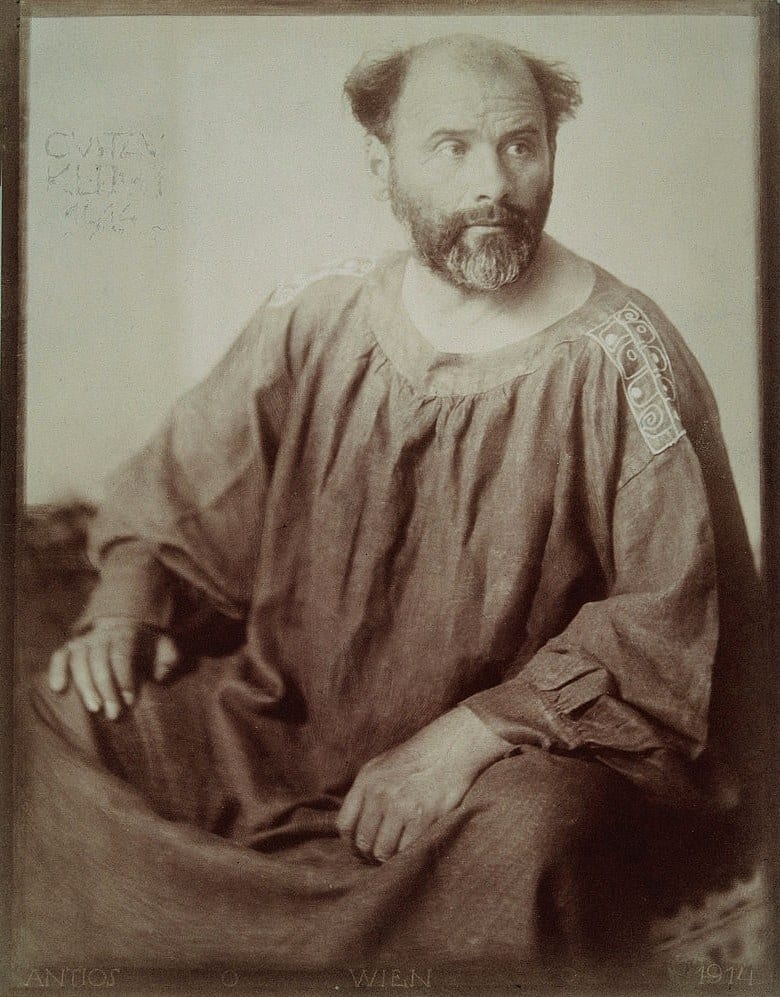
Who he was
Gustav Klimt (1862–1918) was an Austrian Symbolist painter and one of the most prominent members of the Vienna Secession. He is remembered for paintings, murals and sketches in which the female body is the central subject,.
Origins and training
Klimt was born in Baumgarten, near Vienna, the second of seven children. His father, Ernst Klimt the Elder, a gold engraver originally from Bohemia, and his mother, Anna (née Finster), who had hoped for a career as a musical performer, raised three sons who all showed artistic talent early on.
From 1876 to 1883 Klimt studied architectural painting at the Vienna Kunstgewerbeschule, a school of applied arts and crafts in poverty. He revered Hans Makart, then Vienna’s foremost history painter, and accepted the principles of a conservative education, so his early work is academic. With his brother Ernst, who enrolled in 1877, and his friend Franz Matsch he formed the “Company of Artists”; by 1880 the team had numerous commissions for murals and ceilings, including work in the Kunsthistorisches Museum and the Burgtheater, for which Klimt received the Golden Order of Merit in 1888.
Breakthrough and mature work
In 1892 Klimt’s father and brother died, and he became financially responsible for both families. The loss also changed his artistic vision and pushed him towards a more personal style. In the early 1890s he met the fashion designer Emilie Flöge, who remained his companion for the rest of his life.
In 1897 Klimt became a founding member and president of the Vienna Secession and of its periodical Ver Sacrum. The group wanted to give young, unconventional artists a place to exhibit and to bring the best foreign art to Vienna; it had no manifesto, and Naturalists, Realists and Symbolists coexisted. Its symbol was Pallas Athena, whom Klimt painted in his own radical version in 1898.
In 1894 he was commissioned to decorate the ceiling of the Great Hall of the University of Vienna. The three paintings, Philosophy, Medicine and Jurisprudence, were criticised as pornographic for their radical themes, and this was the last public commission he accepted. All three were destroyed when retreating German forces burned Schloss Immendorf in May 1945. In 1902 he finished the Beethoven Frieze for the Secession’s fourteenth exhibition, painted directly on the walls with light materials; it was not displayed again until restored in 1986.
Style and themes
Klimt’s “golden phase” brought positive critical reaction and financial success, and many of its paintings include gold leaf. He had already used gold in Pallas Athene (1898) and Judith I (1901); the works most associated with the phase are the Portrait of Adele Bloch-Bauer I (1907) and The Kiss (1907–08). Trips to Venice and Ravenna, famous for their mosaics, most likely inspired his gold technique and Byzantine imagery. Of the Secession artists he was the most influenced by Japanese art. In 1904 he collaborated with other artists on the Palais Stoclet, whose dining-room decorations he called “probably the ultimate stage of my development of ornament”.
Look for the flattened space and emphatic patterning that unite his figures and his landscapes. From the late 1890s he spent summers with the Flöge family on the Attersee, where he painted landscapes that are the only genre besides figure painting to interest him seriously; deep space is flattened so efficiently into a single plane that it is believed he used a telescope. His allegories, such as The Three Ages of Woman (1905) and Death and Life, which won first prize in Rome in 1911, turn traditional symbolism into a more overtly sensual language.
Legacy
Klimt lived a simple, cloistered life devoted to his art and family, avoiding café society. He died in Vienna on 6 February 1918 after a stroke and pneumonia linked to the influenza epidemic, and was buried at the Hietzinger Cemetery; many paintings were left unfinished. His work was an important influence on his younger peer Egon Schiele. In 2012 Vienna commemorated the 150th anniversary of his birth with many special exhibitions.
Sources
- Artvee: Gustav Klimt (biography and works)
- Artvee work pages, linked under each work
- Wikimedia Commons: File:Klimt.jpg (portrait)

Timeline
- 1862
Born near Vienna
Gustav Klimt is born in Baumgarten near Vienna, the second of seven children.
- 1876
Applied-arts school
He begins studying architectural painting at the Vienna Kunstgewerbeschule, where he stays until 1883.
- 1888
Order of Merit
Emperor Franz Joseph I awards him the Golden Order of Merit for murals in the Burgtheater.
- 1892
Family losses
His father and his brother Ernst die, and he takes on financial responsibility for both families.
- 1897
Vienna Secession
He becomes a founding member and president of the Vienna Secession and of its journal Ver Sacrum.
- 1898
Pallas Athene
He paints his radical version of Pallas Athena, the Secession's symbol.
- 1902
Beethoven Frieze
He finishes the Beethoven Frieze for the Secession's fourteenth exhibition.
- 1907
The golden phase
Portrait of Adele Bloch-Bauer I and The Kiss (1907–08) become the best-known works of his golden phase.
- 1911
Prize in Rome
Death and Life wins first prize at the world exhibition in Rome.
- 1918
Death in Vienna
He dies in Vienna on 6 February after a stroke and pneumonia, and is buried in Hietzing.
Gustav Klimt became famous for these works:
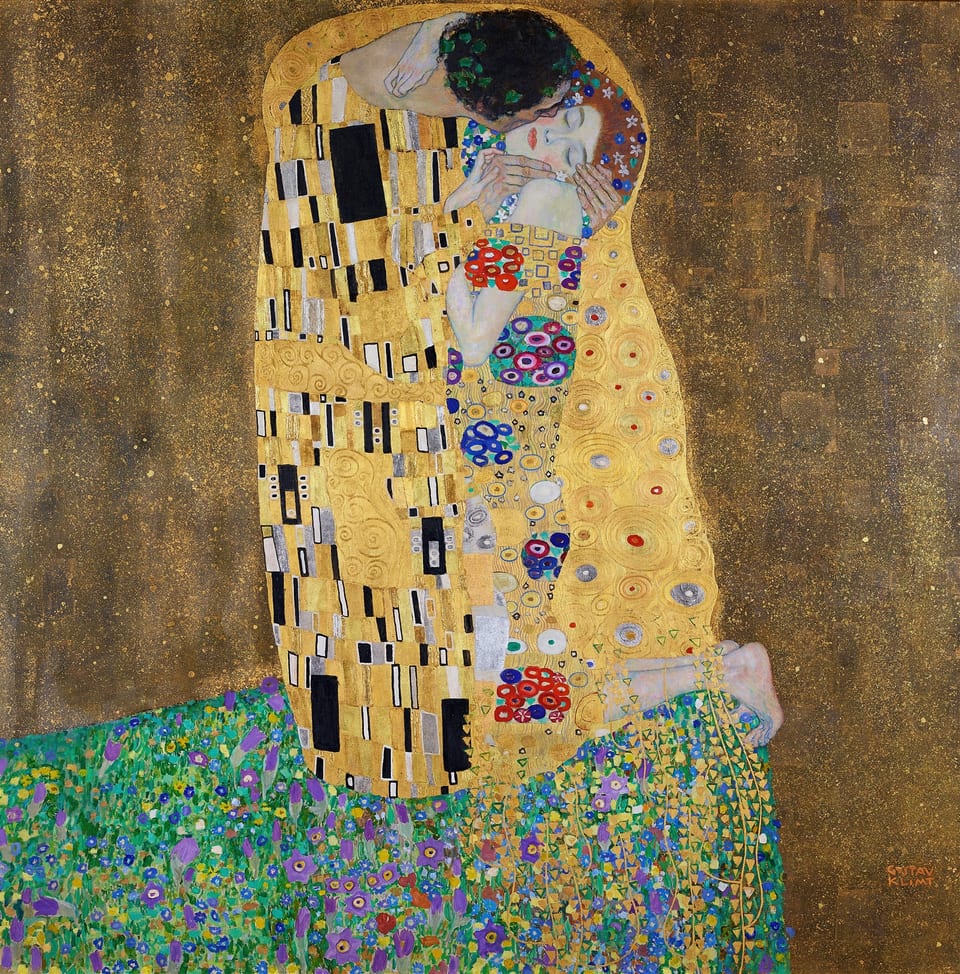
The Kiss
Painted in 1907–08, the best-known work of Klimt's golden phase; it is thought to be an image of the artist and Emilie Flöge as lovers.
Source ↗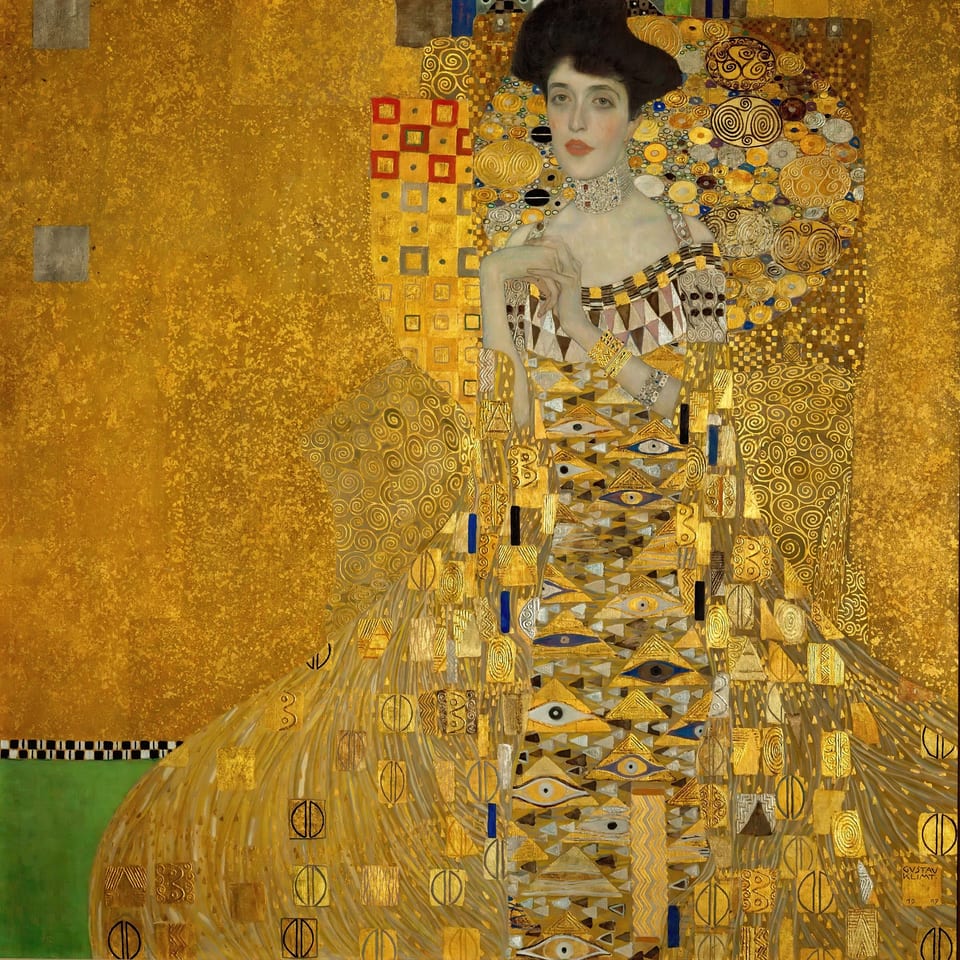
Portrait of Adele Bloch-Bauer I
With The Kiss, the work most popularly associated with Klimt's golden phase.
Source ↗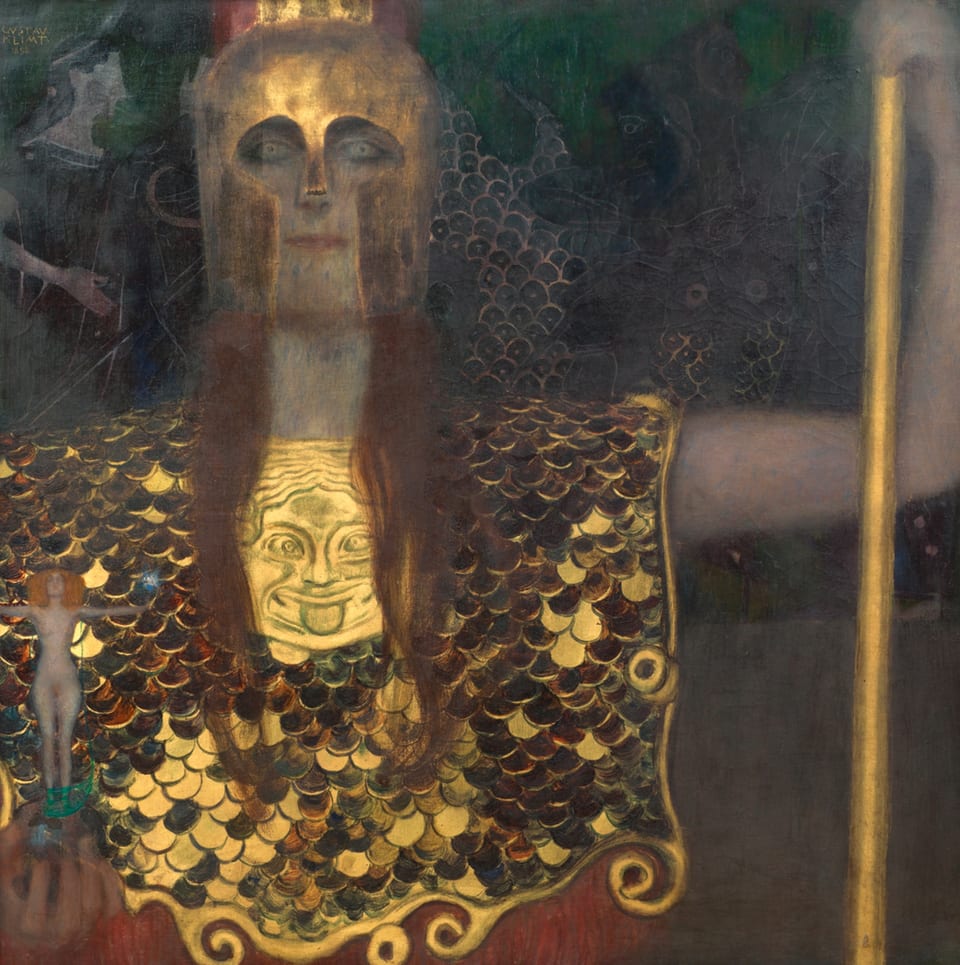
Pallas Athene
Pallas Athena was the symbol of the Vienna Secession, and Klimt painted his radical version of her in 1898.
Source ↗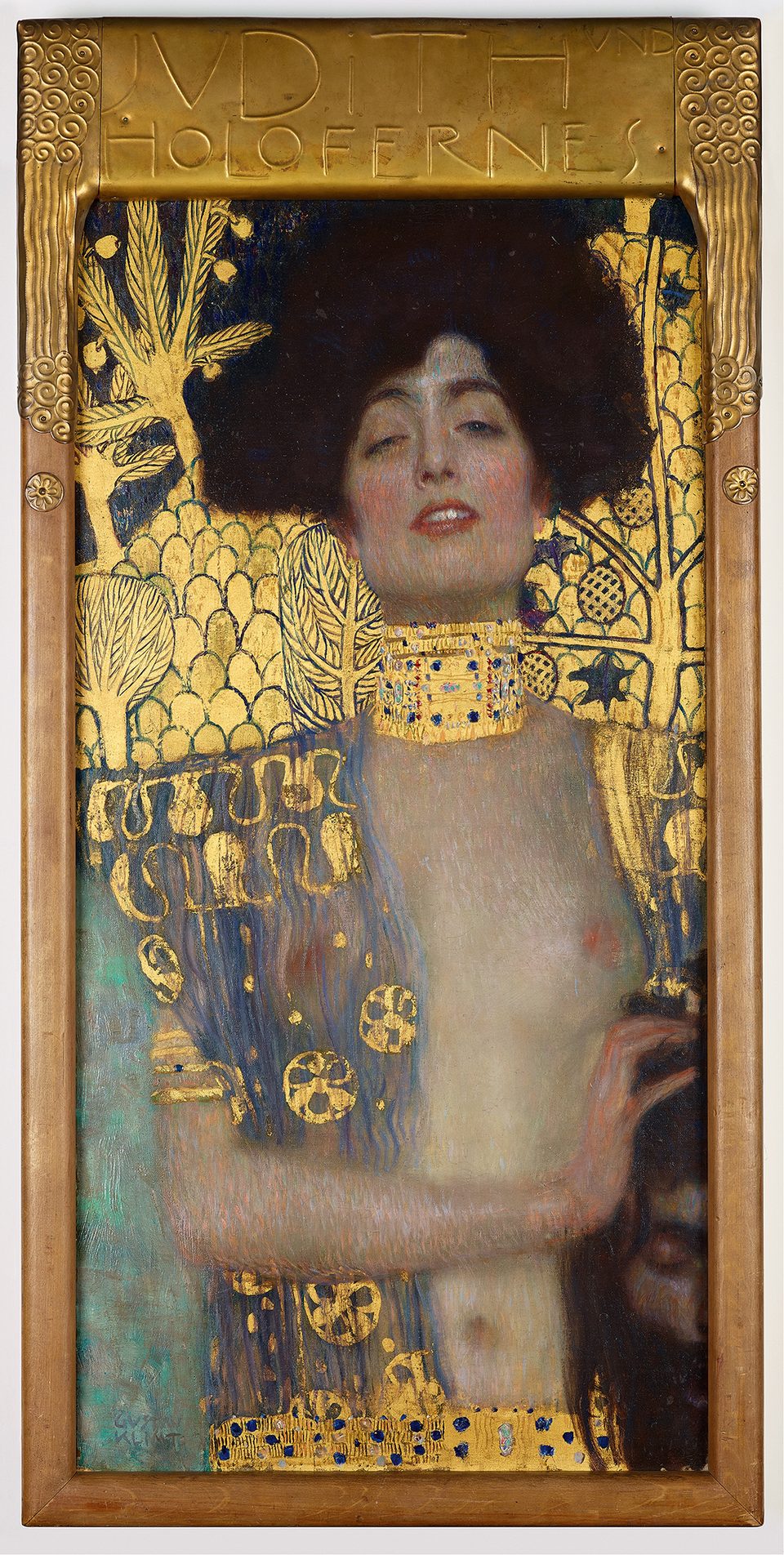
Judith
One of the early works in which Klimt used gold, here in Judith I of 1901.
Source ↗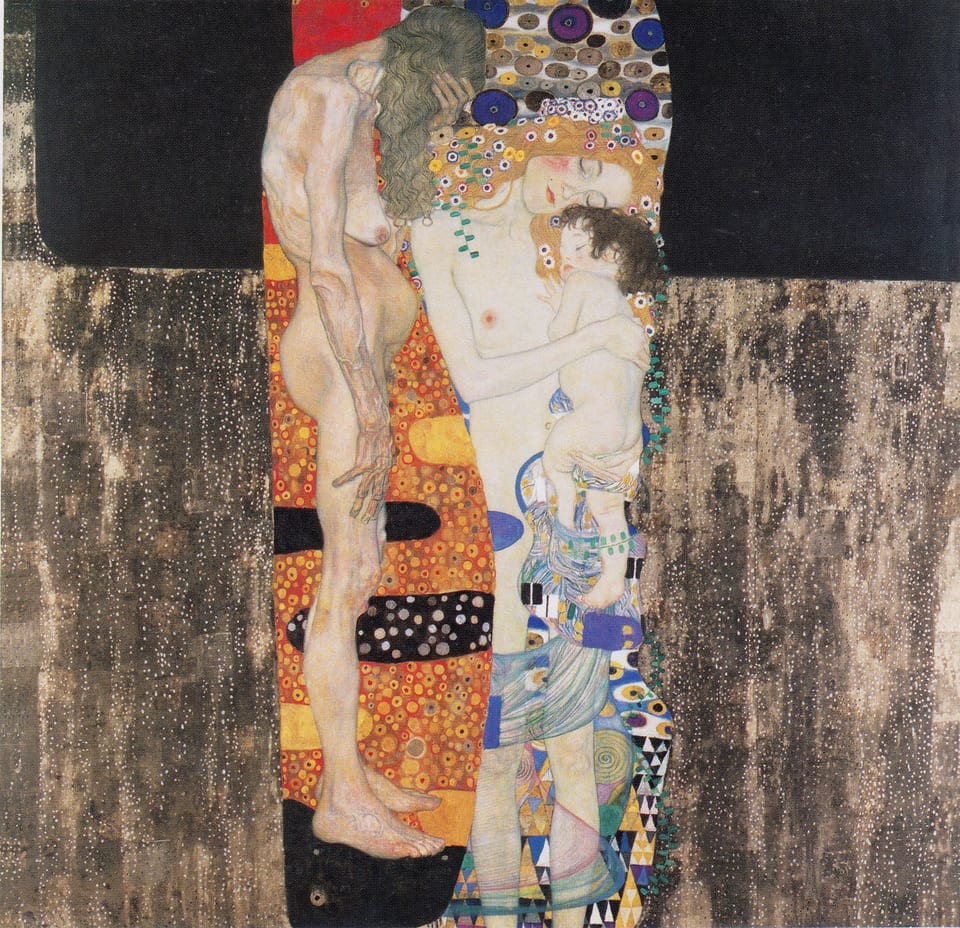
The Three Ages of Woman
Painted in 1905, it depicts the cycle of life.
Source ↗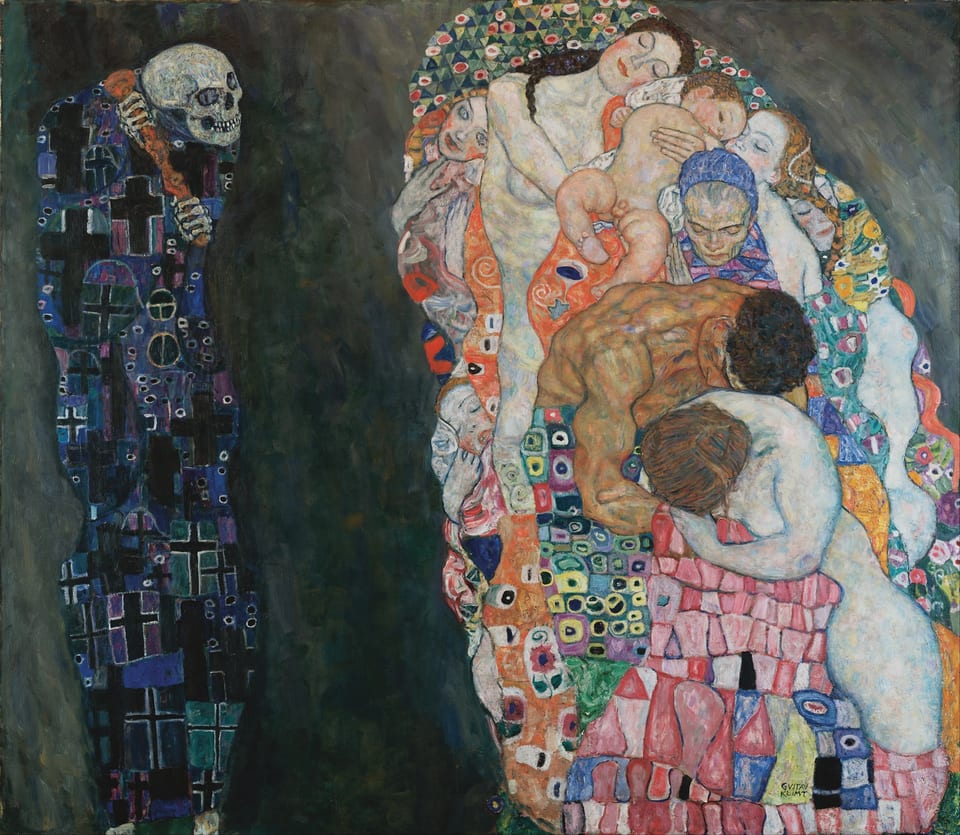
Death and Life
In 1911 the painting received first prize at the world exhibition in Rome.
Source ↗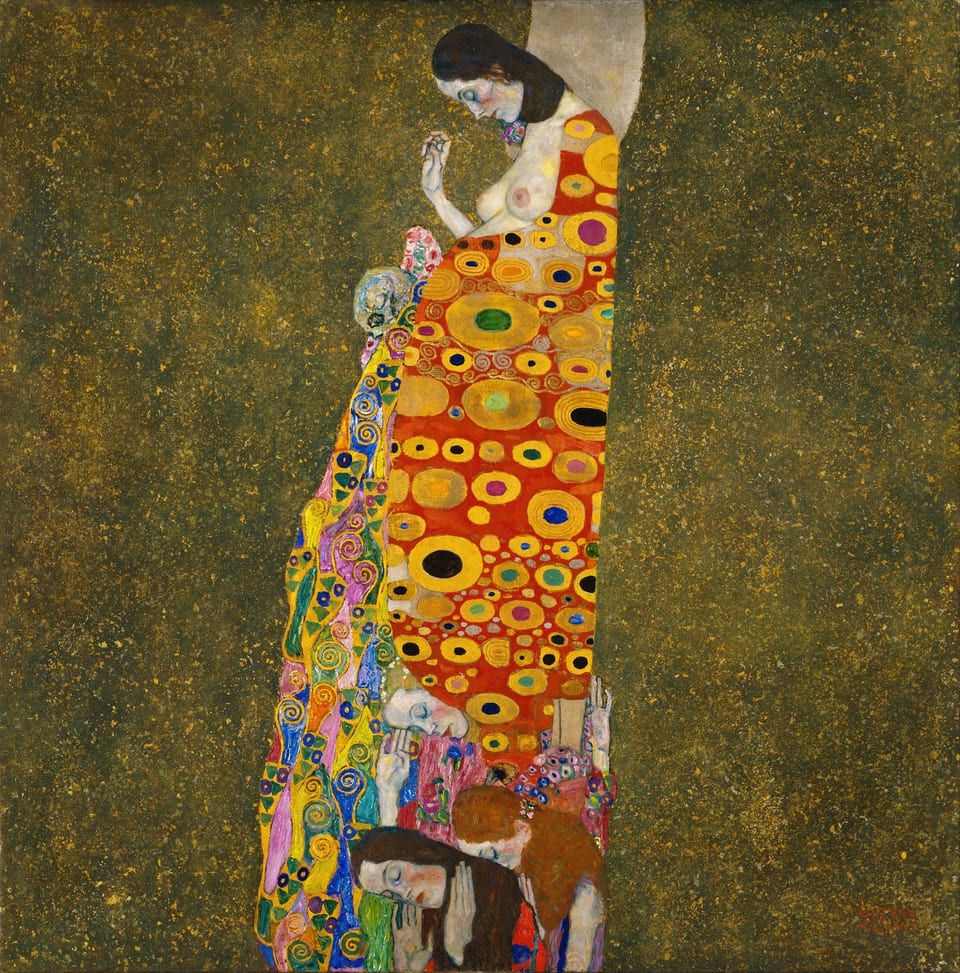
Hope II
Source ↗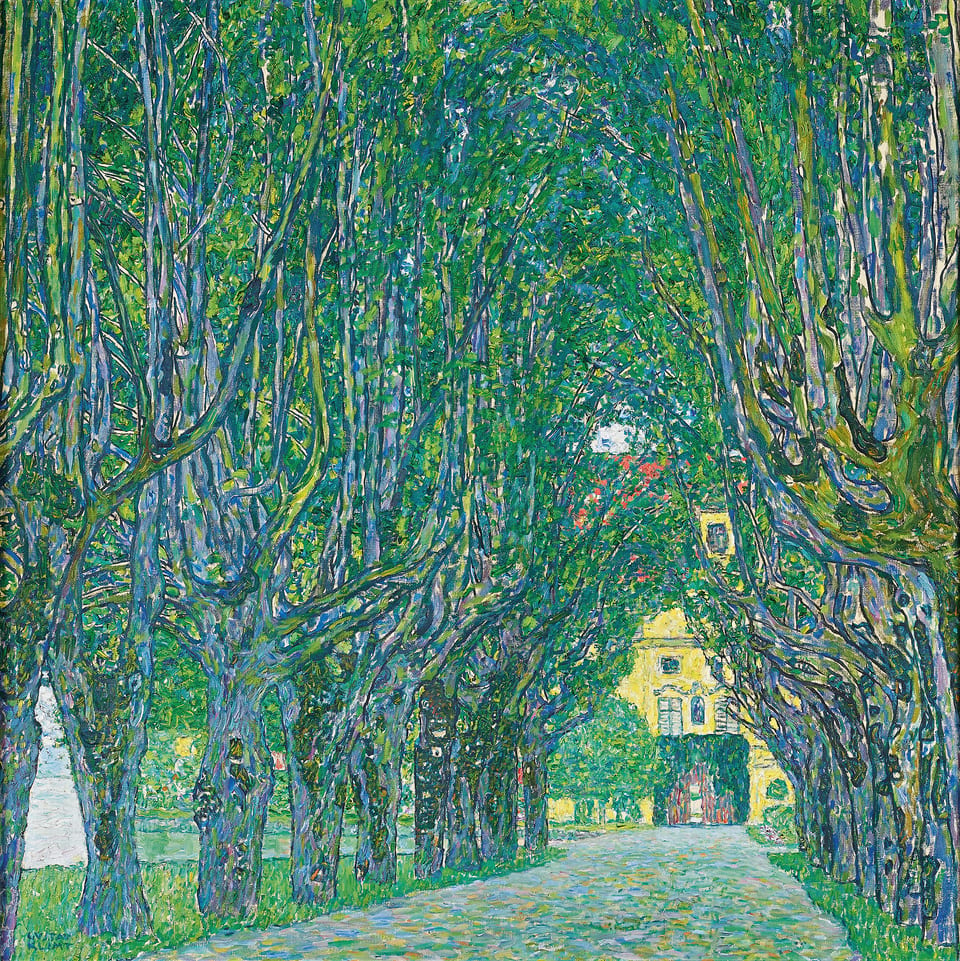
Avenue to the Kammer Castle
One of the Attersee landscapes, the only genre besides figure painting that seriously interested Klimt.
Source ↗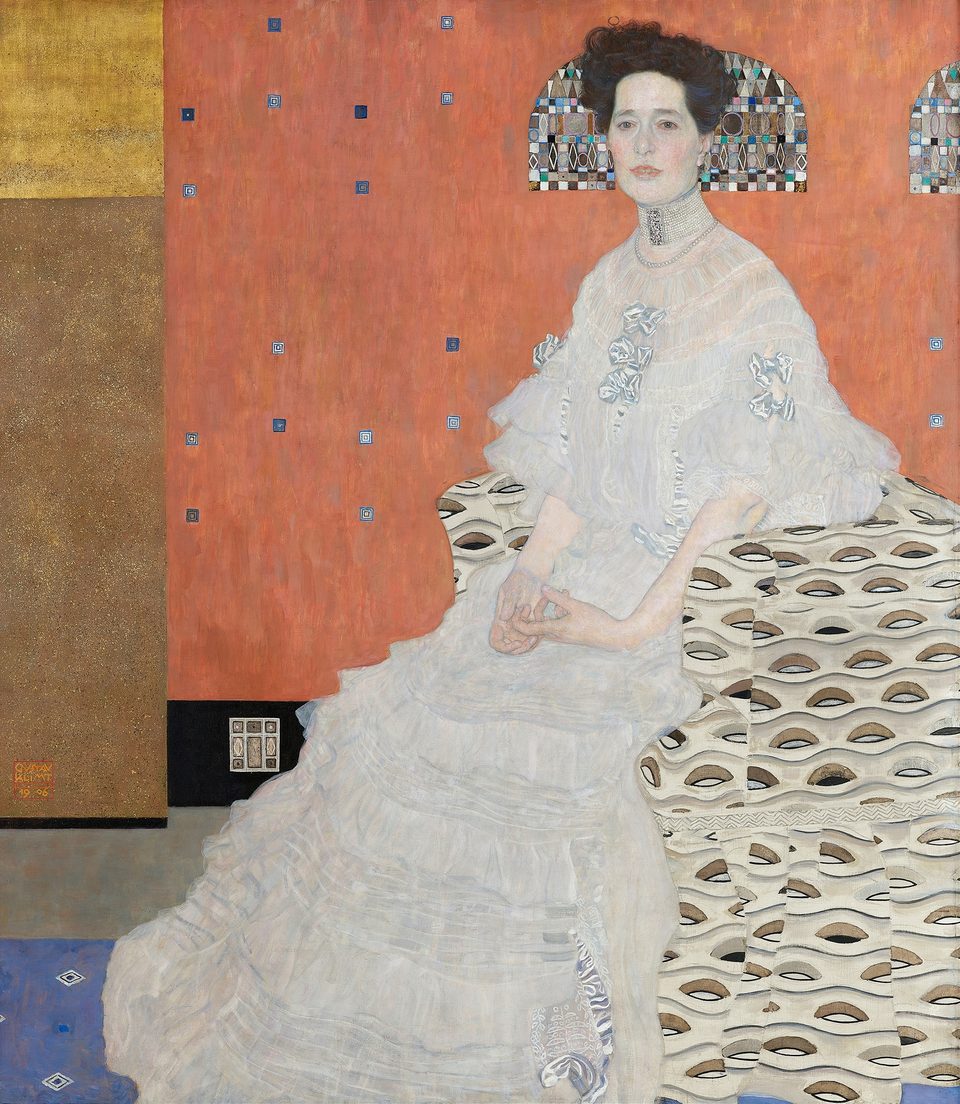
Fritza Riedler
Source ↗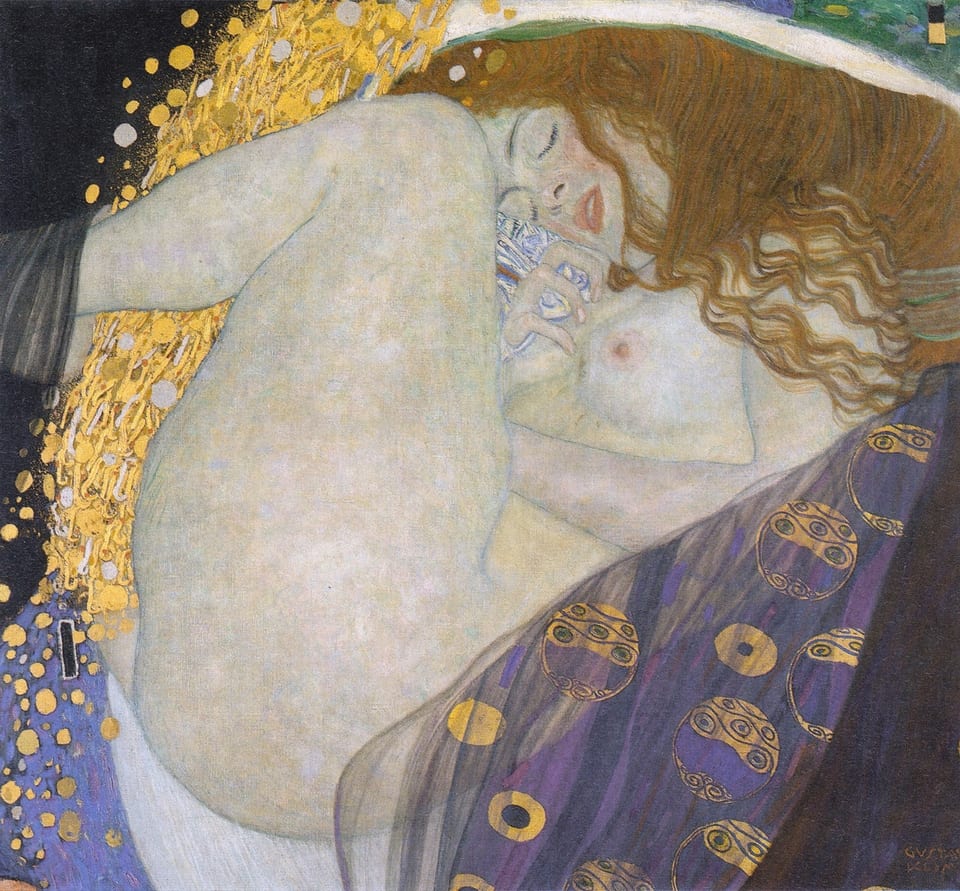
Danaë
Source ↗Sources and rights
Artvee (works), Wikimedia Commons (portrait)
Gustav Klimt died in 1918, so his works have been in the public domain in the EU since 1989 (life plus 70 years). The portrait photograph is by Josef Anton Trčka (1893–1940), taken in 1914, and is marked public domain on Wikimedia Commons.
https://artvee.com/artist/gustav-klimt/
All artists